

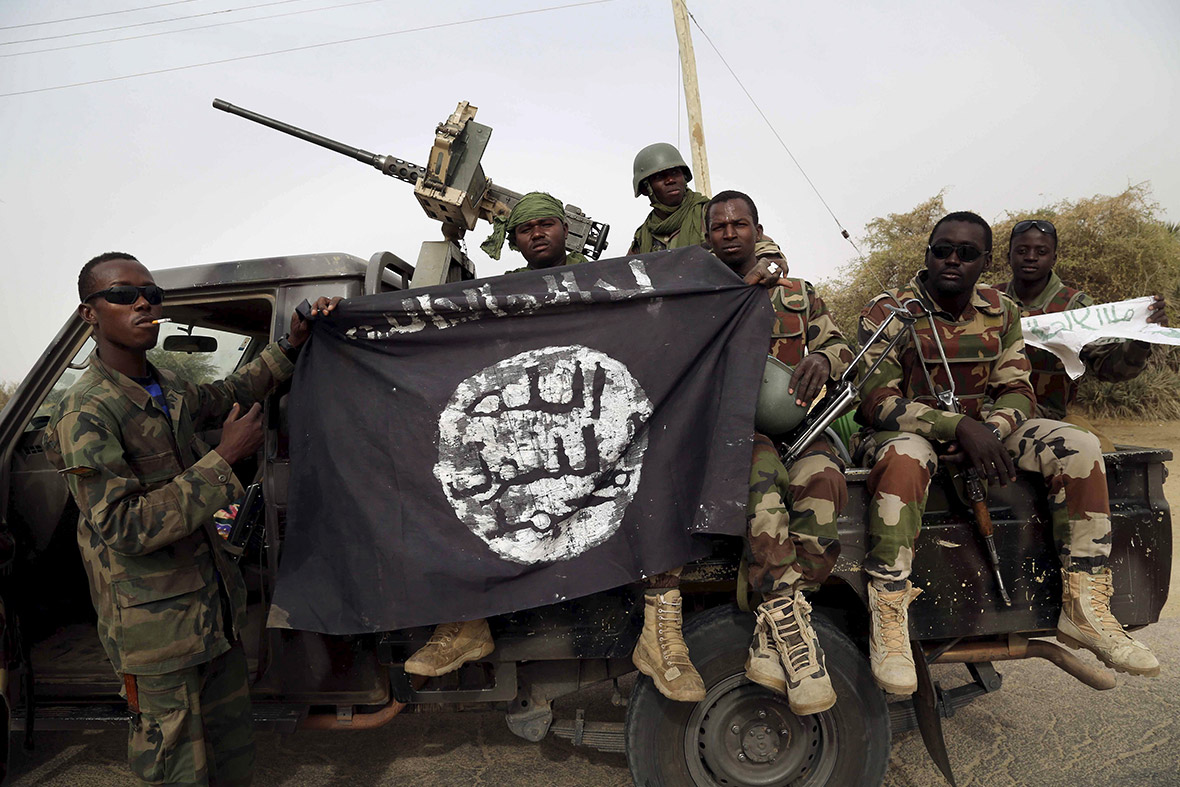
New research highlighted this week concludes that terrorist organizations, including Boko Haram in Nigeria, are increasingly experimenting with commercially available artificial intelligence tools to improve operational effectiveness, including propaganda production, recruitment, attack planning, translation, and technical guidance. Researchers found that while AI has not fundamentally transformed terrorism, it is lowering barriers to entry for extremist groups by making sophisticated capabilities more accessible without requiring equivalent technical expertise. The findings also indicate that current AI safeguards have had mixed success in preventing misuse, raising renewed concerns over whether AI developers and governments are moving quickly enough to address the national security implications of rapidly advancing generative AI systems. The report argues that although AI is not replacing traditional terrorist methods, it is becoming a force multiplier that can enhance existing extremist operations, making the challenge for intelligence agencies significantly more complex.
Sources
- https://www.nytimes.com/2026/07/10/us/politics/ai-terrorism-boko-haram-nigeria.html
- https://casp.ai
- https://www.counterextremism.com/threat/boko-haram
Key Takeaways
- AI is emerging as a force multiplier for terrorist organizations by improving propaganda, communications, research, translation, and operational planning rather than replacing traditional terrorist tactics.
- Existing safeguards built into major AI platforms have proven inconsistent, allowing determined extremists to extract useful information through persistent prompting or by using less-restricted AI models.
- The growing accessibility of powerful AI systems presents an expanding national security challenge, increasing pressure on technology companies and governments to strengthen safeguards while preserving legitimate innovation.
In-Depth
Artificial intelligence is rapidly becoming another battlefield in the fight against terrorism. According to newly released research, extremist organizations such as Boko Haram have begun incorporating widely available AI tools into their operations, not to create entirely new forms of terrorism, but to improve the efficiency and effectiveness of long-established methods. Researchers found evidence that AI is being used to assist with propaganda generation, language translation, recruitment materials, technical research, and aspects of attack planning.
While the report stops well short of claiming that AI has revolutionized terrorism, it warns that generative AI is reducing the expertise once required to perform many technical tasks. Information that previously demanded specialized knowledge can now be assembled much faster using sophisticated language models, particularly when safeguards can be bypassed or when less-restricted AI platforms are employed.
From a conservative perspective, the findings reinforce longstanding concerns that technological innovation often outpaces government and private-sector security planning. America has invested enormous resources in developing frontier AI capabilities, but those same breakthroughs inevitably become available to hostile actors. That reality argues for stronger security measures focused on preventing terrorist exploitation while avoiding regulatory overreach that would unnecessarily handicap American AI leadership against strategic competitors such as China.
The challenge, therefore, is not whether AI should continue advancing—it almost certainly will—but whether democratic societies can build effective safeguards before extremist organizations become substantially more proficient at exploiting these rapidly evolving technologies. The report suggests that window for action is narrowing as increasingly capable AI models become more widely available.