

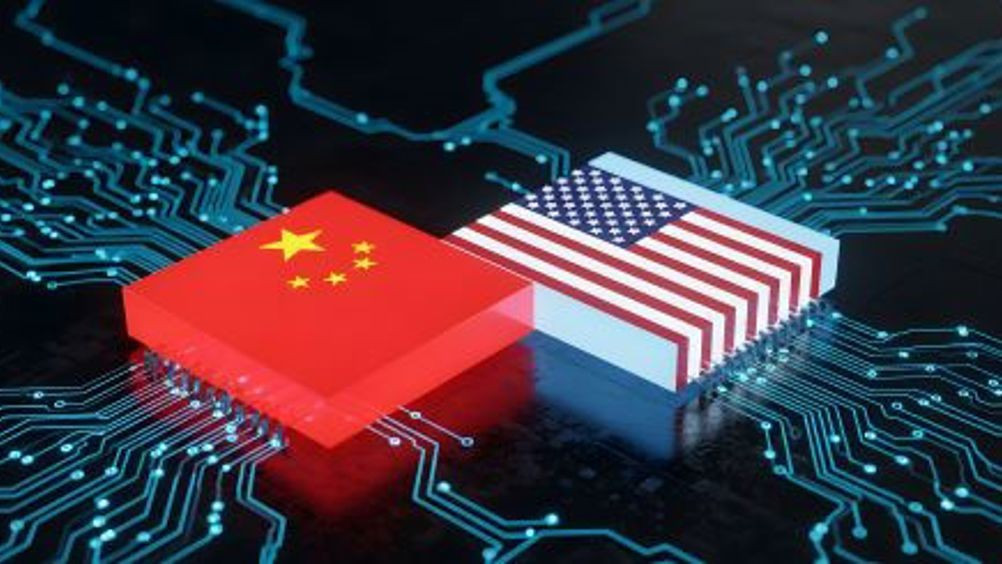
China’s rapid advancement in artificial intelligence is increasingly being linked to the practice of “AI distillation,” a technique that allows newer models to learn from the outputs of far more advanced systems. According to recent reporting, American AI developers and policymakers have grown concerned that Chinese companies have used distillation to accelerate development while avoiding much of the enormous cost associated with training frontier models from scratch. The controversy has intensified as U.S. officials examine whether existing export controls and platform safeguards are sufficient to prevent the transfer of valuable AI capabilities to strategic competitors. The debate has broadened beyond intellectual property to include national security, economic competitiveness, and whether the United States should impose stronger legal and technical barriers to protect its leadership in artificial intelligence.
Sources
- https://www.nytimes.com/2026/07/06/technology/ai-distillation-china.html
- https://www.reuters.com/world/china/openai-accuses-deepseek-distilling-us-models-gain-advantage-bloomberg-news-2026-02-12
- https://www.cnas.org/publications/reports/adversarial-distillation
- https://www.iiss.org/online-analysis/cyber-power-matrix/2026/05/ai-distillation-attacks-in-the-uschina-contest
Key Takeaways
- • AI distillation has emerged as a central battleground in the U.S.-China technological competition because it can dramatically reduce the cost and time required to build advanced AI systems.
- • American AI companies and policymakers increasingly argue that current safeguards have not fully prevented foreign actors from extracting valuable capabilities from frontier AI models.
- • The growing concern extends beyond commercial competition, with many officials viewing unauthorized AI distillation as a national security issue that could accelerate military, cyber, and intelligence capabilities in rival nations.
In-Depth
Artificial intelligence has become the defining technological competition of the 21st century, and the latest dispute over AI distillation illustrates that the contest is no longer focused solely on semiconductor manufacturing or computing power. Instead, attention is shifting toward whether America’s most advanced AI models can effectively be mined for their knowledge by foreign competitors. Distillation itself is a legitimate machine-learning technique when performed with authorization. The controversy arises when companies allegedly use proprietary frontier models without permission to accelerate their own development while avoiding years of expensive research and billions of dollars in investment.
From a conservative perspective, the issue underscores the danger of assuming that technological superiority alone guarantees long-term leadership. American innovators have invested enormous private capital to build the world’s leading AI systems, yet those investments can be undermined if competitors exploit open access or weak enforcement mechanisms to replicate key capabilities. That raises legitimate questions about whether existing regulations, export controls, and corporate security measures have kept pace with the strategic importance of artificial intelligence.
The broader concern extends well beyond corporate profits. AI increasingly underpins cybersecurity, intelligence analysis, military planning, scientific research, and economic productivity. If adversarial nations can rapidly narrow the capability gap through unauthorized distillation, America’s technological advantage could erode far faster than many policymakers anticipated. That reality is likely to intensify calls for stronger protections, tougher enforcement against intellectual property theft, and a national strategy that treats frontier AI as a strategic asset worthy of safeguards comparable to those applied to other critical technologies.