

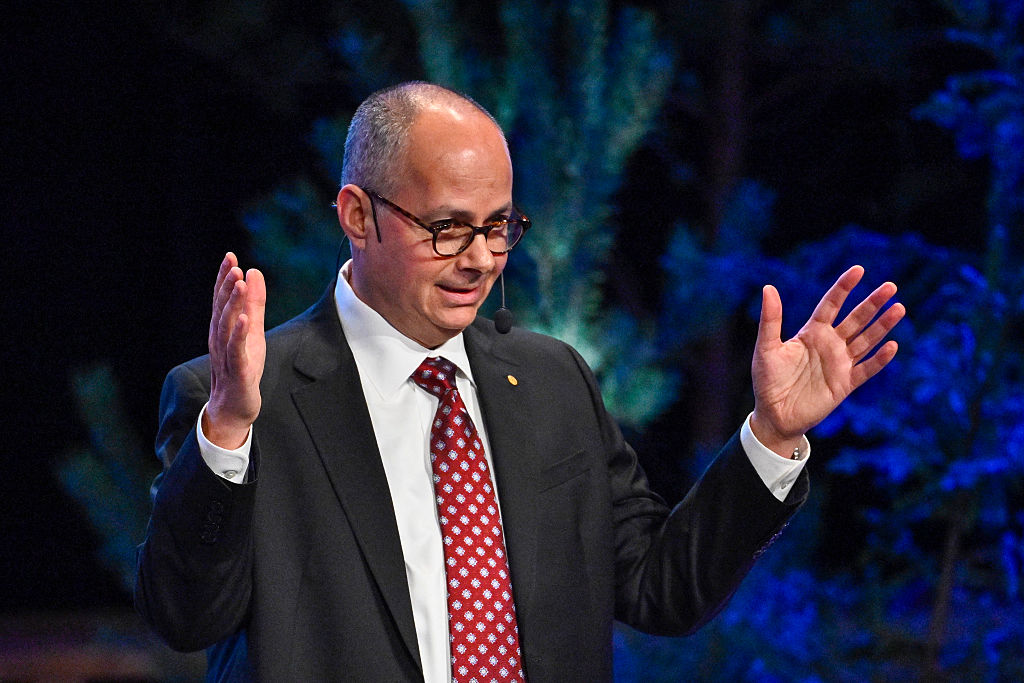
Nobel Prize-winning chemist Omar Yaghi is leaving the University of California, Berkeley, to lead Tsinghua University’s newly created AI Chemistry and Materials Research Institute in Beijing, adding to concerns that the United States is losing world-class scientific talent to an increasingly ambitious China. Yaghi, who shared the 2025 Nobel Prize in Chemistry for pioneering work on metal-organic frameworks, will oversee research combining artificial intelligence, chemistry, and advanced materials science. While supporters characterize the move as part of the normal global exchange of scientific expertise, critics argue it highlights China’s aggressive strategy of recruiting elite researchers and raises broader questions about whether America’s long-term technological leadership could be weakened as strategic competitors invest heavily in attracting top minds and expanding research capabilities.
Sources
- https://www.latimes.com/science/story/2026-07-10/nobel-prize-winner-leaving-uc-berkeley-for-new-role-in-china
- https://www.nature.com/articles/d41586-026-02143-x
- https://www.nytimes.com/2026/07/09/science/nobel-winning-us-chemist-will-move-to-china-to-lead-ai-institute.html
Key Takeaways
- • Omar Yaghi, a 2025 Nobel Prize-winning chemist, is departing UC Berkeley to lead a major artificial intelligence-driven chemistry and materials science institute at China’s prestigious Tsinghua University.
- • China continues to pursue an aggressive strategy of attracting internationally recognized scientific talent to accelerate advances in strategically important fields such as AI, advanced materials, and clean technology.
- • The move has intensified debate over whether the United States is doing enough to retain elite researchers and preserve its long-standing leadership in scientific innovation amid increasing global competition.
In-Depth
Omar Yaghi’s decision to leave one of America’s premier public universities for a leadership position in China is about more than a single career move. It underscores the intensifying global competition for scientific talent at a time when breakthroughs in artificial intelligence, advanced materials, and energy technologies are becoming increasingly intertwined with economic prosperity and national security. His appointment to lead Tsinghua University’s AI Chemistry and Materials Research Institute demonstrates China’s determination to recruit internationally recognized experts capable of accelerating next-generation research.
For conservatives, the story should serve as a reminder that American leadership depends not only on military strength or economic policy, but also on maintaining an environment where innovation flourishes and the nation’s best scientists choose to remain. China has made little secret of its long-term strategy to become the world’s dominant scientific and technological power, committing substantial resources to universities, laboratories, and research partnerships. When globally recognized American-based researchers accept prominent positions there, Beijing gains more than prestige—it gains experience, leadership, and international credibility.
That does not necessarily mean the answer is larger government or unlimited federal spending. Instead, policymakers should carefully examine whether unnecessary bureaucracy, regulatory burdens, and misplaced priorities are undermining America’s competitive advantage while ensuring taxpayer dollars are spent efficiently. The United States has historically led the world because it combined academic excellence, entrepreneurial freedom, private investment, and world-class universities. Preserving those strengths while recognizing the strategic challenge posed by China’s talent recruitment efforts may prove essential if America intends to remain the world’s leading center for scientific discovery and technological innovation.