

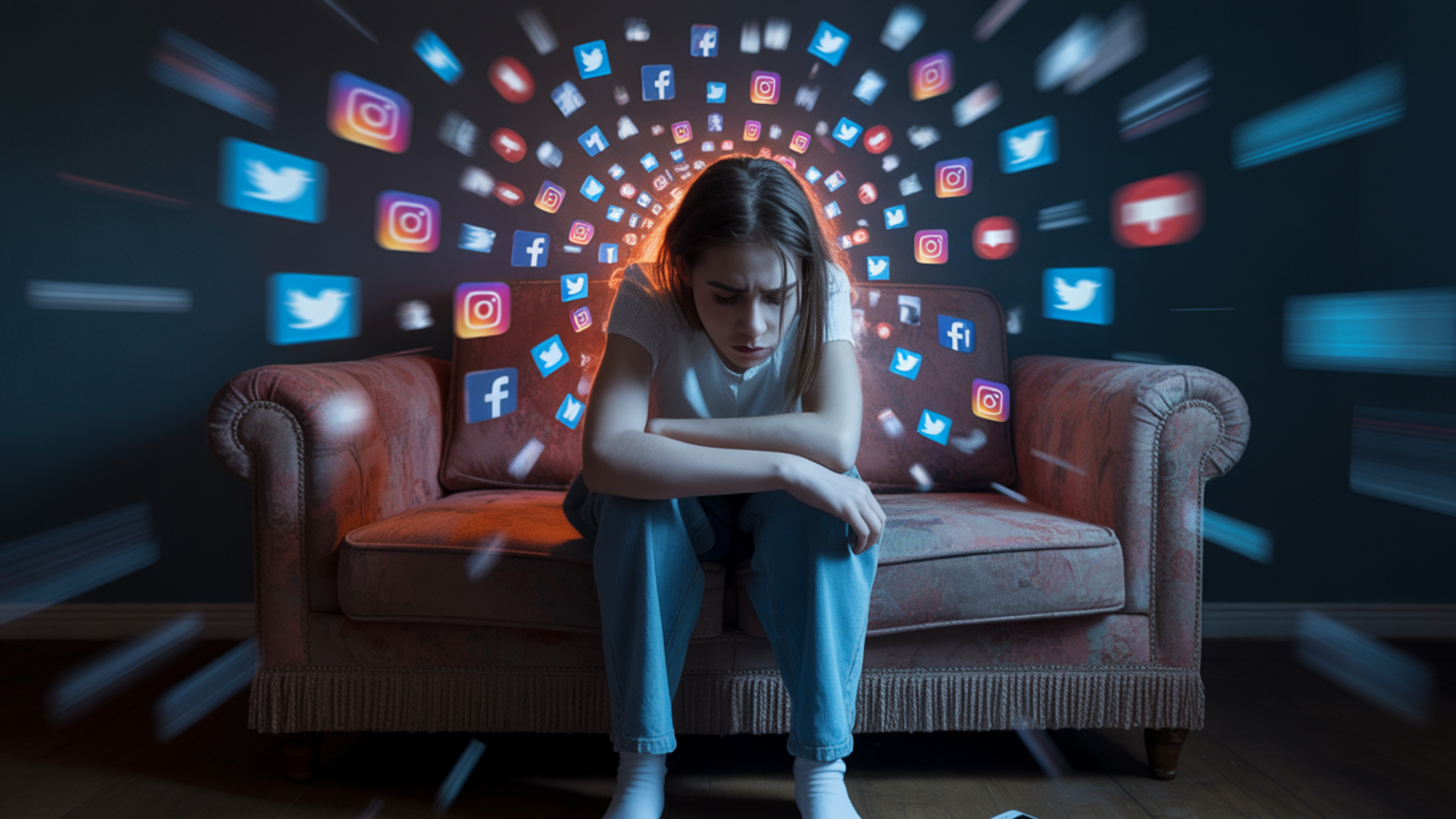
America is built on a proposition that is simultaneously liberating and demanding: free people are entitled to make their own choices, but they must also accept responsibility for those choices. That principle has traditionally distinguished a free society from a paternalistic one. Government may punish fraud, coercion, theft, and violence, but it should hesitate before protecting competent adults from every temptation, vice, or bad decision. Social media presents a difficult challenge to that philosophy because the central question is no longer merely whether people use these platforms excessively. It is whether the platforms have been deliberately engineered to make voluntary disengagement increasingly difficult.
If social media is ultimately proven to be addictive in a meaningful clinical sense, responsibility cannot reasonably be assigned to only one party.
The individual must remain the starting point.
Adults choose whether to create accounts, download applications, post photographs, argue with strangers, scroll through videos, or spend hours following political controversies. The preservation of liberty requires maintaining some concept of personal agency. If every harmful habit can be attributed entirely to the company providing the temptation, individual responsibility becomes almost meaningless.
Americans are surrounded by products and activities that can become compulsive. Gambling, alcohol, shopping, television, video games, pornography, food, and countless other pleasures can overwhelm self-discipline. A society cannot remain genuinely free if the government assumes responsibility for regulating every activity on the grounds that someone might abuse it.
But personal responsibility does not absolve corporations of responsibility for how their products are designed.
There is an important difference between providing something people enjoy and deliberately constructing a system intended to manipulate human psychology so that users remain engaged longer than they otherwise would.
Social media companies possess vast amounts of behavioral data about their users. Algorithms can determine what captures attention, what provokes anger, what encourages another click, what keeps someone watching, and what brings a person back after they leave. Notifications, infinite scrolling, personalized recommendations, intermittent rewards, engagement metrics, and algorithmically selected content can transform what appears to be a simple communications platform into something much more sophisticated.
If evidence establishes that companies knowingly optimized these mechanisms to produce compulsive behavior while understanding that significant harm could result, then corporate accountability becomes legitimate rather than paternalistic.
Free markets depend upon informed consent. They also depend upon honest dealing.
A person knowingly purchasing a potentially habit-forming product presents one question. A person entering what appears to be a communications service without understanding that sophisticated behavioral systems are continuously adapting to maximize their engagement presents another.
The distinction becomes even more significant when it comes to children.
A twelve-year-old cannot reasonably be held to the same standard of judgment and self-control as a forty-year-old. American society already recognizes this principle. Children face restrictions involving contracts, gambling, alcohol, tobacco, driving, employment, and numerous other activities because liberty has always been accompanied by an understanding that maturity matters.
Parents therefore carry substantial responsibility for children’s social media habits. Giving a child unrestricted access to a smartphone and then blaming technology companies for everything that follows is insufficient. Parents have an obligation to establish boundaries, supervise behavior, restrict applications when necessary, and sometimes simply say no.
Yet parental responsibility does not give corporations an unlimited license to exploit children.
If platforms knowingly design products to capitalize on developmental vulnerabilities, aggressively pursue adolescent engagement, or conceal evidence of significant harms from parents and the public, then the government has a legitimate role. That role should be narrowly focused on transparency, fraud, deceptive practices, meaningful parental controls, data exploitation, and the protection of minors—not on creating a federal bureaucracy responsible for determining how many minutes an adult may spend watching videos.
There is also a danger in allowing the addiction argument to become an excuse for government control over speech.
Social media is not merely entertainment. It has become part of America’s political and cultural infrastructure. Citizens debate elections, criticize government officials, organize movements, report news, promote businesses, and communicate ideas through these platforms. Regulation supposedly intended to protect people from “harmful engagement” could easily shift toward regulating supposedly harmful information.
That should concern conservatives and civil libertarians alike.
The constitutional tradition does not guarantee Americans freedom from temptation, foolishness, manipulation, or regret. It guarantees something far more important: the ability to exercise liberty within a system of laws that protects citizens against genuine coercion and misconduct.
The proper answer, therefore, is shared but differentiated responsibility.
Individuals remain responsible for their behavior. Parents remain responsible for raising and protecting their children. Corporations remain responsible for the products they intentionally design and the representations they make about those products. Government remains responsible for enforcing legitimate laws while resisting the temptation to convert every social problem into another justification for expanding state power.
If social media is proven addictive, the discovery should not become an argument against individual choice. It should instead force America to clarify what a meaningful choice actually requires.
Freedom does not mean corporations may secretly manipulate consumers without consequence. But corporate misconduct does not mean citizens surrender responsibility for themselves.
A free society requires both principles simultaneously.
The user must retain the freedom to put the phone down.
The company must not secretly rig the game to make putting it down extraordinarily difficult.
And government must police that boundary without becoming the institution that decides what Americans are permitted to see, say, read, or choose.
That balance is frustrating because it offers no convenient villain. Yet that may be precisely the point. The social-media problem did not arise from corporations alone, government alone, parents alone, or users alone. It emerged from a culture in which astonishing technology collided with human weakness, commercial incentives, inadequate parental supervision, and institutions that were slow to understand what was happening.
Accountability should therefore follow responsibility wherever it actually lies.
Anything less excuses misconduct. Anything more risks using addiction as the rationale for surrendering the very individual liberty supposedly being protected.