

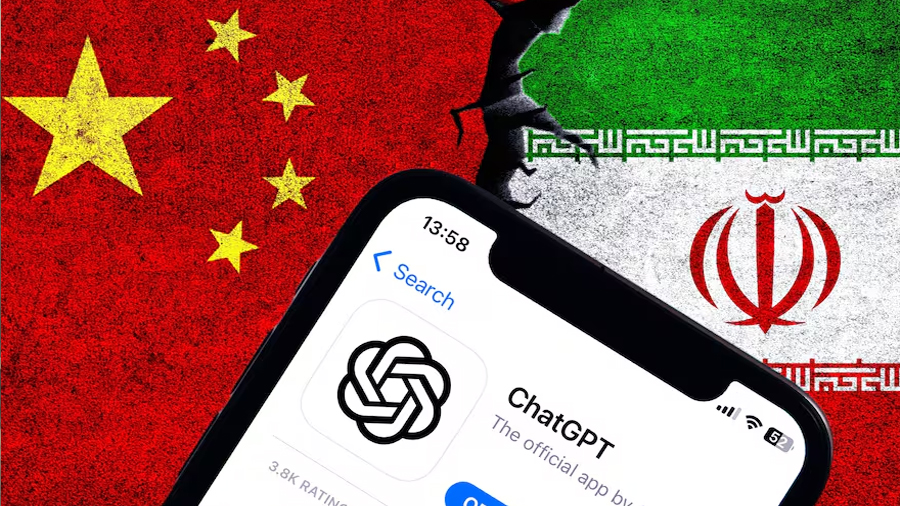
Artificial intelligence is entering a more consequential phase of information warfare as Iran, China-linked operators and private groups experiment with autonomous AI agents capable of creating fake social-media accounts, generating political content and coordinating messaging with limited human involvement. Recent investigations indicate that some operations are combining powerful Chinese open-source models with agentic software, allowing networks to function on private infrastructure where conventional safeguards can be removed. Iranian state-aligned actors have separately used AI to construct multilingual propaganda systems, fake personas and targeting databases, while China-linked influence operations have attempted to insert covert messaging into American technology-policy debates. The immediate effectiveness of these campaigns remains uncertain—many have attracted little genuine engagement—but their importance lies in drastically reducing the personnel, cost and time required to operate large-scale influence networks.
Key Takeaways
- Autonomous AI agents represent a significant escalation from merely generating propaganda: systems can increasingly create accounts, develop personas, produce content, respond to users and coordinate activity across multiple social-media platforms with limited continuing human direction.
- Chinese open-source AI models create a particular security challenge because operators can download and modify them, remove safeguards and run them privately, making intervention by the original developer far more difficult than with centrally controlled commercial systems.
- Scale does not automatically produce influence. Investigations into Iranian and China-linked campaigns have repeatedly found limited authentic engagement, suggesting that AI can dramatically increase propaganda production without guaranteeing that real people will believe, share or act upon it.
In-Depth
Artificial intelligence is moving from a tool that helps propagandists write content to infrastructure capable of running an influence operation. Recent investigations describe Iranian state-aligned actors, China-linked operators and private groups experimenting with AI agents that can create personas, manage accounts, generate messages and coordinate distribution with limited supervision. This reduces manpower required to sustain networks of fake identities across platforms.
The most consequential change is the combination of downloadable Chinese AI models with autonomous agents. Open models can be modified, stripped of safeguards and operated on private hardware, limiting the ability of an American AI provider to detect abuse and terminate access. Investigations have documented Iran-linked operations using AI to manufacture multilingual propaganda and China-linked campaigns attempting to manipulate American debates over technology policy.
Still, capability should not be confused with effectiveness. Researchers report that many AI-assisted influence operations attract little authentic engagement. One experimental network described in reporting controlled roughly 1,000 functioning social-media accounts but generated limited genuine interaction. Automation can manufacture volume without necessarily manufacturing persuasion.
That distinction should guide the American response. The challenge is not simply offensive speech or synthetic content; it is concealed, coordinated manipulation conducted at machine speed by actors whose identities and sponsorship are deliberately hidden. Defensive policy should concentrate on authentication, detection of coordinated inauthentic behavior, transparency regarding foreign sponsorship, rapid intelligence sharing and technical safeguards that make mass account creation harder. The emerging contest is about preserving confidence that online political participation represents actual people rather than automated influence machinery.
Sources
- https://www.anthropic.com/threat-intelligence-report-september-2026
- https://openai.com/index/prc-linked-influence-operations-ai-debates/
- https://www.brookings.edu/articles/why-washington-fears-chinas-open-source-ai/
- https://openai.com/index/disrupting-malicious-uses-of-ai-storm-2035-2025/
- https://openai.com/index/disrupting-deceptive-uses-of-ai-by-covert-influence-operations/