

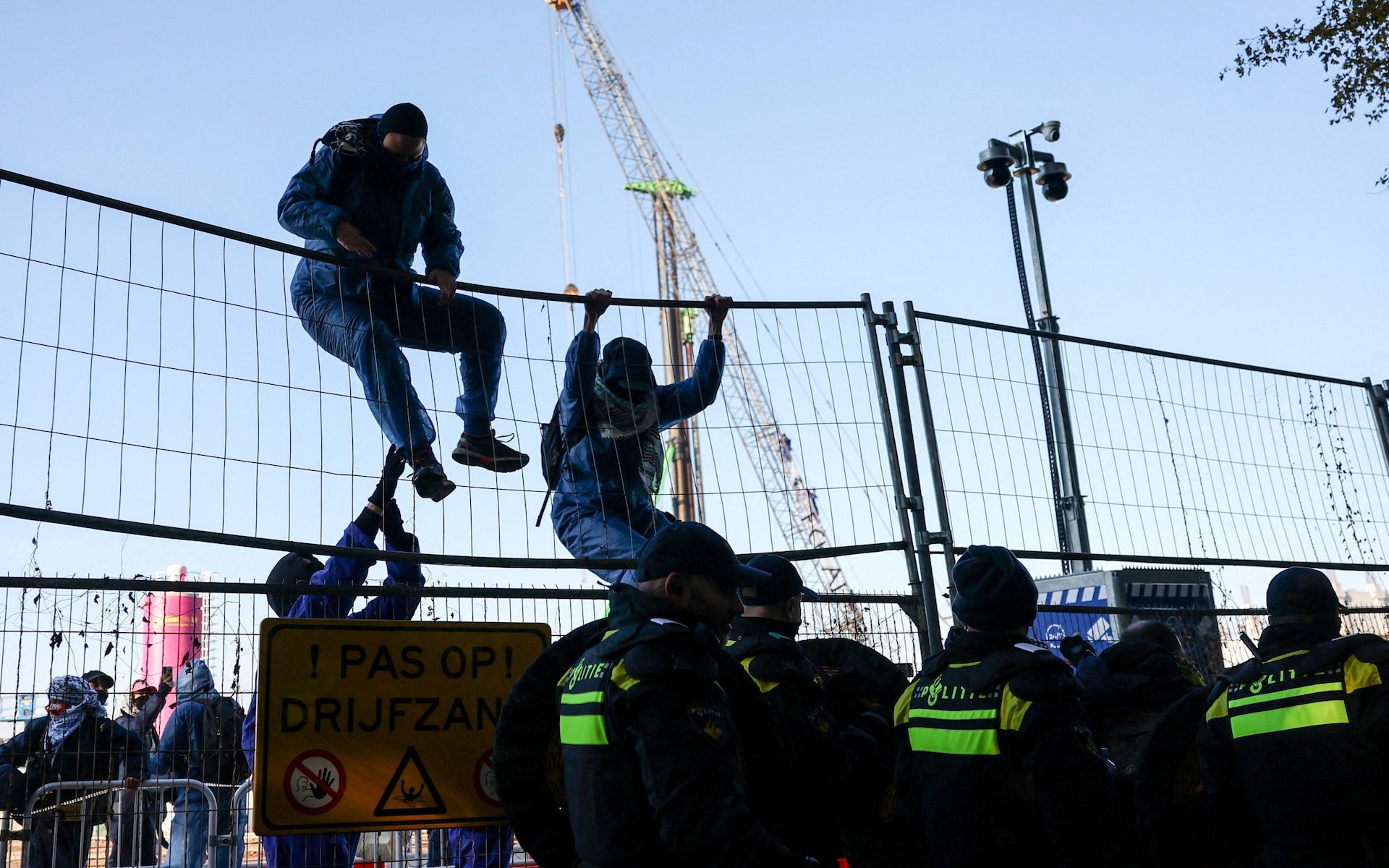
– More than 100 protesters stormed a Microsoft data center construction site in Amsterdam, breaching security fences, climbing cranes and clashing with police.
– Activists demanded restrictions on artificial intelligence infrastructure, citing energy consumption, environmental concerns and Microsoft’s alleged involvement in military surveillance.
– Demonstrations across Europe intensified pressure on governments and technology companies, raising concerns about economic development, property rights and lawful protest.
More than 100 protesters breached a Microsoft data center construction site in Amsterdam on Nov. 6, climbing fences and a crane, displaying banners and confronting police. The demonstration targeted a facility being developed by Pure Data Centres for Microsoft in the Sloterdijk district. Dutch activists associated with Geef Tegengas sought to halt construction, while other demonstrators raised objections to artificial intelligence, energy consumption and Microsoft’s business relationships with military and immigration authorities. Police intervened and detained demonstrators suspected of trespassing.
The confrontation coincided with broader European protests against the expansion of data centers. Organizers called for a moratorium on projects, citing electricity and water demands, environmental oversight and limited community consultation. Separate demonstrations took place in Germany and Poland, with events planned across Europe. Microsoft defended peaceful expression but rejected unlawful or dangerous actions. The episode highlighted tension between expanding digital infrastructure and local opposition to its costs and consequences.
Why It Matters
The Amsterdam confrontation illustrates how disputes over artificial intelligence infrastructure can escalate when residents believe development decisions are being made without sufficient public accountability. Data centers support cloud services, commerce and technological innovation, but their electricity and water requirements deserve transparent scrutiny. Governments should require impact assessments and explanations of who bears infrastructure costs.
Still, concerns about resource use do not justify trespassing, property damage or confrontations with police. The right to peaceful protest is fundamental, but so are property rights, public safety and the rule of law. Allowing activists to shut down lawful construction through intimidation would undermine the democratic processes they claim to defend.
The larger challenge is balancing economic competitiveness with local governance. Policymakers should establish predictable permitting rules, protect taxpayers from subsidies and require developers to address community concerns before projects proceed. Such safeguards offer a stronger answer than either unchecked expansion or politically driven obstruction.
Sources
- https://www.telegraph.co.uk/business/2026/11/06/protesters-storm-microsoft-data-centre/
- https://www.datacenterdynamics.com/en/news/more-than-100-protesters-break-into-microsoft-data-center-construction-site-in-amsterdam/
- https://nltimes.nl/2026/11/06/protesters-break-onto-site-planned-microsoft-data-center-adam-police-intervene
- https://www.theguardian.com/world/2026/nov/06/activists-break-into-building-site-of-microsoft-datacentre-in-amsterdam
- https://live.euronext.com/en/financial-news/activists-breach-microsoft-data-centre-construction-site-protests-spread-europe