

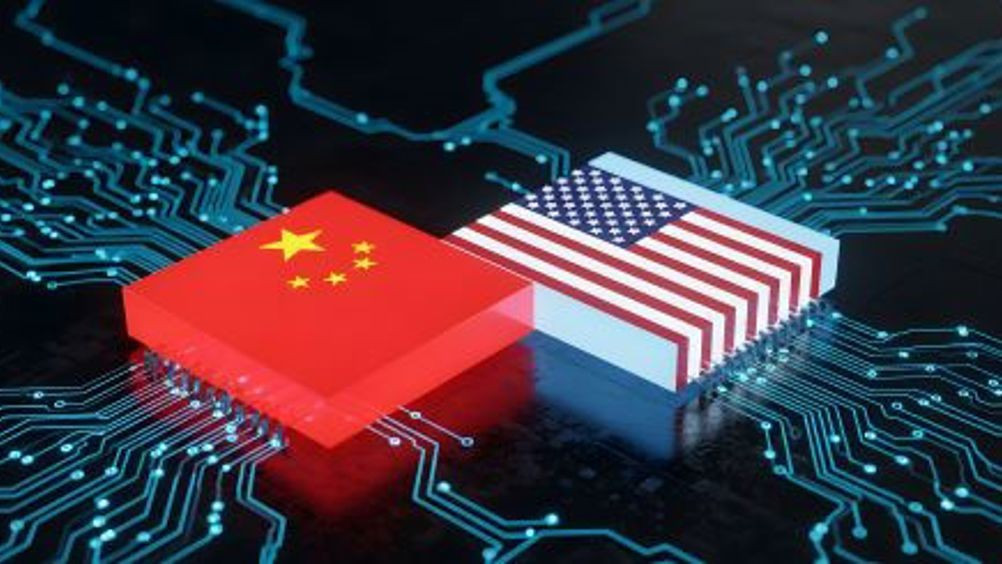
American officials and leading artificial-intelligence companies are increasingly accusing Chinese AI developers of using “distillation” to reproduce capabilities developed by U.S. frontier models, turning a common AI-training technique into a major technology and national-security dispute. Distillation ordinarily involves using a powerful “teacher” model to train a smaller or more efficient “student” model, but the controversy centers on allegations that Chinese companies including DeepSeek, Alibaba, Moonshot AI, MiniMax and Z.ai accessed proprietary American systems at enormous scale, sometimes through fraudulent accounts and proxy networks. American companies contend that such operations can transfer valuable reasoning, coding and agentic capabilities without requiring competitors to bear the enormous expense of developing those capabilities independently. Chinese officials have rejected U.S. accusations as unfounded and discriminatory, while the legal status of unauthorized model distillation remains unsettled. The dispute has consequently become part of the larger U.S.-China competition over AI leadership, intellectual property, advanced computing and national security.
Key Takeaways
- Distillation is a legitimate and widely used AI-development technique, but American companies argue that unauthorized, industrial-scale extraction of proprietary model capabilities crosses the line from ordinary research into misappropriation.
- U.S. officials have accused multiple Chinese AI developers of targeting American frontier models, while Anthropic says some campaigns involved millions of interactions, fraudulent accounts, proxy networks and attempts to capture valuable reasoning capabilities.
- The controversy exposes a significant legal and policy gap: existing copyright, trade-secret and computer-access laws were not designed specifically for AI models that can effectively teach competing systems through their outputs.
In-Depth
Artificial intelligence has created an unusual intellectual-property problem: a company may spend billions developing a frontier model only to discover that a competitor can potentially extract portions of its capabilities by repeatedly questioning it.
That process, known as distillation, is not inherently improper. AI developers routinely use powerful models to train smaller, cheaper systems. The dispute begins when companies allegedly access a competitor’s proprietary model without authorization, systematically harvest its responses and use those responses to improve competing technology.
American officials and AI companies say Chinese developers have pursued this strategy aggressively. Anthropic reported campaigns involving enormous numbers of Claude interactions, including more than 151 million exchanges attributed to Alibaba between May and July. It also accused other Chinese laboratories of using fraudulent accounts, proxy networks and extracted reasoning traces to accelerate development.
China disputes Washington’s broader characterization, arguing that distillation is a standard industry technique and that American restrictions risk becoming another mechanism for suppressing Chinese competition. That objection highlights an uncomfortable reality: American AI companies themselves depend heavily on information generated elsewhere, making the boundaries surrounding ownership of machine-learned capabilities difficult to define.
The strategic issue nevertheless extends beyond conventional commercial competition. Frontier AI increasingly has applications in cybersecurity, military planning, scientific research and autonomous systems. If competitors can reproduce expensive capabilities without making equivalent investments, American technological advantages could erode more quickly.
The unresolved question is where legitimate learning ends and unauthorized technological appropriation begins. Existing law provides no simple answer, leaving policymakers, courts and AI companies confronting a problem technology has advanced faster than rules governing it.
Sources
- https://www.nytimes.com/2026/09/25/science/china-ai-distillation-copying.html
- https://www.reuters.com/technology/us-accuses-chinese-ai-firms-industrial-scale-theft-ai-technology-2026-09-08/
- https://www.anthropic.com/threat-intelligence-report-september-2026
- https://arstechnica.com/tech-policy/2026/09/six-chinese-ai-firms-accused-of-aggressively-copying-us-frontier-models/
- https://www.lawfaremedia.org/article/responding-to-ai-distillation-without-panic