

America wants artificial intelligence. We want AI that discovers new medicines, diagnoses diseases, tutors our children, strengthens national defense, automates tedious work, protects financial accounts, accelerates scientific research, and gives American companies an advantage over China. We want faster models, smarter assistants, autonomous machines, and technological breakthroughs that would have sounded like science fiction a decade ago.
There is just one problem.
Increasingly, Americans do not seem to want the physical infrastructure required to make any of it possible.
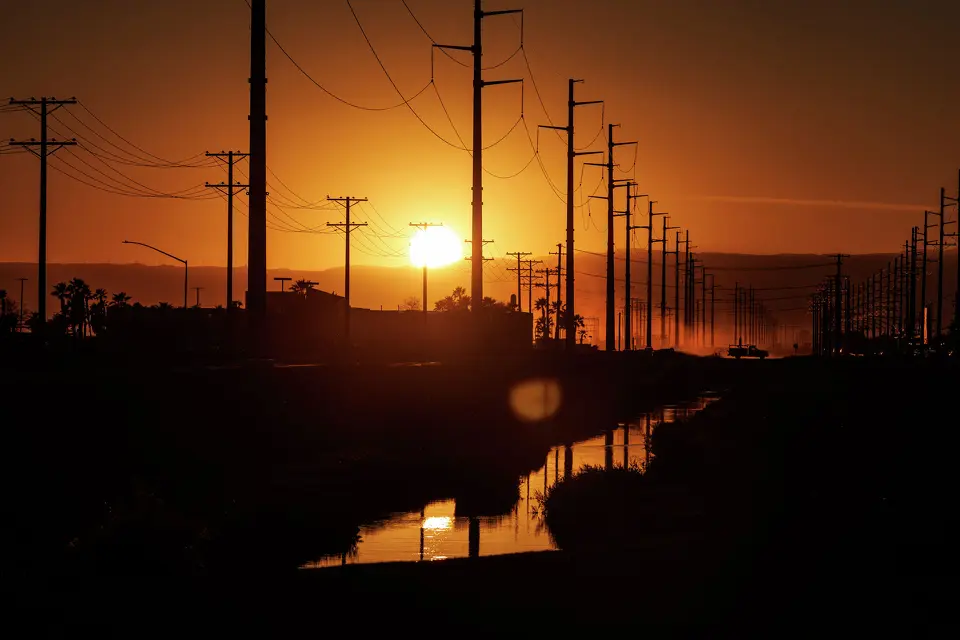
That contradiction is becoming one of the defining technological dilemmas of the AI age. Artificial intelligence may feel weightless when accessed through a smartphone or laptop, but there is nothing weightless about the infrastructure behind it. Advanced AI requires enormous computing capacity. Computing requires data centers. Data centers require land, electricity, transmission infrastructure, cooling, semiconductor equipment, construction, and capital.
There is no virtual world without a very physical one underneath it.
Yet proposals for new data centers increasingly encounter resistance from communities concerned about electricity consumption, water usage, noise, land development, property values, and the possibility that residents will ultimately subsidize infrastructure built primarily for enormous technology companies.
Some of those concerns are entirely legitimate.
A community should not be expected to welcome every industrial project merely because someone attaches “artificial intelligence” to the proposal. If a massive data center requires expensive electrical-grid improvements, taxpayers and ordinary ratepayers deserve to know who is paying for them. If it consumes substantial amounts of water, residents deserve credible estimates of that consumption. Local governments should examine zoning, noise, infrastructure, tax incentives, and environmental effects just as they would with any major industrial development.
But Americans also need to recognize the tradeoff.
We cannot simultaneously demand world-leading artificial intelligence while opposing the infrastructure necessary to produce it. That is the technological equivalent of demanding cheap electricity while opposing power plants, inexpensive housing while opposing construction, and domestic manufacturing while objecting whenever someone wants to build a factory.
Eventually, reality wins.
The deeper problem is that modern Americans have become remarkably disconnected from the physical requirements of prosperity. We experience the finished product while rarely seeing the infrastructure that makes it possible. Electricity comes from an outlet. Packages arrive at the front door. Videos stream instantly. Cloud computing appears to exist somewhere in the atmosphere.
Artificial intelligence magnifies that illusion. Ask a chatbot a question and an answer appears seconds later. What remains invisible is the enormous network of chips, servers, fiber-optic cables, cooling equipment, power-generation facilities, transmission lines, and data centers necessary to produce that convenience.
Those facilities have to exist somewhere.
The geopolitical implications make the question even more serious. AI is not merely another consumer technology. It is becoming an important component of economic productivity, scientific research, intelligence analysis, cybersecurity, advanced manufacturing, and military capability. If the United States makes building AI infrastructure prohibitively expensive or politically impossible, development will not simply stop. Capital and computing capacity will migrate toward jurisdictions willing to accommodate them.
China is unlikely to abandon its AI ambitions because Americans dislike industrial development.
That does not mean Washington should override every community objection or hand technology companies a blank check. Quite the opposite. A conservative approach should begin with property rights, local accountability, transparent costs, competitive markets, and skepticism toward corporate subsidies.
Technology companies that require extraordinary quantities of electricity should bear the costs associated with supplying it rather than quietly transferring those expenses to families and small businesses. Water agreements should be transparent. Tax incentives should face public scrutiny. Communities hosting enormous facilities should receive genuine economic benefits rather than vague promises.
But regulation should establish predictable rules, not become a mechanism for endless obstruction.
There is also an opportunity hidden inside the problem. America’s AI ambitions could force the country to confront weaknesses that have accumulated across its energy and permitting systems. More data centers mean more electricity demand. Meeting that demand could encourage investment in natural gas, nuclear power, advanced geothermal, grid modernization, transmission capacity, and other reliable energy sources.
Instead of treating rising electricity demand as an environmental catastrophe, America could treat it as an industrial challenge.
For much of the country’s history, growing energy consumption accompanied growing prosperity. Factories, railroads, steel mills, automobiles, air conditioning, computers, and the Internet all required enormous supporting infrastructure. Americans built it because they understood that technological progress ultimately requires construction.
AI will be no different.
The real choice is not between having data centers and having no data centers. It is between building them intelligently in America or watching more technological capacity develop elsewhere.
Communities have every right to demand responsible development. They have every right to insist that corporations pay their fair share of infrastructure costs and respect property owners. What they cannot reasonably demand is all the benefits of an AI-powered economy without accepting any of its physical footprint.
There is no cloud floating above us where artificial intelligence magically lives.
The cloud is buildings, wires, water, electricity, machines, and land.
If America truly intends to lead the artificial-intelligence revolution, eventually it must become comfortable building things again.