

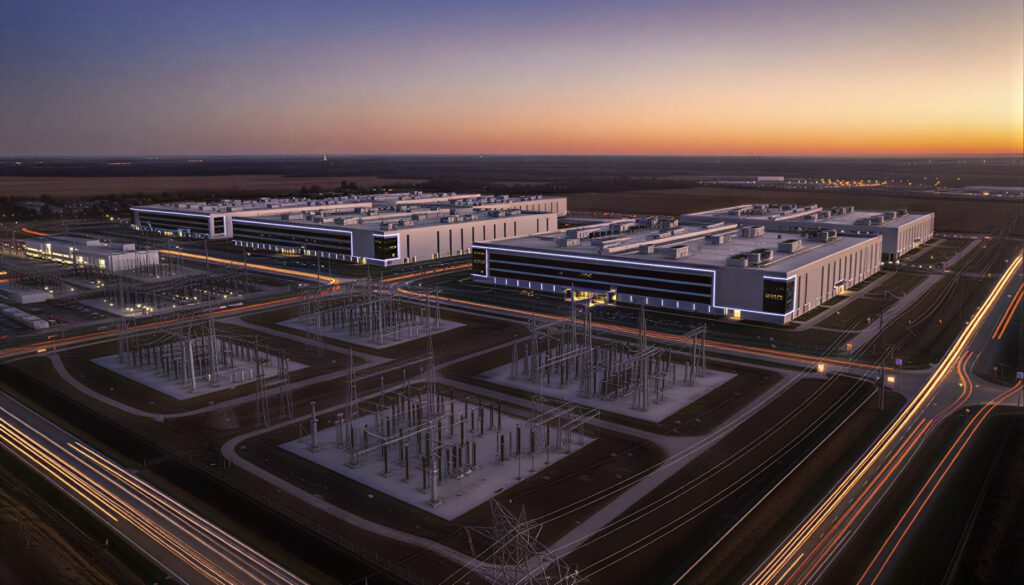
• A peer-reviewed study examining 12 Japanese data centers found little evidence that operating facilities cause widespread neighborhood warming.
• Satellite measurements revealed daytime surface cooling of up to 2.2 degrees Celsius, while nighttime warming remained below 0.3 degrees Celsius.
• Researchers calculated that previously claimed temperature increases would require six to 43 times more waste heat than data centers actually produce.
A peer-reviewed study published Nov. 4 challenges claims that artificial intelligence data centers generate extensive heat islands across surrounding communities. Researcher Jiawei Jing examined 13 years of satellite observations covering 12 facilities near Tokyo, comparing temperatures before construction and after operations began. Daytime land surface temperatures fell 1.8 to 2.2 degrees Celsius at the study site, largely because reflective roofs replaced darker agricultural surfaces. Nighttime warming across the cluster remained below 0.3 degrees Celsius.
The findings contrast with an earlier, unreviewed analysis reporting average surface warming of roughly 2 degrees Celsius around data centers and suggesting hundreds of millions of nearby residents could be affected. Jing calculated that producing such widespread warming would require six to 43 times more heat than the facilities release. Limited warming near cooling exhaust remains possible, and researchers caution that surface readings differ from air temperatures. The findings strengthen the case for site-specific assessment.
Why It Matters
The findings challenge an influential argument used against American data center construction: that computing facilities inevitably raise temperatures across entire neighborhoods. When proposals promise infrastructure investment, tax revenue and technological capacity, public officials have a responsibility to distinguish measurable environmental risks from alarming projections that have not survived rigorous scrutiny.
That does not mean data centers deserve automatic approval. Electricity demand, water availability, cooling systems, noise and taxpayer exposure remain legitimate concerns requiring transparent evaluations and enforceable safeguards. Nor does one Japanese study settle conditions at every American site. But policymakers should avoid treating disputed temperature estimates as established facts or overlooking the distinction between heat from operating servers and changes caused by construction materials. Sound land-use decisions require comparable measurements, realistic engineering calculations and honest consideration of economic benefits alongside costs. Communities deserve evidence-based oversight, not regulations driven by sensational claims that could discourage investment without delivering environmental protection.
Sources
• Satellite Observations and Energy Balance Constrain the Thermal Footprint of a Hyperscale Data-Centre Cluster — Environmental Research Letters, Nov. 4, 2026.
https://doi.org/10.1088/1748-9326/aead02
• The Data Heat Island Effect: Quantifying the Impact of AI Data Centers in a Warming World — Research preprint, March 2026.
https://arxiv.org/abs/2603.20897
• Are AI Data Centers Heating Their Surroundings? Fact-Checking the 340 Million Study — Independent research analysis, Nov. 12, 2026.
https://tokenstrom.com/posts/are-ai-data-centers-heating-their-surroundings-fact-checking-the-340-m/
• Satellite Analysis Finds Little Evidence That Data Centers Cause Widespread Ground Warming — Research findings, Nov. 4, 2026.
https://phys.org/news/2026-11-satellite-analysis-evidence-centers-widespread.html