

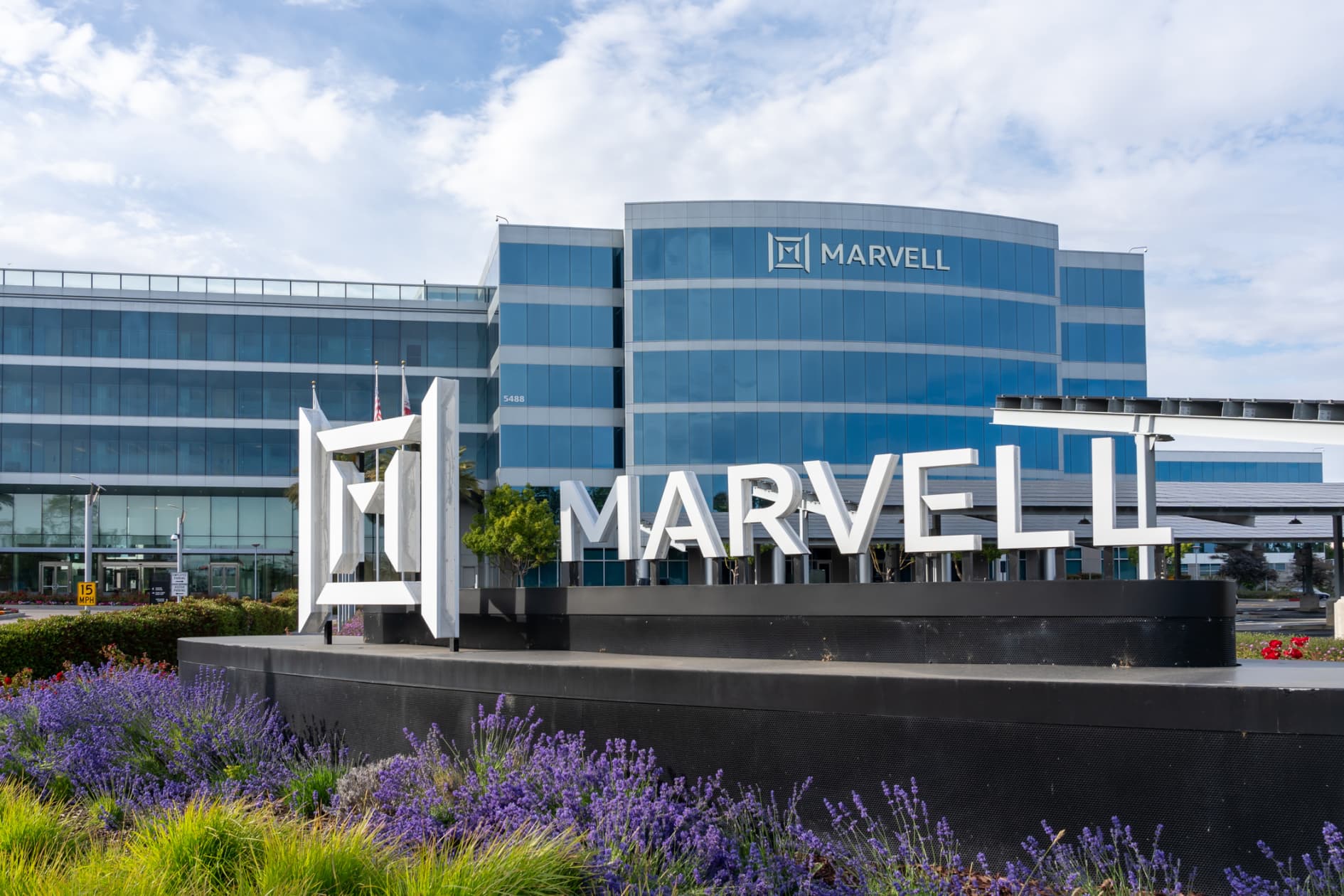
• Marvell Technology announced a $115 billion all-stock acquisition of Lumentum Holdings, combining semiconductor and optical networking technologies to expand its artificial intelligence infrastructure business.
• The proposed merger targets a potential $550 billion market, with projected annual cost savings exceeding $1 billion and completion expected in 2028.
• The enormous valuation has revived comparisons with the dot-com bubble, raising concerns about AI speculation, shareholder dilution and the sustainability of technology infrastructure spending.
Marvell Technology has agreed to acquire optical components manufacturer Lumentum Holdings in an all-stock transaction carrying an implied enterprise value of $115 billion. Announced Nov. 2, the deal would give Lumentum shareholders 4.5 Marvell shares for each share owned, leaving existing Marvell investors with about 67% of the combined company. The transaction, subject to shareholder and regulatory approvals, is expected to close in the first half of 2028.
The companies aim to integrate Marvell’s semiconductor and networking capabilities with Lumentum’s lasers and optical communications technology as artificial intelligence data centers demand faster connections. They estimate a $550 billion potential market and foresee more than $1 billion in annual cost savings. But the extraordinary purchase price has revived comparisons with the dot-com bubble and questions about whether investment in AI infrastructure can sustain current valuations. Shares of both companies declined after the announcement, reflecting concern about the proposed merger’s financial risks.
Why It Matters
The merger places an enormous financial wager on the belief that artificial intelligence infrastructure spending will continue expanding for years. Optical connections can move information between increasingly powerful processors more efficiently, making the underlying technology commercially important. Combining complementary American businesses could also improve their ability to compete in a strategically significant market.
Still, a genuine technological need does not automatically justify any acquisition price. Because the offer is entirely stock-based, its dollar value will fluctuate with Marvell’s share price, and existing shareholders face substantial dilution. Projected savings, growth opportunities and improved margins remain forecasts, not guaranteed returns. Regulatory scrutiny and a closing timetable extending into 2028 add uncertainty. The dot-com comparison should not obscure the potential benefits of the transaction, but it does underscore a familiar lesson: Investors should demand evidence of sustainable profits rather than assume that enthusiasm for a transformative technology will indefinitely support extraordinary corporate valuations.
Sources
• https://www.sec.gov/Archives/edgar/data/1835632/000119312526442717/d352474d8k.htm