

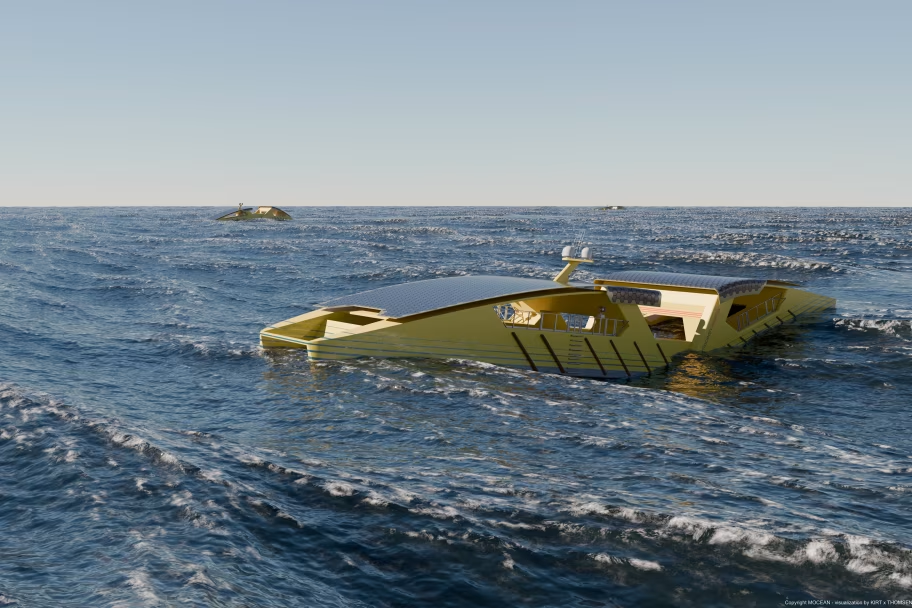
• Growing opposition to land-based AI data centers is pushing developers toward offshore facilities that could reduce neighborhood conflicts and demands on local electricity and freshwater supplies.
• Companies are exploring wave-powered floating platforms and tidal-powered underwater computing facilities, while China has already placed commercial underwater data centers into operation.
• Offshore development faces significant obstacles involving construction costs, corrosion, maintenance, severe weather, environmental protection and the commercial viability of ocean-generated electricity.
Facing growing resistance to artificial intelligence data centers on land, developers are exploring floating platforms and submerged facilities that use seawater for cooling and potentially generate electricity from ocean waves or tides. The proposals seek to ease concerns about neighborhood development, electricity demand and freshwater consumption. Panthalassa is developing wave-powered computing platforms, while DeepGreen has proposed a tidal-powered underwater project near Eastport, Maine. These concepts face questions about engineering, financing and environmental approvals.
Some offshore technology has moved beyond proposals. A wind-powered underwater data center near Shanghai entered commercial operation in 2026, demonstrating one approach to cooling servers with seawater. However, many American projects remain experimental. Saltwater corrosion, severe weather, maintenance expenses, connections to communications networks and potential effects on marine ecosystems complicate deployment. Previous underwater experiments also showed that technical success does not necessarily establish commercial viability, leaving developers to demonstrate that offshore computing can compete economically with conventional facilities.
Why It Matters
The offshore push reveals a basic reality about America’s artificial intelligence expansion: computing infrastructure cannot grow indefinitely without considering the communities paying for supporting roads, utilities and water systems. Moving servers offshore could give developers new options while reducing conflicts over industrial construction near homes. But shifting facilities beyond the shoreline should not become a way to sidestep scrutiny or transfer costs to taxpayers and electricity customers.
The commercial test should be straightforward. Developers must demonstrate reliable performance, competitive costs, responsible environmental management and clear benefits for customers and surrounding communities. Public officials should examine coastal permitting, maritime safety and potential harm to fishing grounds and marine wildlife without automatically rejecting technological innovation. China’s operational projects also raise competitive questions for American industry. If private investment can make offshore computing practical, the United States stands to benefit. If the economics fail, subsidies and political enthusiasm should not disguise that outcome.
Sources
• https://www.wsj.com/tech/ai/data-centers-ocean-f676429a
• https://www.fastcompany.com/91591381/underwater-data-centers-sustainable-ai-infrastructure