

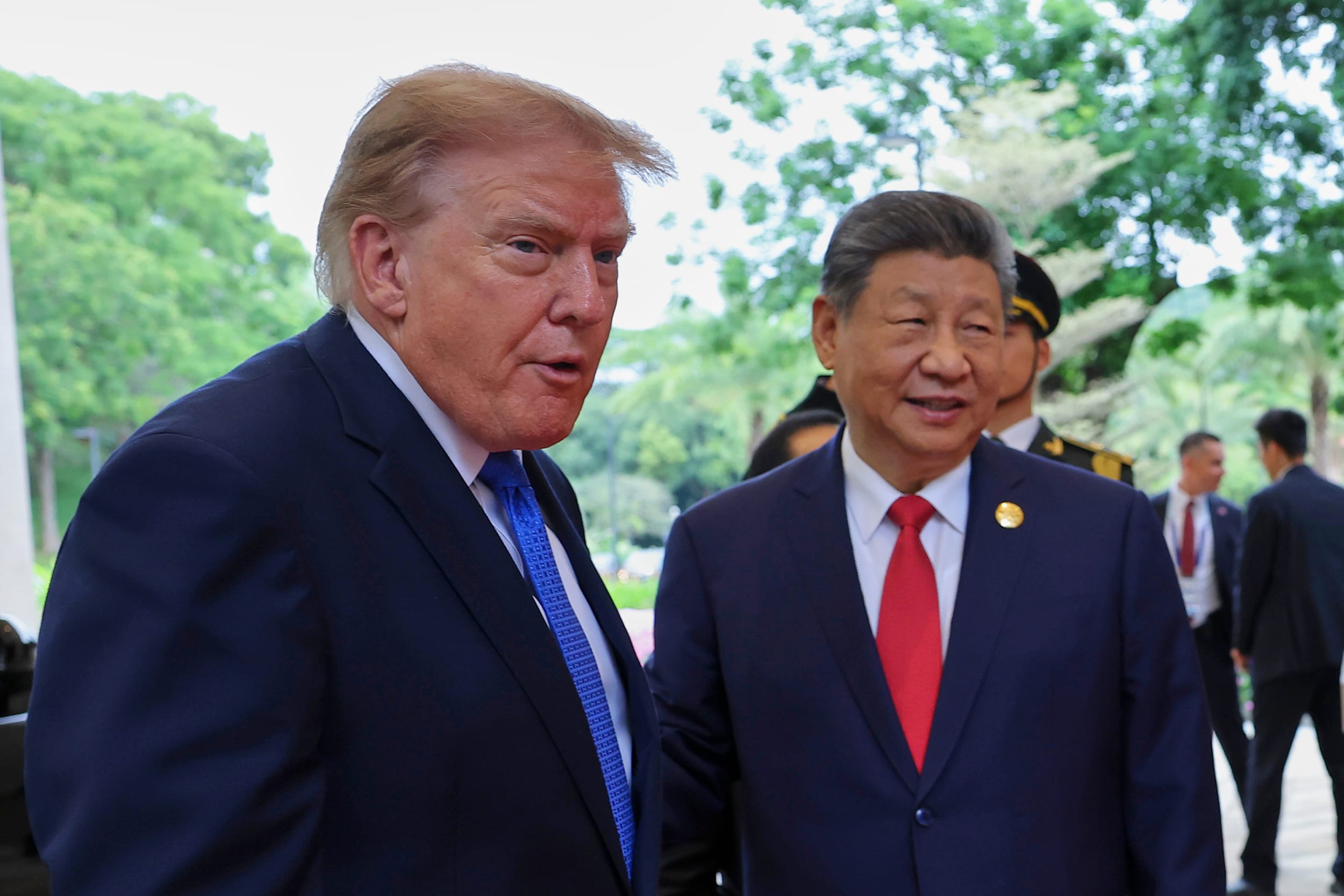
• President Donald Trump and Chinese President Xi Jinping agreed that human oversight must remain essential in major military decisions involving artificial intelligence.
• Treasury Secretary Scott Bessent said autonomous AI systems should not independently initiate major military operations, despite intensifying competition between Washington and Beijing.
• The understanding comes amid expanding Chinese military capabilities, nuclear security concerns and stalled international efforts to establish binding restrictions on autonomous weapons.
President Donald Trump and Chinese President Xi Jinping agreed that humans should remain involved in major military decisions using artificial intelligence, Treasury Secretary Scott Bessent said Friday. The understanding emerged from their meeting in Shenzhen, China, where the leaders discussed technological competition and security. Bessent said autonomous systems should not independently initiate major military operations, even as Washington and Beijing compete for dominance in AI. Trump separately confirmed discussions about joint safeguards but provided few details about how either country would implement them.
The agreement comes amid concern over autonomous weapons and China’s expanding military capabilities. Trump also participated in nuclear security discussions with Xi and Russian President Vladimir Putin, with the three leaders supporting dialogue on reducing nuclear risks. Meanwhile, international negotiations over binding restrictions on autonomous weapons remain unresolved. The emerging challenge is translating political commitments into workable safeguards without surrendering technological advantages or weakening national defense readiness.
Why It Matters
Keeping human judgment at the center of military decisions is a requirement of accountable national defense. Artificial intelligence can accelerate intelligence analysis and battlefield response, but allowing software to independently authorize major operations would introduce uncertainty into decisions involving American lives, military force and potentially nuclear escalation.
Trump’s understanding with Xi offers a starting point for limiting those risks without conceding America’s competitive edge. Washington must insist on enforceable definitions, oversight and clear responsibility for any use of autonomous systems. Verbal assurances from Beijing cannot substitute for verification, especially as China expands its military and technological capabilities.
The diplomatic stalemate demonstrates why declarations alone are insufficient. Nations remain reluctant to accept binding limits that competitors might disregard. American policymakers therefore face a dual obligation: retain superiority in military AI while ensuring commanders, not algorithms, exercise authority over consequential uses of force. Preserving both principles will require vigilance, transparency and investment.
Sources
• https://apnews.com/article/trump-xi-china-nuclear-weapons-286391edaacc7e8544dc0dc023e253fb
• https://apnews.com/article/un-drones-robots-un-lethal-ai-weapons-ebe057d2a47cde53100970c8f648e7fa