

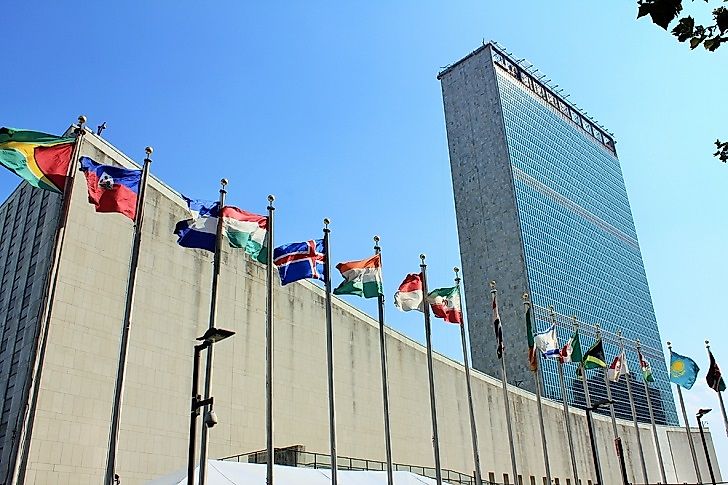
• United Nations negotiations in Geneva failed to establish binding international restrictions on artificial intelligence-powered autonomous weapons, extending discussions until 2028.
• Russia and the United States faced criticism for resisting stronger commitments, highlighting growing divisions over military technology, national security and international oversight.
• Autonomous weapons capable of selecting and attacking targets without direct human intervention raise concerns about civilian casualties, military accountability and the future of warfare.
United Nations negotiations in Geneva concluded Nov. 21 without an agreement to establish legally binding restrictions on artificial intelligence-powered autonomous weapons, commonly called killer robots. Participating nations instead agreed to continue developing a possible regulatory framework through 2028, falling short of international efforts to establish enforceable safeguards. The discussions involved 128 countries participating in the Convention on Certain Conventional Weapons, where consensus requirements allow individual nations to block agreements. Russia led opposition to stronger commitments, while the United States also resisted binding restrictions that could limit military technological development.
The failed negotiations underscore growing tensions between national defense priorities and international efforts to regulate increasingly autonomous military systems. Seven countries, including Brazil, Austria and Mexico, had proposed formal negotiations toward stronger controls. Humanitarian organizations warned that weapons capable of independently identifying and attacking targets could undermine accountability and civilian protections. Meanwhile, military powers remain reluctant to surrender strategic advantages as artificial intelligence transforms modern warfare.
Why It Matters
The failure to establish binding international rules governing autonomous weapons exposes a fundamental conflict between national sovereignty, military superiority and global regulatory ambitions. Artificial intelligence increasingly influences battlefield decisions, raising legitimate questions about whether machines should independently determine when lethal force is justified.
For the United States, maintaining technological superiority over adversaries such as Russia and China remains a critical national security consideration. International agreements that restrict American military capabilities without reliable verification and enforcement could create strategic disadvantages, particularly when rival powers demonstrate little willingness to accept meaningful limitations.
Nevertheless, preserving human accountability in lethal military decisions is essential to responsible warfare. Autonomous systems introduce risks involving mistaken targeting, unpredictable behavior and civilian casualties. Governments must balance battlefield innovation against established obligations under international humanitarian law.
The extension of negotiations until 2028 leaves these questions unresolved while military technology advances. Effective safeguards will require enforceable standards that protect civilians without compromising legitimate national defense requirements.