

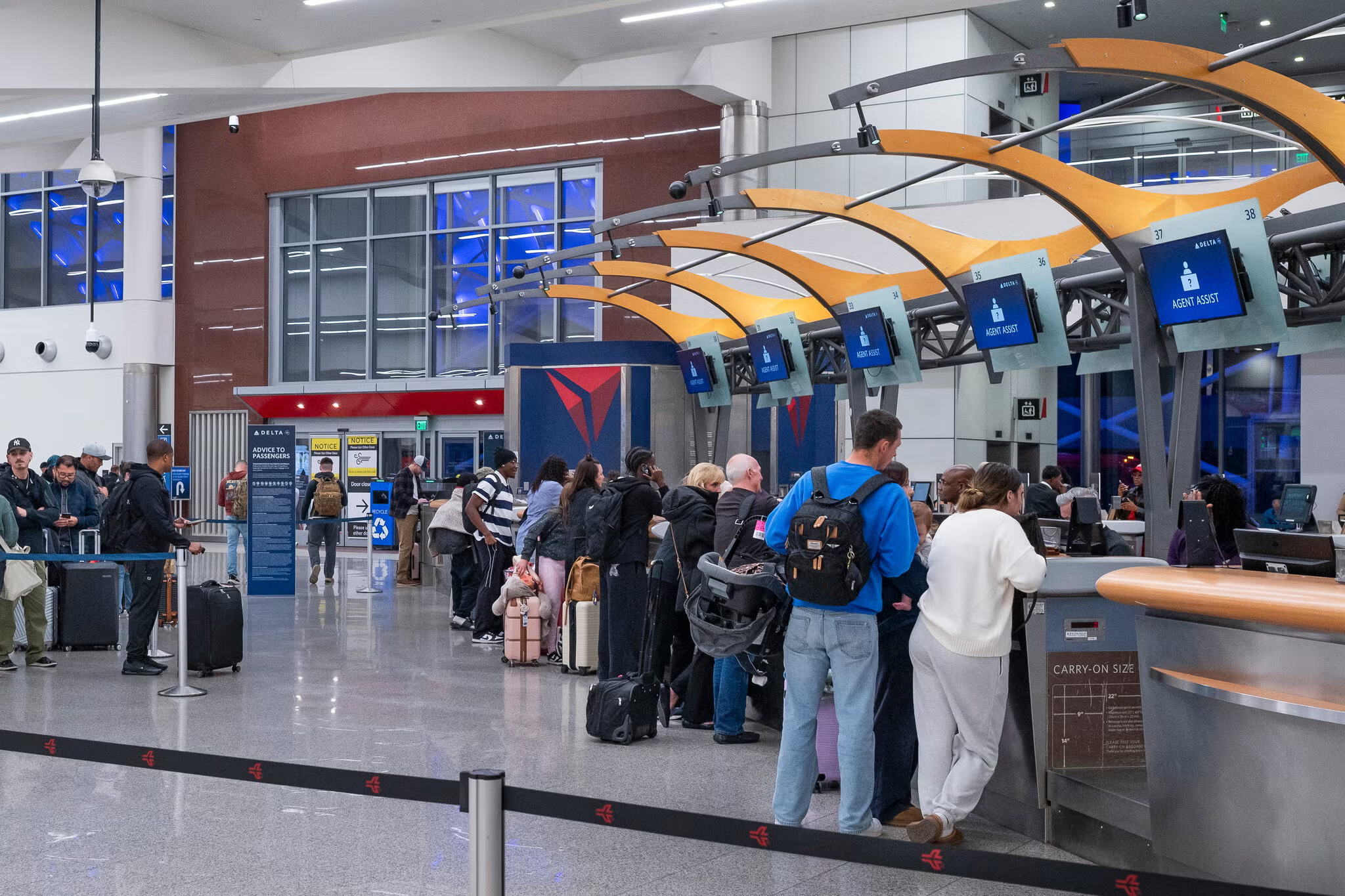
• A malfunction in Delta Air Lines’ aircraft weight and balance automation system disrupted thousands of flights nationwide Nov. 22, causing widespread delays and cancellations.
• The FAA temporarily halted Delta flights bound for Atlanta, while airline employees used manual procedures to maintain safe departures until automated systems were restored.
• The outage exposed vulnerabilities in airline technology infrastructure during Thanksgiving travel, following separate disruptions involving federal aviation systems and another major carrier.
A failure in Delta Air Lines’ automated aircraft weight and balance system disrupted flights Sunday, Nov. 22, as millions of Americans prepared for Thanksgiving travel. The malfunction affected calculations that determine whether aircraft are safely loaded for departure. At Delta’s request, the Federal Aviation Administration halted flights bound for Hartsfield-Jackson Atlanta International Airport before replacing the ground stop with a delay program. Federal officials said the problem did not involve FAA air traffic control systems.
Delta employees used manual procedures to calculate loads while technicians restored automation. The airline said the system was functioning again Sunday afternoon, but disruptions continued into the evening. Flight tracking figures showed roughly 2,000 Delta flights delayed, representing more than half its schedule, alongside cancellations. Delta attributed 70% of its schedule disruptions to the technical problem, with weather accounting for others. The carrier offered passengers rebooking assistance, refunds for canceled flights and accommodations where needed.
Why It Matters
The Delta outage highlights how heavily America’s aviation system depends on technology that passengers see. Weight and balance calculations are essential safety checks, not optional paperwork. Yet the failure of one automated process can disrupt thousands of itineraries, strand families and impose unexpected costs on travelers who have paid for dependable transportation.
The incident also followed technology disruptions involving federal aviation systems and another airline. Although those failures were not established as connected, their timing raises questions about redundancy, maintenance and preparedness. Airlines and regulators should demonstrate that critical systems have tested backup procedures and that employees can deploy them without disruption.
Travelers deserve clear explanations, timely refunds when flights are canceled and updates rather than vague assurances. With Thanksgiving traffic increasing pressure on airports, reliable infrastructure and transparent corporate accountability are necessities. Protecting flight safety must remain paramount, but technological resilience should be treated as equally serious operational responsibility.
Sources
• https://www.cnn.com/2026/11/22/us/delta-airlines-ground-delay
• https://apnews.com/article/delta-atlanta-flight-delays-d4bdb732da930205ec3453d35c28daa2
• https://www.ajc.com/business/2026/11/delta-delays-thanksgiving-atlanta/