

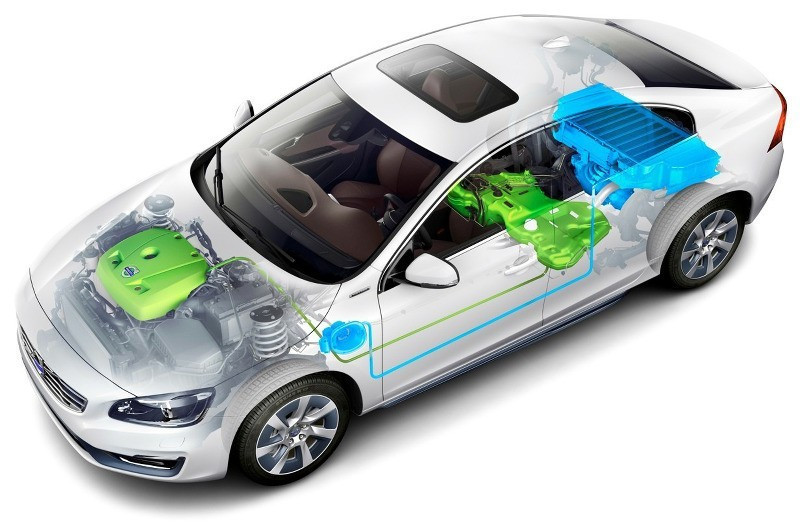
Volvo today revealed plans to produce a next-generation hybrid—specifically an extended-range electric vehicle (EREV)—in the United States, built at its South Carolina Ridgeville/Charleston facility no later than 2030. The automaker frames this as part of a shift in thinking: the EREV will behave mostly like a pure electric vehicle, but with a small gasoline generator that recharges the battery to alleviate range anxiety. This move comes as Volvo contends with declining EV sales, expiring U.S. federal tax credits, and pressure from import tariffs. To support it, Volvo is anchoring the plan with a $1.3 billion investment to expand capacity and aims to boost its U.S. plant output by 50 percent over five years. While Volvo had earlier committed to going fully electric by 2030, today’s announcement signals that the transition will be slower, and hybrids will remain part of its portfolio for now.
Sources: Car & Driver, Reuters
Key Takeaways
– Volvo is repositioning: rather than rushing to all-electric, it’s embracing hybrid bridge tech by building U.S.-made EREVs to balance performance, range, and market realities.
– The South Carolina plant is central to the strategy, with massive investment and capacity expansion planned to support new hybrid and other vehicle lines.
– Broader context: the decision reflects pressure from U.S. import tariffs, softening EV demand, and the impending expiration of federal EV tax credits.
In-Depth
Volvo’s announcement marks a pragmatic recalibration in its electrification strategy. The automaker is not walking away from EVs—but it’s acknowledging that transitioning too rapidly from internal combustion to battery-only models may be ill-suited to current market dynamics. What it’s proposing instead is a “second generation” of hybrids—extended-range electric vehicles (EREVs)—that behave like EVs with a small gasoline engine acting purely as a backup generator to recharge the battery on the go. In Volvo’s view, this helps ease customers’ range anxiety without fully tethering the brand to combustion engines.
It’s significant that Volvo is committing to build this technology in the U.S.—specifically at its Ridgeville/Charleston, South Carolina facility. That plant already produces the EX90 and Polestar 3, and Volvo intends to add XC60 production there in late 2026. The plan calls for a $1.3 billion investment and aims to increase output by 50 percent over five years, targeting utilization of the factory’s full 150,000-vehicle annual capacity. The new EREV is slated to join the lineup before 2030, tailored for American families and likely configured as a three-row SUV to compete in high-demand segments.
From a political and economic perspective, this strategy addresses headwinds facing Volvo. Import tariffs imposed under the Trump administration have eaten into profitability for brands that export vehicles to the U.S. market. Producing more models domestically helps insulate Volvo from those duties. Meanwhile, demand for pure EVs reflects a plateau in some markets, particularly as federal EV tax credits are expiring—removing incentives and putting pressure on automakers to offer hybrid alternatives. Several other manufacturers (Ford, Hyundai, Nissan, Ram, Scout) are reportedly exploring or rolling out EREV programs, signaling a broader industry pivot.
Volvo had previously targeted a full transition away from combustion by 2030, but that timeline is now being pushed outward or softened. The hybrid-first posture signals a willingness to remain flexible and responsive rather than dogmatically committed to a single path. The efficacy of this move will depend on whether Volvo can deliver EREVs with compelling performance, acceptable cost, and reliability—and whether the market receives them rather than continuing to favor full EVs or traditional hybrids. Still, today’s announcement offers a window into how legacy auto brands may recalibrate their electric strategies to straddle both innovation and risk mitigation.