

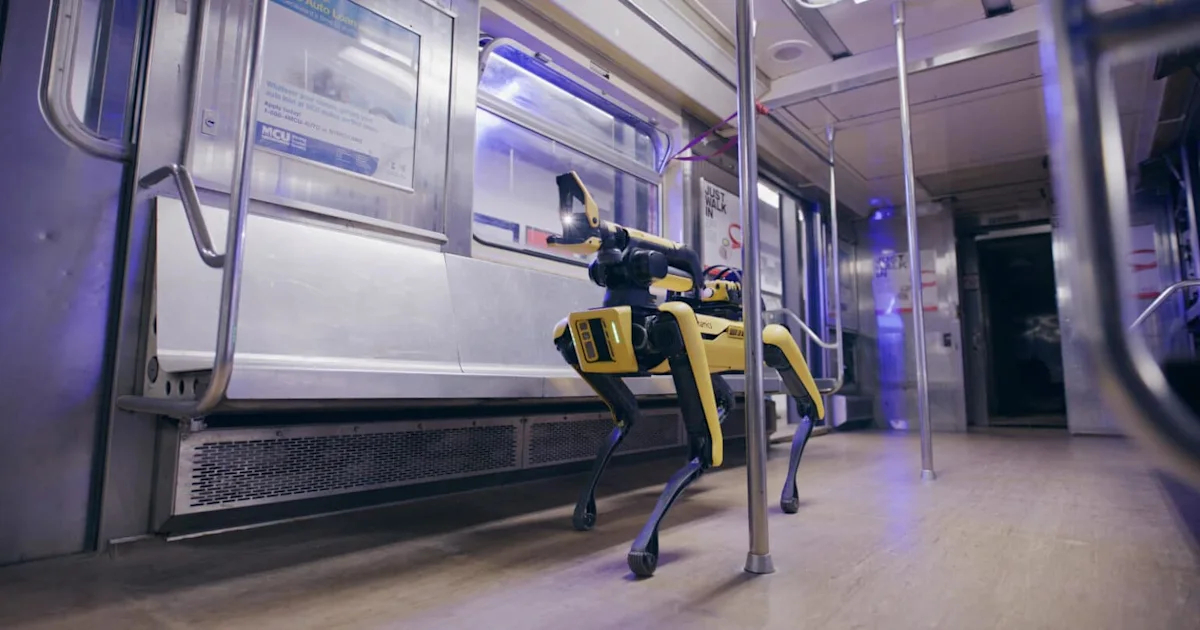
Artificial intelligence is rapidly moving from the computer screen into the physical world, and one of its most promising applications may be found in law enforcement. AI-assisted robotic dogs—four-legged machines capable of navigating stairs, debris, buildings, tunnels, and other difficult terrain—offer police agencies something they have always needed but rarely possessed: the ability to send technology into danger before sending a human being.
That should be viewed as progress.
Law enforcement has always benefited from technologies that allow officers to do their jobs more safely and effectively. Radios improved communication. Body armor reduced fatalities. Helicopters provided aerial surveillance. Bomb-disposal robots allowed technicians to examine explosives from a distance. Body cameras created additional documentation of police encounters. AI-powered robotic dogs represent another step in that technological evolution.
Their greatest advantage is straightforward: machines are replaceable. Police officers, firefighters, emergency personnel, and innocent civilians are not.
Consider an armed suspect barricaded inside a building. Officers may have limited information about his location, whether additional weapons are present, whether hostages are inside, or whether the suspect is preparing an ambush. Historically, obtaining that information could require officers to physically enter the structure and expose themselves to potentially lethal danger.
A robotic dog equipped with cameras, microphones, thermal imaging, environmental sensors, and artificial intelligence could enter first.
Rather than replacing police officers, the machine could provide them with better information before they make critical decisions. Officers could determine the layout of the building, locate individuals, identify potential hazards, and communicate with suspects without immediately placing themselves in harm’s way.
The same principle extends far beyond barricade situations.
Robotic dogs could enter buildings where explosives are suspected, inspect suspicious packages, search unstable structures following natural disasters, navigate tunnels, examine hazardous-material scenes, assist firefighters, locate missing persons, and conduct reconnaissance during active-shooter incidents. They could operate in smoke, darkness, extreme temperatures, contaminated environments, or other conditions that would place human responders at unnecessary risk.
Artificial intelligence makes these machines considerably more useful than traditional remotely controlled robots.
Instead of requiring an operator to manually control every movement, AI can help a robotic dog maintain balance, recognize obstacles, map unfamiliar environments, select safe routes, and process information from multiple sensors simultaneously. That allows officers to concentrate on the broader emergency rather than spending every second controlling the machine’s individual movements.
This is precisely the type of artificial intelligence government should embrace: technology that enhances human capability rather than replacing human judgment.
There will inevitably be concerns about surveillance, privacy, and the potential misuse of increasingly sophisticated robotic systems. Those concerns deserve consideration, but they should not become excuses for preventing police departments from adopting technology capable of saving lives.
The United States already possesses extensive constitutional and legal protections governing searches, seizures, warrants, surveillance, and police conduct. The deployment of a robotic dog does not erase the Fourth Amendment simply because the officer’s camera happens to have four mechanical legs.
The governing principle should be relatively simple: technology should enhance lawful police capabilities, not manufacture new governmental powers that did not previously exist.
If police would legally be permitted to enter a particular location, using a robot to enter first may actually be the more responsible choice. If officers require a warrant to conduct a particular search, deploying an AI-equipped machine should not eliminate that requirement. Existing constitutional protections can provide the foundation for regulating these systems without unnecessarily restricting their legitimate use.
There is also an important fiscal and practical argument for embracing the technology.
Training an experienced police officer requires substantial public investment. Losing that officer to an ambush, explosive device, hazardous chemical, collapsing structure, or other preventable danger carries an enormous human cost to families, departments, and communities. If a robotic system costing tens or even hundreds of thousands of dollars can prevent the death or permanent disability of a first responder, the investment can be remarkably easy to justify.
Americans should also recognize the larger technological implications.
China and other strategic competitors are aggressively developing artificial intelligence, robotics, autonomous systems, drones, and advanced surveillance technologies. The United States cannot maintain technological leadership by becoming afraid of deploying emerging technologies whenever ethical questions arise. The better approach is to develop them, establish sensible rules for their use, and demonstrate that advanced technology can operate within constitutional government.
Weaponization deserves a higher level of scrutiny, particularly where autonomous lethal force is concerned. Decisions involving deadly force should remain under meaningful human control. But that issue should not overshadow the overwhelmingly nonlethal applications for robotic law-enforcement systems.
A robotic dog does not need a weapon to be enormously valuable.
Its greatest weapon may simply be information.
Knowing that a suspect is waiting behind a doorway can save an officer’s life. Discovering an explosive before a bomb technician approaches it can prevent a tragedy. Finding an unconscious child inside a burning or unstable building can accelerate a rescue. Detecting hazardous chemicals before firefighters or police enter an area can protect an entire emergency-response team.
Those are not dystopian applications of artificial intelligence. They are practical uses of technology to protect human beings.
There is an understandable tendency to view unfamiliar law-enforcement technologies through the lens of their worst theoretical possibilities. But public policy cannot be constructed entirely around what technology might someday be abused to accomplish. Automobiles can be abused. Cameras can be abused. Computers can be abused. Drones can be abused. The proper response is accountability for misuse, not rejection of useful technology.
AI-powered robotic dogs should be judged by the same standard.
Law enforcement agencies should establish clear policies, maintain human responsibility for consequential decisions, protect constitutional rights, and provide appropriate oversight. Within those boundaries, however, departments should be encouraged—not discouraged—to experiment with technologies that can make policing safer and more effective.
A conservative approach to government does not require hostility toward technological innovation. It requires ensuring that government exercises its legitimate responsibilities effectively while remaining accountable to the people.
Protecting communities and protecting the men and women asked to police them are unquestionably legitimate responsibilities.
If an AI-powered machine can walk through the dangerous doorway first, inspect the suspicious package, enter the contaminated building, locate the armed suspect, or search the collapsed structure, there is little reason to insist that a human being assume that risk instead.
Robot dogs are not a threat to good policing.
Used properly, they may become one of the most valuable tools modern police officers have ever been given.