

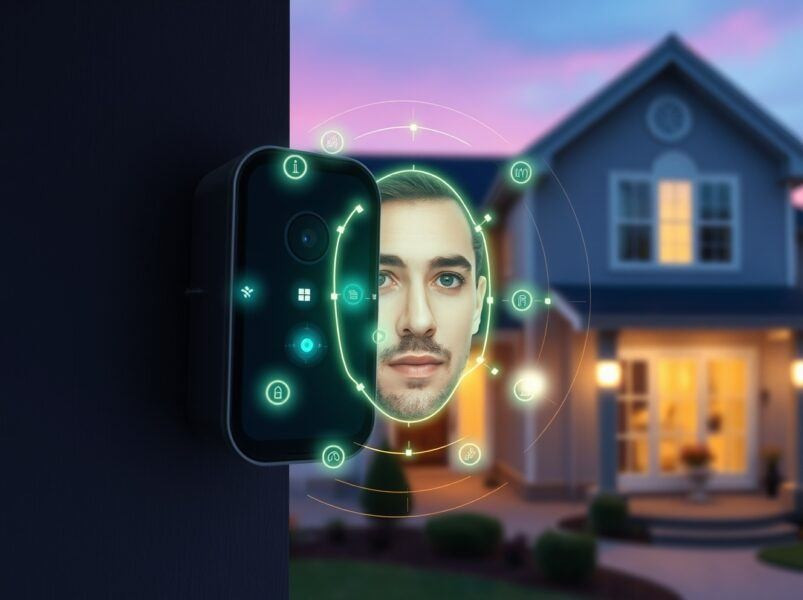
Amazon has begun rolling out an optional AI-powered facial recognition feature called “Familiar Faces” for its Ring video doorbells in the United States, which lets users label and track up to 50 familiar individuals — such as family members, friends, neighbors, or regular delivery drivers — so they receive personalized notifications instead of generic motion alerts. The rollout, disabled by default and requiring manual opt-in, has sparked criticism from privacy advocates and lawmakers who argue the technology creates new surveillance risks and captures biometric data from people who never consented to be cataloged. Amazon says the data is encrypted, never shared, and that unnamed faces are purged after 30 days, but concerns over law enforcement access and broader biometric privacy remain central to the debate.
Sources: Tech Republic, Stuff.tv
Key Takeaways
– Ring’s “Familiar Faces” feature uses AI to let homeowners label and personalize alerts for recurring visitors, but critics warn it could normalize biometric surveillance.
– The feature is optional and disabled by default; Amazon asserts encryption and limited data retention policies to address privacy concerns.
– Lawmakers and privacy groups are pushing back, highlighting potential misuse, involuntary data capture, and complications with existing biometric privacy laws.
In-Depth
Amazon’s expansion of AI capabilities into its Ring line of smart doorbells has pushed the company into the spotlight again, reigniting debates over how far convenience-oriented technology should go when it comes to identifying people by their faces. The newly introduced “Familiar Faces” feature enables Ring owners to create a catalog of up to 50 people by manually labeling them in the Ring app. Once someone is labeled, Ring’s AI recognizes that person and sends a personalized notification such as “Mom at front door,” replacing the generic motion alerts that many smart home devices have relied on until now.
Amazon pitches this update as a useful way for users to reduce redundant alerts and improve situational awareness around their homes — valuable for families who want to differentiate between the neighbors, friends, or delivery personnel who come by regularly. The feature is not activated automatically; users must intentionally opt in and manually enter names for familiar faces. The company has also stated that unlabeled faces will be automatically removed after 30 days, and that the biometric information involved is encrypted to safeguard privacy.
Despite these assurances, the rollout has not been free of controversy. Privacy advocates, including digital rights organizations, have expressed concern about the broader implications of normalizing facial recognition in residential settings. Central to those worries is the idea that capturing and storing biometric identifiers — even with user consent — can creep beyond personal use cases into more intrusive territory, potentially affecting neighbors, passersby, or other individuals who never agreed to be identified or logged.
Lawmakers have also added their voices to the conversation. Some state regulators have restricted the launch of the feature in jurisdictions with stringent biometric privacy laws, reflecting ongoing unease about unchecked surveillance technologies. Critics point to Amazon’s past interactions with law enforcement and history of privacy issues as reasons to scrutinize this new capability closely.
On the flip side, proponents of smart security innovation argue that such features, when implemented transparently and with clear opt-in mechanisms, offer practical benefits that match consumer demand for smarter devices. For frequent users of Ring or similar systems, personalized notifications can deliver clearer, more actionable information than generic alerts, which often blur the line between meaningful and trivial events.
The tension highlights the wider challenge facing technology companies today: balancing the deployment of advanced AI-driven features with respect for individual privacy rights and public trust. As tools like Ring’s facial recognition spread, the debate over appropriate limits, consent mechanisms, and regulatory guardrails is likely to intensify. Consumers, policymakers, and advocates alike will be watching closely to see whether convenience outweighs potential privacy costs — or whether new safeguards need to be put in place to ensure that biometric technologies serve users without compromising their fundamental rights.