

Close Menu

    Subscribe to Updates

    Get the latest tech news from Tallwire.

      What's Hot

      Artemis II Splashdown Signals A Step Closer to Mass Space Travel

      April 12, 2026

      Anthropic Code Leak Raises Questions About AI Security and Industry Oversight

      April 8, 2026

      NASA Astronauts Use iPhones to Capture Historic Artemis II Mission Images

      April 8, 2026
      Facebook X (Twitter) Instagram
      • Tech
      • AI
      • Get In Touch
      Facebook X (Twitter) LinkedIn
      TallwireTallwire
      • Tech

        NASA Astronauts Use iPhones to Capture Historic Artemis II Mission Images

        April 8, 2026

        OpenAI Expands Influence With Strategic TBPN Media Acquisition

        April 8, 2026

        Cybersecurity Veteran Turns Focus To Drone Hacking After Decades Battling Malware

        April 6, 2026

        Anonymous Social App Surges In Saudi Arabia, Testing Limits Of Digital Freedom

        April 6, 2026

        Peter Thiel’s Bold Ag-Tech Gamble Signals High-Tech Disruption of Traditional Ranching

        April 6, 2026
      • AI

        Anthropic Code Leak Raises Questions About AI Security and Industry Oversight

        April 8, 2026

        The Rise Of Agentic AI Signals A Shift From Tools To Autonomous Digital Actors

        April 8, 2026

        AI Chatbots Draw Scrutiny As Teens Engage In Intimate Roleplay And Emotional Dependency

        April 8, 2026

        Ai-Powered Startup Signals Rise Of One-Person Billion-Dollar Companies

        April 8, 2026

        OpenAI Secures Historic $122 Billion Funding Round at $852 Billion Valuation

        April 7, 2026
      • Security

        Anthropic Code Leak Raises Questions About AI Security and Industry Oversight

        April 8, 2026

        DeFi Platform Drift Halts Operations After Multi-Million Dollar Crypto Hack

        April 7, 2026

        Fake WhatsApp App Exposes Users To Government Spyware Operation

        April 7, 2026

        ICE Deploys Controversial Spyware Tool In Drug Trafficking Investigations

        April 7, 2026

        Telehealth Firm Discloses Breach Amid Rising Digital Health Vulnerabilities

        April 6, 2026
      • Health

        European Crackdown Targets Social Media’s Impact on Children

        April 8, 2026

        AI Chatbots Draw Scrutiny As Teens Engage In Intimate Roleplay And Emotional Dependency

        April 8, 2026

        Australia Moves To Curb Social Media Addiction Among Youth With Expanded Under-16 Ban

        April 5, 2026

        Australia’s eSafety Regulator Warns Big Tech As Teens Circumvent Social Media Restrictions

        April 5, 2026

        Meta Finally Held Accountable For Harming Teens, But Real Reform Remains Uncertain

        April 2, 2026
      • Science

        Artemis II Splashdown Signals A Step Closer to Mass Space Travel

        April 12, 2026

        Peter Thiel’s Bold Ag-Tech Gamble Signals High-Tech Disruption of Traditional Ranching

        April 6, 2026

        White House Tech Advisor David Sacks Steps Down To Lead Presidential Science Advisory

        March 31, 2026

        Blue Origin’s Orbital Data Center Push Signals New Frontier in Tech Infrastructure

        March 27, 2026

        Quantum Cryptography Pioneers Awarded Computing’s Highest Honor

        March 25, 2026
      • Tech

        Peter Thiel’s Bold Ag-Tech Gamble Signals High-Tech Disruption of Traditional Ranching

        April 6, 2026

        Zuckerberg Quietly Offers Musk Support As Tech Titans Align Around Government Power

        April 4, 2026

        White House Tech Advisor David Sacks Steps Down To Lead Presidential Science Advisory

        March 31, 2026

        Another Billionaire Signals Exit As California’s Taxes Drives Out High-Profile Entrepreneurs

        March 28, 2026

        Bezos Eyes $100 Billion War Chest To Rewire Legacy Industry With AI

        March 28, 2026
      TallwireTallwire
      Home»Tech»Samsung and Google launch $1,799 “all-in-one” headset to challenge Apple
      Tech

      Samsung and Google launch $1,799 “all-in-one” headset to challenge Apple

      Updated:February 21, 20266 Mins Read
      Facebook Twitter Pinterest LinkedIn Tumblr Email
      Samsung and Google launch $1,799 “all-in-one” headset to challenge Apple
      Samsung and Google launch $1,799 “all-in-one” headset to challenge Apple
      Share
      Facebook Twitter LinkedIn Pinterest Email

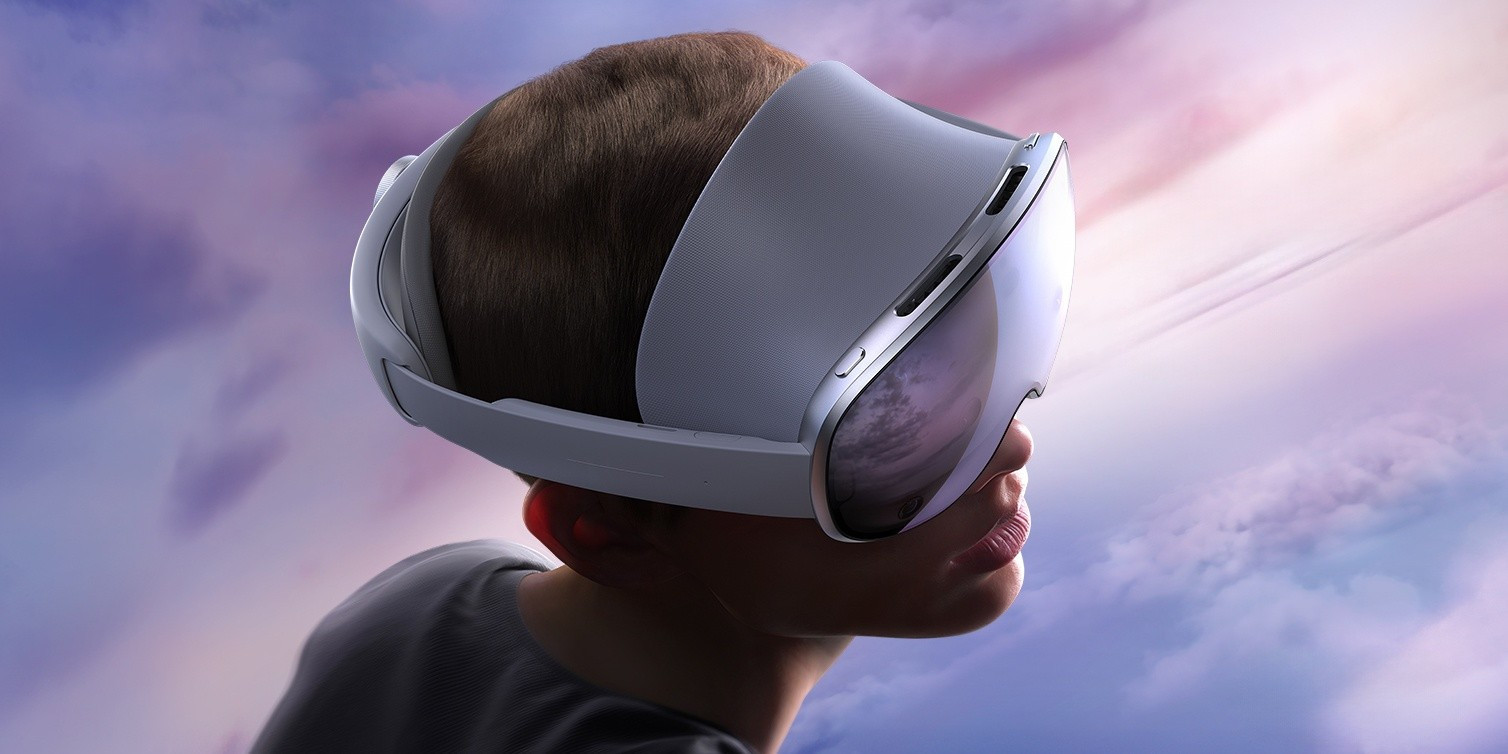
      In a bold move, Samsung and Google today unveiled the new headset called “Galaxy XR,” priced at US $1,799, which the companies say is designed to replace multiple devices by combining mixed reality (XR) features powered by the new Android XR operating system. According to multiple reports, the headset is the first device built on Android XR, bringing together immersive displays, hand and eye tracking, a Snapdragon XR2+ Gen 2 chip, and deep integration of Google’s Gemini AI assistant, marking a clear challenge to Apple‘s Vision Pro in the premium XR space. The collaboration positions Samsung as the hardware lead and Google as the software/AI force, with the intent to turn XR from niche into mainstream.

      Sources: Wired, Android Central

      Key Takeaways

      – Samsung and Google’s partnership on Android XR and the Galaxy XR marks a strategic push to bring extended-reality computing into the everyday device ecosystem rather than keeping it niche.

      – At US $1,799 the Galaxy XR undercuts Apple’s Vision Pro (~US $3,499) and positions itself as a more affordable premium headset, but remains expensive and clearly aimed at early adopters.

      – The device emphasizes productivity and immersive computing (multiple virtual screens, app integration, hand/eye tracking) as much as entertainment, indicating XR is being pitched as a device that could replace laptops or monitors, not just games.

      In-Depth

      In the shifting landscape of tech hardware, it’s every bit as important who partners with whom as it is what the specs say. The new Galaxy XR by Samsung—and powered by Google’s Android XR platform—is not just another headset. It’s a statement. With a retail price of US $1,799, Samsung and Google are clearly telling the market: XR isn’t a niche gadget anymore—it’s a potential next-generation computing platform. And rather than fighting the battle alone, they’re combining Samsung’s hardware muscle with Google’s software and AI ecosystem.

      Android XR, the new OS underpinning the device, brings the familiar environment of Android apps to an immersive, spatial computing format—meaning your productivity apps, browser windows, video calls, and entertainment can all exist around you in 3-D space. The Galaxy XR uses advanced displays (micro-OLED, high refresh), eye tracking, hand tracking, and Google’s Gemini AI built in, enabling direct voice/gesture control and rapid context switching between tasks. This isn’t purely for games or novelty—it’s pitched as a replacement for multiple screens and computing sessions. In today’s world where many people juggle monitors, laptops, tablets, meetings and media at once, that message has serious gravitas.

      From a business perspective, the $1,799 price tag is telling. Yes—it’s still pricey, accessible mainly to early adopters or professionals—but it’s significantly less than Apple’s Vision Pro (around $3,499). That gap gives Samsung and Google room to claim value and a broader market ambition. They’re signaling that XR isn’t a closed luxury ecosystem; Android XR is being positioned as open and app-friendly, leveraging the long train of Android apps and Google services. That matters because one of the critiques of prior XR/AR devices has been a lack of ecosystem and practical use cases. With Google’s software experience and Samsung’s global reach, this could be a turning point.

      But let’s not ignore the conservative lens: launching a “replacement for everything” is a bold claim, and lofty promises often meet harsh realities. Battery life, comfort for extended wear, heat, ambient integration, real-world durability, enterprise support and the depth of compelling apps will all determine success. The fact that Samsung explicitly frames this as the first step—“just the beginning”—suggests that the current iteration may still be more suited to tech enthusiasts or enterprise pilots rather than mass-market consumers. The reality is, while price is lower than some rivals, $1,799 is still a serious investment and the device will need strong justification beyond geek cred.

      From a market tactical view, Samsung’s strategy to partner with Google is smart. Google has struggled with its XR hardware attempts (think Google Glass, Daydream) but remains deeply entrenched in software and AI. Samsung, meanwhile, has the manufacturing, branding, and distribution muscle. Bringing in Qualcomm‘s XR2+ chip adds the performance part of the story. Together, the triumvirate is better positioned to threaten Apple’s dominance in the premium space and perhaps draw in enterprise customers (who might use XR for training, design, remote collaboration) as well as forward-looking consumers.

      If this works, the implication is larger: we could be entering a computing era where the “display device” is no longer a flat screen in front of you, but a spatial environment around you—your browser windows, apps, dashboards all float around, you move your head or gaze to activate them, voice or gesture selects them. Your “desktop” becomes the room. That’s a radical shift. For developers, app makers, industries (manufacturing, training, remote work) this opens new possibilities — and competitive pressure on companies that haven’t yet seriously invested in XR.

      On the other hand, the device’s success is not guaranteed. VR/AR has seen many false starts over the past decade, with high hopes and limited consumer traction. How comfortable will everyday users be wearing a headset for hours? Are the use-cases compelling beyond novelty? Will developers invest enough to produce rich apps rather than ports? And will this device gain broader social acceptance (vs being seen as a gimmick)? These are real questions. Samsung and Google are making the right moves—open ecosystem, strong price positioning, high-end hardware—but all the pieces have to come together.

      In the broader conservative worldview, the collaboration underscores how two major multinational tech players are still seeking to define the next platform. It signals the continuing shift of computing power from desktop/laptop into wearable/immersive formats, and how control of the ecosystem (hardware + OS + apps + services) remains central. The move also raises questions about digital privacy, ecosystem lock-in (even if Android XR is more open than some alternatives), and the real return on investment for consumers. For companies and individuals looking to adopt, the question becomes: is this device replacing multiple gadgets for me? Or is it a premium gadget that adds novelty but rarely replaces anything substantial?

      In summary, the Galaxy XR and Android XR launch is a major moment. Samsung and Google are staking their claim in the XR arena, and the $1,799 device is the first shot. If developers, consumers and enterprises embrace the platform, we might see XR move from curiosity into category. If not, it may join the list of well-featured gadgets that failed to break wide. Either way, it’s one to watch.

      Apple Google Samsung
      Share. Facebook Twitter Pinterest LinkedIn Tumblr Email
      Previous ArticleSam Altman’s World (Formerly Worldcoin) Unveils New Super App With Messaging, Crypto & Identity Tools
      Next Article Samsung’s One UI 8.5 Leak Suggests It’ll Throttle Your Network to Save Battery

      Related Posts

      NASA Astronauts Use iPhones to Capture Historic Artemis II Mission Images

      April 8, 2026

      OpenAI Expands Influence With Strategic TBPN Media Acquisition

      April 8, 2026

      Cybersecurity Veteran Turns Focus To Drone Hacking After Decades Battling Malware

      April 6, 2026

      Anonymous Social App Surges In Saudi Arabia, Testing Limits Of Digital Freedom

      April 6, 2026
      Add A Comment
      Leave A Reply Cancel Reply

      Editors Picks

      NASA Astronauts Use iPhones to Capture Historic Artemis II Mission Images

      April 8, 2026

      OpenAI Expands Influence With Strategic TBPN Media Acquisition

      April 8, 2026

      Cybersecurity Veteran Turns Focus To Drone Hacking After Decades Battling Malware

      April 6, 2026

      Anonymous Social App Surges In Saudi Arabia, Testing Limits Of Digital Freedom

      April 6, 2026
      Popular Topics
      trending Software Sundar Pichai Ransomware spotlight UAE Tech Samsung Series A Tesla Tim Cook Robotics Quantum computing Taiwan Tech Viral Startup SpaceX Tesla Cybertruck Satya Nadella Series B Sam Altman
      Major Tech Companies
      • Apple News
      • Google News
      • Meta News
      • Microsoft News
      • Amazon News
      • Samsung News
      • Nvidia News
      • OpenAI News
      • Tesla News
      • AMD News
      • Anthropic News
      • Elbit News
      AI & Emerging Tech
      • AI Regulation News
      • AI Safety News
      • AI Adoption
      • Quantum Computing News
      • Robotics News
      Key People
      • Sam Altman News
      • Jensen Huang News
      • Elon Musk News
      • Mark Zuckerberg News
      • Sundar Pichai News
      • Tim Cook News
      • Satya Nadella News
      • Mustafa Suleyman News
      Global Tech & Policy
      • Israel Tech News
      • India Tech News
      • Taiwan Tech News
      • UAE Tech News
      Startups & Emerging Tech
      • Series A News
      • Series B News
      • Startup News
      Tallwire
      Facebook X (Twitter) LinkedIn Threads Instagram RSS
      • Tech
      • Entertainment
      • Business
      • Government
      • Academia
      • Transportation
      • Legal
      • Press Kit
      © 2026 Tallwire. Optimized by ARMOUR Digital Marketing Agency.

      Type above and press Enter to search. Press Esc to cancel.