

Close Menu

    Subscribe to Updates

    Get the latest tech news from Tallwire.

      What's Hot

      Artemis II Splashdown Signals A Step Closer to Mass Space Travel

      April 12, 2026

      Anthropic Code Leak Raises Questions About AI Security and Industry Oversight

      April 8, 2026

      NASA Astronauts Use iPhones to Capture Historic Artemis II Mission Images

      April 8, 2026
      Facebook X (Twitter) Instagram
      • Tech
      • AI
      • Get In Touch
      Facebook X (Twitter) LinkedIn
      TallwireTallwire
      • Tech

        NASA Astronauts Use iPhones to Capture Historic Artemis II Mission Images

        April 8, 2026

        OpenAI Expands Influence With Strategic TBPN Media Acquisition

        April 8, 2026

        Cybersecurity Veteran Turns Focus To Drone Hacking After Decades Battling Malware

        April 6, 2026

        Anonymous Social App Surges In Saudi Arabia, Testing Limits Of Digital Freedom

        April 6, 2026

        Peter Thiel’s Bold Ag-Tech Gamble Signals High-Tech Disruption of Traditional Ranching

        April 6, 2026
      • AI

        Anthropic Code Leak Raises Questions About AI Security and Industry Oversight

        April 8, 2026

        The Rise Of Agentic AI Signals A Shift From Tools To Autonomous Digital Actors

        April 8, 2026

        AI Chatbots Draw Scrutiny As Teens Engage In Intimate Roleplay And Emotional Dependency

        April 8, 2026

        Ai-Powered Startup Signals Rise Of One-Person Billion-Dollar Companies

        April 8, 2026

        OpenAI Secures Historic $122 Billion Funding Round at $852 Billion Valuation

        April 7, 2026
      • Security

        Anthropic Code Leak Raises Questions About AI Security and Industry Oversight

        April 8, 2026

        DeFi Platform Drift Halts Operations After Multi-Million Dollar Crypto Hack

        April 7, 2026

        Fake WhatsApp App Exposes Users To Government Spyware Operation

        April 7, 2026

        ICE Deploys Controversial Spyware Tool In Drug Trafficking Investigations

        April 7, 2026

        Telehealth Firm Discloses Breach Amid Rising Digital Health Vulnerabilities

        April 6, 2026
      • Health

        European Crackdown Targets Social Media’s Impact on Children

        April 8, 2026

        AI Chatbots Draw Scrutiny As Teens Engage In Intimate Roleplay And Emotional Dependency

        April 8, 2026

        Australia Moves To Curb Social Media Addiction Among Youth With Expanded Under-16 Ban

        April 5, 2026

        Australia’s eSafety Regulator Warns Big Tech As Teens Circumvent Social Media Restrictions

        April 5, 2026

        Meta Finally Held Accountable For Harming Teens, But Real Reform Remains Uncertain

        April 2, 2026
      • Science

        Artemis II Splashdown Signals A Step Closer to Mass Space Travel

        April 12, 2026

        Peter Thiel’s Bold Ag-Tech Gamble Signals High-Tech Disruption of Traditional Ranching

        April 6, 2026

        White House Tech Advisor David Sacks Steps Down To Lead Presidential Science Advisory

        March 31, 2026

        Blue Origin’s Orbital Data Center Push Signals New Frontier in Tech Infrastructure

        March 27, 2026

        Quantum Cryptography Pioneers Awarded Computing’s Highest Honor

        March 25, 2026
      • Tech

        Peter Thiel’s Bold Ag-Tech Gamble Signals High-Tech Disruption of Traditional Ranching

        April 6, 2026

        Zuckerberg Quietly Offers Musk Support As Tech Titans Align Around Government Power

        April 4, 2026

        White House Tech Advisor David Sacks Steps Down To Lead Presidential Science Advisory

        March 31, 2026

        Another Billionaire Signals Exit As California’s Taxes Drives Out High-Profile Entrepreneurs

        March 28, 2026

        Bezos Eyes $100 Billion War Chest To Rewire Legacy Industry With AI

        March 28, 2026
      TallwireTallwire
      Home»Tech»Virginia Lieutenant-Governor Race Sees GOP Candidate Stage AI “Debate” to Draw the Spotlight
      Tech

      Virginia Lieutenant-Governor Race Sees GOP Candidate Stage AI “Debate” to Draw the Spotlight

      5 Mins Read
      Facebook Twitter Pinterest LinkedIn Tumblr Email
      Virginia Lieutenant-Governor Race Sees GOP Candidate Stage AI “Debate” to Draw the Spotlight
      Virginia Lieutenant-Governor Race Sees GOP Candidate Stage AI “Debate” to Draw the Spotlight
      Share
      Facebook Twitter LinkedIn Pinterest Email

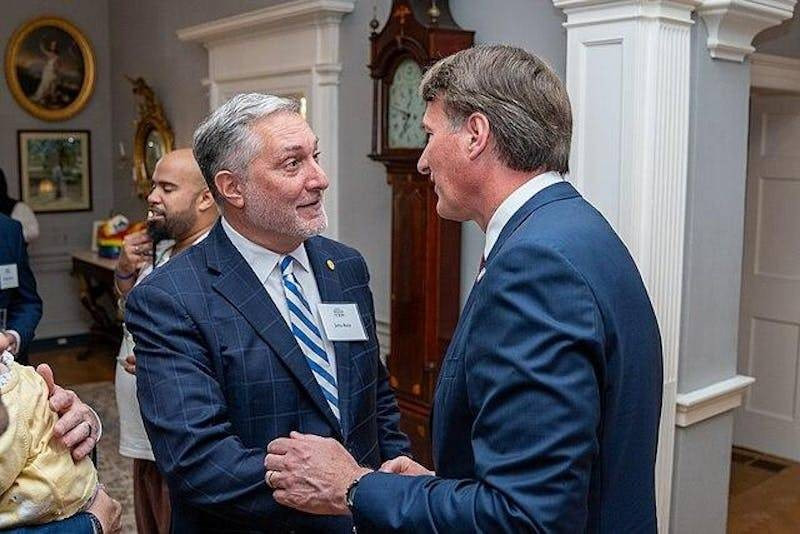
      In a novel move in the 2025 race for Virginia lieutenant governor, Republican candidate John Reid faced off in a staged 40-minute “debate” against an artificial-intelligence version of his Democrat opponent, State Senator Ghazala Hashmi—after she declined to participate in a traditional in-person forum. The event featured Reid at the podium responding to questions on minimum wage, electric vehicles and education, while a screen displayed Hashmi’s image and a robotic voice—trained on her public remarks—delivered pre-written responses. The campaign defended the stunt as fair representation, but critics blasted it as a “desperate,” gimmicky tactic that raises fresh questions about ethics and trust in political campaigning as AI tools increasingly enter electoral contests.

      Sources: Washington Post, FOX News

      Key Takeaways

      – The use of an AI-generated debate opponent marks a new frontier in campaign strategy, with candidates leveraging technology to claim the spotlight when the opponent refuses to engage.

      – While extremely attention-grabbing, the tactic carries risks—questions about authenticity, voter trust, and the propriety of mimicking an opponent’s voice and image via AI may undermine more than help.

      – This episode underscores that AI’s role in elections isn’t hypothetical anymore; political campaigns are already experimenting with synthetic media, forcing regulatory, ethical and transparency issues to the front of the political agenda.

      In-Depth

      The 2025 race in Virginia for lieutenant governor has taken an unconventional turn that underscores how emerging technologies are rapidly reshaping political tactics. Republican candidate John Reid opted to hold his own “debate” event after his Democratic rival, State Senator Ghazala Hashmi, declined invitations to appear on stage. Instead of backing down, Reid’s team created an AI-driven version of Hashmi, training a voice clone on her past statements and showing her image on a screen answering questions in a robotic tone. According to reporting, the questions spanned issues such as minimum wage, electric vehicles and education policy, while the AI responses were compiled by Reid’s campaign based on Hashmi’s public record.

      Meanwhile, other outlets reported that the stunt lasted approximately 40 minutes, and supporters of Hashmi’s campaign called the act a “shoddy gimmick” that may reflect desperation more than substance. (Source: Washington Post; Fox News) The strategic calculation appears clear: when your opponent won’t engage publicly, you change the terrain of engagement and double down on visibility. In that sense, the maneuver plays into the conservative playbook of forcing accountability and confronting silence—or what appears to be avoidance—by the opposition.

      From a rights-leaning vantage, the move can be interpreted in two ways. On one hand, it reveals creativity in bypassing what the candidate perceives as a refusal by the opponent to face voters directly—thus appealing to accountability, transparency and the notion that voters deserve access to answers, not ignoring. On the other hand, there’s the possibility that such theatrics could backfire, damaging the credibility of the candidate who employs them—especially if voters see the AI event as gimmicky or as a dodge rather than genuine engagement.

      Beyond the campaign itself, this event signals something broader: artificial intelligence is no longer a sideline novelty—it’s being actively integrated into how campaigns are run. The Washington Post notes that the incident “raises real questions about AI in politics” (Source: Governing) and analysts warn that deep-fake or voice-clone technologies could erode trust in the democratic process if not transparently disclosed and regulated. What happens when an opponent doesn’t just decline a debate, but is portrayed via synthetic media anyway? Are voters really hearing the opponent’s views—or a proxy curated by the other campaign?

      There are conservative implications worth noting. First, if AI allows for enhanced engagement and provides voters with the chance to see an opponent’s argument—even when that opponent won’t show up—then campaigns that aren’t afraid to challenge the status quo may benefit. It plays into a narrative of reform, accountability and disruption of “politics-as-usual.” But second, without guardrails and transparency, the risk is that such tactics become disingenuous, undermining trust not only in one candidate but in the process itself. Voters might increasingly ask: is what I’m seeing genuine or manufactured? That skepticism could hurt incumbents or challengers alike—and often hurts the establishment hardest.

      For the Virginia race, the timing is significant. Control of the lieutenant governor’s seat matters because of its tie-breaking power in the state Senate, so both sides are incentivized to leverage every advantage. (Source: Washington Post) The question now is whether this AI debate will shift voter perceptions or simply add noise. Will voters react positively to a campaign trying something bold, or will they view it as cheap theatrics? And perhaps most importantly, will this spark broader backlash—and regulation—from voters and lawmakers concerned about artificial media’s role in politics?

      As we move into future election cycles, conservative strategists should watch this episode carefully. The technology is available, but the reception is uncertain. A candidate willing to use AI might gain early mover advantage, but they must also manage optics, transparency and voter trust. If done clumsily, it could mirror liberal concerns about manipulation and lack of authenticity. In essence, the tool is neutral—but how it’s wielded will matter just as much as whether it’s used.

      In short: the Virginia lieutenant governor race has just offered up a case study in how campaigns are adapting—and perhaps evolving—into the AI era. From vote-seeking tactics to digital authenticity, the boundaries of political engagement are shifting. Whether this particular stunt proves effective or not, it signals a turning point worth plugging into for anyone watching electoral strategy, campaign innovation or the intersection of tech and politics.

      Share. Facebook Twitter Pinterest LinkedIn Tumblr Email
      Previous ArticleUzbekistan’s Nationwide License-Plate Surveillance System Left Exposed Online Amid Security Lapse
      Next Article Washington Post Confirmed Victim of Oracle E-Business Suite Hack

      Related Posts

      NASA Astronauts Use iPhones to Capture Historic Artemis II Mission Images

      April 8, 2026

      OpenAI Expands Influence With Strategic TBPN Media Acquisition

      April 8, 2026

      Cybersecurity Veteran Turns Focus To Drone Hacking After Decades Battling Malware

      April 6, 2026

      Anonymous Social App Surges In Saudi Arabia, Testing Limits Of Digital Freedom

      April 6, 2026
      Add A Comment
      Leave A Reply Cancel Reply

      Editors Picks

      NASA Astronauts Use iPhones to Capture Historic Artemis II Mission Images

      April 8, 2026

      OpenAI Expands Influence With Strategic TBPN Media Acquisition

      April 8, 2026

      Cybersecurity Veteran Turns Focus To Drone Hacking After Decades Battling Malware

      April 6, 2026

      Anonymous Social App Surges In Saudi Arabia, Testing Limits Of Digital Freedom

      April 6, 2026
      Popular Topics
      Sundar Pichai Series A Samsung Robotics Tesla Cybertruck SpaceX Series B Viral UAE Tech trending Sam Altman Quantum computing Tim Cook Software Ransomware Taiwan Tech Startup Tesla Satya Nadella spotlight
      Major Tech Companies
      • Apple News
      • Google News
      • Meta News
      • Microsoft News
      • Amazon News
      • Samsung News
      • Nvidia News
      • OpenAI News
      • Tesla News
      • AMD News
      • Anthropic News
      • Elbit News
      AI & Emerging Tech
      • AI Regulation News
      • AI Safety News
      • AI Adoption
      • Quantum Computing News
      • Robotics News
      Key People
      • Sam Altman News
      • Jensen Huang News
      • Elon Musk News
      • Mark Zuckerberg News
      • Sundar Pichai News
      • Tim Cook News
      • Satya Nadella News
      • Mustafa Suleyman News
      Global Tech & Policy
      • Israel Tech News
      • India Tech News
      • Taiwan Tech News
      • UAE Tech News
      Startups & Emerging Tech
      • Series A News
      • Series B News
      • Startup News
      Tallwire
      Facebook X (Twitter) LinkedIn Threads Instagram RSS
      • Tech
      • Entertainment
      • Business
      • Government
      • Academia
      • Transportation
      • Legal
      • Press Kit
      © 2026 Tallwire. Optimized by ARMOUR Digital Marketing Agency.

      Type above and press Enter to search. Press Esc to cancel.