

Close Menu

    Subscribe to Updates

    Get the latest tech news from Tallwire.

      What's Hot

      Stripe Expands AI Ambitions With Landmark OpenRouter Acquisition

      August 21, 2026

      Australia Moves to Preserve Influential YouTube Channels as Digital Cultural Record

      August 21, 2026

      When the Machine Gets Medicine Wrong: AI Hallucinations and the Stakes for Human Health

      August 21, 2026
      Facebook X (Twitter) Instagram
      • Tech
      • AI
      • Get In Touch
      Facebook X (Twitter) LinkedIn
      TallwireTallwire
      • Tech

        Stripe Expands AI Ambitions With Landmark OpenRouter Acquisition

        August 21, 2026

        AI Medical Scribes Face Growing Scrutiny Over Hallucinated Patient Records

        August 21, 2026

        Bots Overtake Human Internet Traffic as AI-Driven Automation Reshapes the Digital Economy

        August 21, 2026

        AI-Powered Scam-Bait Network Deploys 200,000 Fake Victims Against Online Fraudsters

        August 21, 2026

        Nvidia and OpenAI Unveil Massive Ohio AI Data Center Partnership

        August 20, 2026
      • AI

        AI Medical Scribes Face Growing Scrutiny Over Hallucinated Patient Records

        August 21, 2026

        AI-Powered Scam-Bait Network Deploys 200,000 Fake Victims Against Online Fraudsters

        August 21, 2026

        Bots Overtake Human Internet Traffic as AI-Driven Automation Reshapes the Digital Economy

        August 21, 2026

        Motion Picture Association, ByteDance Reach AI Copyright Guardrails Agreement

        August 20, 2026

        Nvidia and OpenAI Unveil Massive Ohio AI Data Center Partnership

        August 20, 2026
      • Security

        AI-Powered Scam-Bait Network Deploys 200,000 Fake Victims Against Online Fraudsters

        August 21, 2026

        China’s Expanding Control Over AI Training Data Raises Global Concerns

        August 20, 2026

        Visa Expands AI Fraud Defense With $2.4 Billion Israeli Cybersecurity Acquisition

        August 20, 2026

        Trump Broadens U.S. Cyber Offensive Against Global Criminal Networks

        August 19, 2026

        Flock Safety Revises Surveillance Policies Following Nationwide Privacy Backlash

        August 17, 2026
      • Health

        AI Medical Scribes Face Growing Scrutiny Over Hallucinated Patient Records

        August 21, 2026

        Judge Clears Key Evidence for Landmark Meta Youth Safety Trial

        August 20, 2026

        Brain-Decoding AI Startup Seeks to Translate the Brain’s Electrical Language

        August 20, 2026

        AI Accelerates Search for Answers in Rare Medical Cases

        August 19, 2026

        Google Unveils Wearable Insulin Resistance Tracking in Major Health Technology Expansion

        August 18, 2026
      • Science

        AI Medical Scribes Face Growing Scrutiny Over Hallucinated Patient Records

        August 21, 2026

        Brain-Decoding AI Startup Seeks to Translate the Brain’s Electrical Language

        August 20, 2026

        AI Accelerates Search for Answers in Rare Medical Cases

        August 19, 2026

        AI Pushes Deeper Into One of Mathematics’ Greatest Unsolved Mysteries

        August 19, 2026

        Bernie Sanders Urges Immediate Halt to Advanced AI Development Amid Growing Safety Fears

        August 16, 2026
      • Tech

        Australia Moves to Preserve Influential YouTube Channels as Digital Cultural Record

        August 21, 2026

        Phoebe Gates Startup Controversy Highlights Questions About Elite Access And Market Fairness

        August 19, 2026

        AI Data Center Construction Boom Creates High-Paying Trade Jobs While Pressuring Housing Market

        August 19, 2026

        AI Chatbots Reshape Online Communication Through Self-Reinating Feedback Loops

        August 18, 2026

        Bay Area Data Center Dispute Escalates After Racism Allegations Surface

        August 16, 2026
      TallwireTallwire
      Home»Government»China’s Chip Import Barriers Cited as Beijing’s Bid for Military Strength
      Government

      China’s Chip Import Barriers Cited as Beijing’s Bid for Military Strength

      Updated:February 21, 20265 Mins Read
      Facebook Twitter Pinterest LinkedIn Tumblr Email
      White House Defends Sending Nvidia AI Chips to China Amid Security Debate
      White House Defends Sending Nvidia AI Chips to China Amid Security Debate
      Share
      Facebook Twitter LinkedIn Pinterest Email

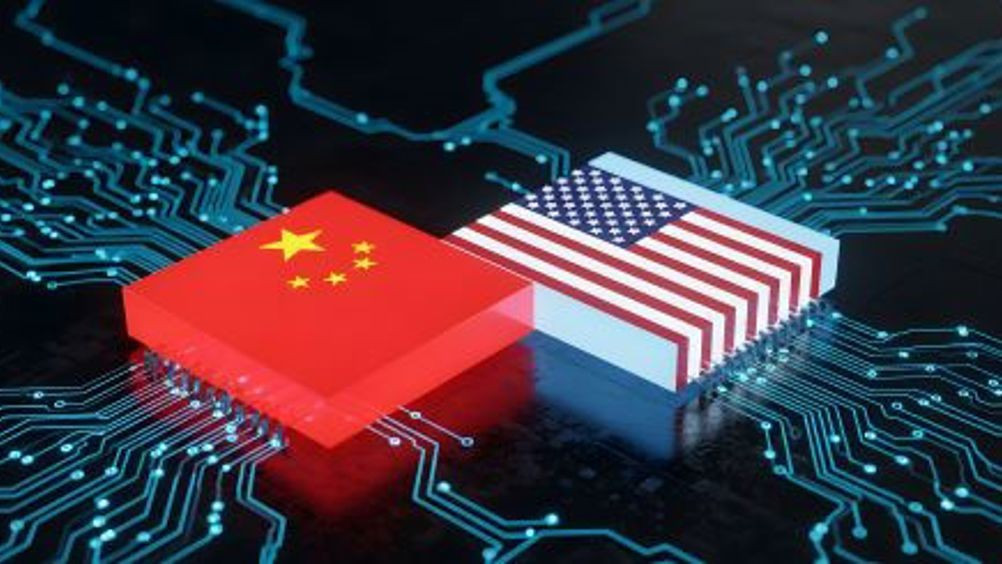
      China’s recent decision to erect substantial barriers on the import of foreign semiconductor chips has drawn sharp criticism from U.S. analysts, including a Massachusetts Institute of Technology business professor who argues that the move is driven by the Chinese Communist Party’s pursuit of military power rather than purely economic strategy. According to reporting on January 23, 2026, Beijing’s ban on imports such as Nvidia‘s high-end AI chips comes amid heightened competition with the United States over technology and defense capabilities. Some analysts view the restrictions as part of a broader effort to reduce dependence on U.S. technology while aggressively building China’s own domestic semiconductor manufacturing base — a strategy closely tied to China’s long-standing “Made in China 2025” industrial policy aimed at technological self-sufficiency and strategic dominance. Critically, U.S. export controls have for years sought to limit China’s access to advanced chips and manufacturing tools to slow the potential military application of such technologies and safeguard America’s competitive edge. Observers argue that this dynamic — where China restricts imports and the U.S. restricts exports — reflects a deeper geopolitical struggle for technological primacy with implications for national security, global supply chains, and the future of AI and defense systems. This tech tug-of-war underscores how semiconductors have become central not just to commerce but to strategic military calculations on both sides.

      Sources:

      https://www.theepochtimes.com/china/as-china-erects-chip-import-barriers-an-mit-professor-blames-ccps-military-ambitions-5973333
      https://www.congress.gov/crs-product/R48642
      https://en.wikipedia.org/wiki/Made_in_China_2025

      Key Takeaways

      • China’s chip import restrictions are interpreted by some U.S. experts as part of the CCP’s effort to reduce foreign dependence while advancing military capabilities.
      • U.S. semiconductor export controls have been tightened over recent years to hinder the PRC’s access to advanced chip technology for competitive and national-security reasons.
      • China’s industrial policies, including “Made in China 2025,” underpin long-term objectives to build domestic technological capacities that challenge U.S. leadership in critical industries.

      In-Depth

      Semiconductors — the tiny silicon chips that power everything from smartphones to fighter jets — are at the center of an intensifying strategic competition between the United States and China. At issue is more than just trade; it’s about who will command the next generation of technological and military power. On January 23, 2026, reporting highlighted a significant move by the People’s Republic of China: erecting strict barriers on the import of foreign advanced chips, including top-tier units from American firms like Nvidia. Analysts close to U.S. policy circles argue that this isn’t merely an economic decision but a calculated strategic choice tied to the Chinese Communist Party’s drive to fortify its military and reduce reliance on adversarial technology sources.

      China’s push to build a self-sufficient semiconductor sector traces back to its industrial policies such as “Made in China 2025” — a comprehensive blueprint aimed at progressing Beijing’s technological prowess in core industries, including semiconductors. Under that framework, China has invested heavily in domestic chip production and equipment manufacturing, seeking to close the gap with global leaders while insulating its economy and defense infrastructure from external pressures. Yet despite these efforts, China still lags significantly in cutting-edge chipmaking capabilities, particularly in producing the most advanced nodes and manufacturing equipment. Its dependence on foreign technology, especially for high-performance computing and artificial intelligence, has remained a strategic vulnerability that both countries are eager to address.

      On the U.S. side, policymakers have steadily tightened export controls since the late 2010s, restricting shipments of advanced chips, semiconductor design tools, and specialized manufacturing gear to China. These measures are justified on grounds that unfettered access to American semiconductor technology could strengthen Chinese military systems, AI capabilities, and command-and-control infrastructure. Washington’s intent, in the eyes of defenders of the policy, is twofold: to protect U.S. technological leadership and to prevent adversarial use of components that could degrade American national security. While these restrictions have unquestionably slowed some aspects of China’s semiconductor development, they have also incentivized Beijing to double down on its own manufacturing ecosystem.

      The interplay of import barriers and export controls creates a complex dynamic: China seeks self-reliance while protecting nascent domestic champions; the United States aims to contain China’s access to sensitive technologies without undermining its own industry. This back-and-forth has implications far beyond bilateral trade balances. Supply chains — already strained by pandemic disruptions and geopolitical tensions — must adapt to bifurcation that could leave global markets polarized between U.S.-aligned and China-aligned technological spheres. Advanced manufacturing hubs in South Korea, Taiwan, Japan, and Europe are forced to navigate this fragmentation, balancing commercial interests with geopolitical risks.

      For Americans vested in national security and economic competitiveness, this isn’t simply a matter of economics. Semiconductors are foundational to future warfare, cybersecurity, aerospace, autonomous systems, and artificial intelligence. The U.S. approach — combining export restrictions with domestic incentives for chip manufacturing — reflects a conservative emphasis on maintaining strategic advantages while mitigating risks posed by technological rivals. Meanwhile, China’s strategies reveal a regime determined to avoid strategic dependence and fortify its defense capacities, even at the cost of greater state control over technology sectors.

      Ultimately, the U.S.-China semiconductor confrontation is a defining feature of 21st-century geopolitics. It underscores a broader contest over who sets the rules for emerging technologies and whose values will shape the digital and physical battlefields of tomorrow. What plays out in boardrooms, factories, and policy chambers today could determine the balance of power for decades to come.

      Taiwan Tech
      Share. Facebook Twitter Pinterest LinkedIn Tumblr Email
      Previous ArticleTikTok Finalizes U.S. Entity Deal to Avert Nationwide Ban
      Next Article Malaysia Reinstates Grok AI After Safety Measures Satisfy Regulators

      Related Posts

      Australia Moves to Preserve Influential YouTube Channels as Digital Cultural Record

      August 21, 2026

      AI Medical Scribes Face Growing Scrutiny Over Hallucinated Patient Records

      August 21, 2026

      Social Media Platforms Acknowledge Under-16 Access Continues Despite Enforcement Measures

      August 21, 2026

      AI-Powered Scam-Bait Network Deploys 200,000 Fake Victims Against Online Fraudsters

      August 21, 2026
      Add A Comment
      Leave A Reply Cancel Reply

      Editors Picks

      Stripe Expands AI Ambitions With Landmark OpenRouter Acquisition

      August 21, 2026

      AI Medical Scribes Face Growing Scrutiny Over Hallucinated Patient Records

      August 21, 2026

      Bots Overtake Human Internet Traffic as AI-Driven Automation Reshapes the Digital Economy

      August 21, 2026

      AI-Powered Scam-Bait Network Deploys 200,000 Fake Victims Against Online Fraudsters

      August 21, 2026
      Popular Topics
      starlink Stocks Sundar Pichai Tim Cook Samsung Viral Software Series A trending UAE Tech Space Startup SpaceX Taiwan Tech spotlight Satya Nadella Tesla Cybertruck Satellite Series B Tesla
      Major Tech Companies
      • Apple News
      • Google News
      • Meta News
      • Microsoft News
      • Amazon News
      • Samsung News
      • Nvidia News
      • OpenAI News
      • Tesla News
      • AMD News
      • Anthropic News
      • Elbit News
      AI & Emerging Tech
      • AI Regulation News
      • AI Safety News
      • AI Adoption
      • Quantum Computing News
      • Robotics News
      Key People
      • Sam Altman News
      • Jensen Huang News
      • Elon Musk News
      • Mark Zuckerberg News
      • Sundar Pichai News
      • Tim Cook News
      • Satya Nadella News
      • Mustafa Suleyman News
      Global Tech & Policy
      • Israel Tech News
      • India Tech News
      • Taiwan Tech News
      • UAE Tech News
      Startups & Emerging Tech
      • Series A News
      • Series B News
      • Startup News
      Tallwire
      Facebook X (Twitter) LinkedIn Threads Instagram RSS
      • Tech
      • Entertainment
      • Business
      • Government
      • Academia
      • Transportation
      • Legal
      • Press Kit
      © 2026 Tallwire. Optimized by ARMOUR Digital Marketing Agency.

      Type above and press Enter to search. Press Esc to cancel.