

Close Menu

    Subscribe to Updates

    Get the latest creative news from FooBar about art, design and business.

    What's Hot

    Amazon Stock Hits Worst Losing Streak Since 2006 Amid Investor AI Spending Fears

    February 17, 2026

    Why Your Personal Data Keeps Showing Up on the Dark Web as It Grows

    February 17, 2026

    U.S. Automakers Recalibrate EV Strategy as Federal Subsidies End and Demand Wanes

    February 17, 2026
    Facebook X (Twitter) Instagram
    • Tech
    • AI News
    • Get In Touch
    Facebook X (Twitter) LinkedIn
    TallwireTallwire
    • Tech

      U.S. Automakers Recalibrate EV Strategy as Federal Subsidies End and Demand Wanes

      February 17, 2026

      Roku Plans Streaming Bundles Push to Boost Profitability in 2026

      February 17, 2026

      Meta Plans Facial Recognition for Smart Glasses Amid Privacy Pushback

      February 17, 2026

      Spotify Developers Haven’t Written Code Since December Thanks to AI Transformation

      February 16, 2026

      Waymo Goes Fully Autonomous in Nashville, Tennessee

      February 16, 2026
    • AI News

      Amazon Stock Hits Worst Losing Streak Since 2006 Amid Investor AI Spending Fears

      February 17, 2026

      Why Your Personal Data Keeps Showing Up on the Dark Web as It Grows

      February 17, 2026

      Behind the AI Industry’s Burnout and Turnover Crisis

      February 17, 2026

      Meta Plans Facial Recognition for Smart Glasses Amid Privacy Pushback

      February 17, 2026

      Airbnb Shifts One-Third Of Customer Support To AI In North America

      February 17, 2026
    • Security

      Why Your Personal Data Keeps Showing Up on the Dark Web as It Grows

      February 17, 2026

      Fintech Lending Giant Figure Confirms Significant Data Breach Exposing Customer Records

      February 17, 2026

      US Lawmakers Urge Tighter Export Controls to Curb China’s Access to Chipmaking Equipment

      February 16, 2026

      Senator Raises Questions On eSafety Crackdown And Potential Strain On US-Australia Relationship

      February 16, 2026

      AI Safety Researcher Resigns, Warns ‘World Is in Peril’ Amid Broader Industry Concerns

      February 15, 2026
    • Health

      UK Kids Turning to AI Chatbots and Acting on Advice at Alarming Rates

      February 16, 2026

      Landmark California Trial Sees YouTube Defend Itself, Rejects ‘Social Media’ and Addiction Claims

      February 16, 2026

      Instagram Top Executive Says ‘Addiction’ Doesn’t Exist in Landmark Social Media Trial

      February 15, 2026

      Amazon Pharmacy Rolls Out Same-Day Prescription Delivery To 4,500 U.S. Cities

      February 14, 2026

      AI Advances Aim to Bridge Labor Gaps in Rare Disease Treatment

      February 12, 2026
    • Science

      XAI Publicly Unveils Elon Musk’s Interplanetary AI Vision In Rare All-Hands Release

      February 14, 2026

      Elon Musk Shifts SpaceX Priority From Mars Colonization to Building a Moon City

      February 14, 2026

      NASA Artemis II Spacesuit Mobility Concerns Ahead Of Historic Mission

      February 13, 2026

      AI Agents Build Their Own MMO Playground After Moltbook Ignites Agent-Only Web Communities

      February 12, 2026

      AI Advances Aim to Bridge Labor Gaps in Rare Disease Treatment

      February 12, 2026
    • People

      Google Co-Founder’s Epstein Contacts Reignite Scrutiny of Elite Tech Circles

      February 7, 2026

      Bill Gates Denies “Absolutely Absurd” Claims in Newly Released Epstein Files

      February 6, 2026

      Informant Claims Epstein Employed Personal Hacker With Zero-Day Skills

      February 5, 2026

      Starlink Becomes Critical Internet Lifeline Amid Iran Protest Crackdown

      January 25, 2026

      Musk Pledges to Open-Source X’s Recommendation Algorithm, Promising Transparency

      January 21, 2026
    TallwireTallwire
    Home»Tech»China Agrees to Roll Back Rare Earth Export Restrictions in U.S. Trade Deal
    Tech

    China Agrees to Roll Back Rare Earth Export Restrictions in U.S. Trade Deal

    4 Mins Read
    Facebook Twitter Pinterest LinkedIn Tumblr Email
    China Agrees to Roll Back Rare Earth Export Restrictions in U.S. Trade Deal
    China Agrees to Roll Back Rare Earth Export Restrictions in U.S. Trade Deal
    Share
    Facebook Twitter LinkedIn Pinterest Email

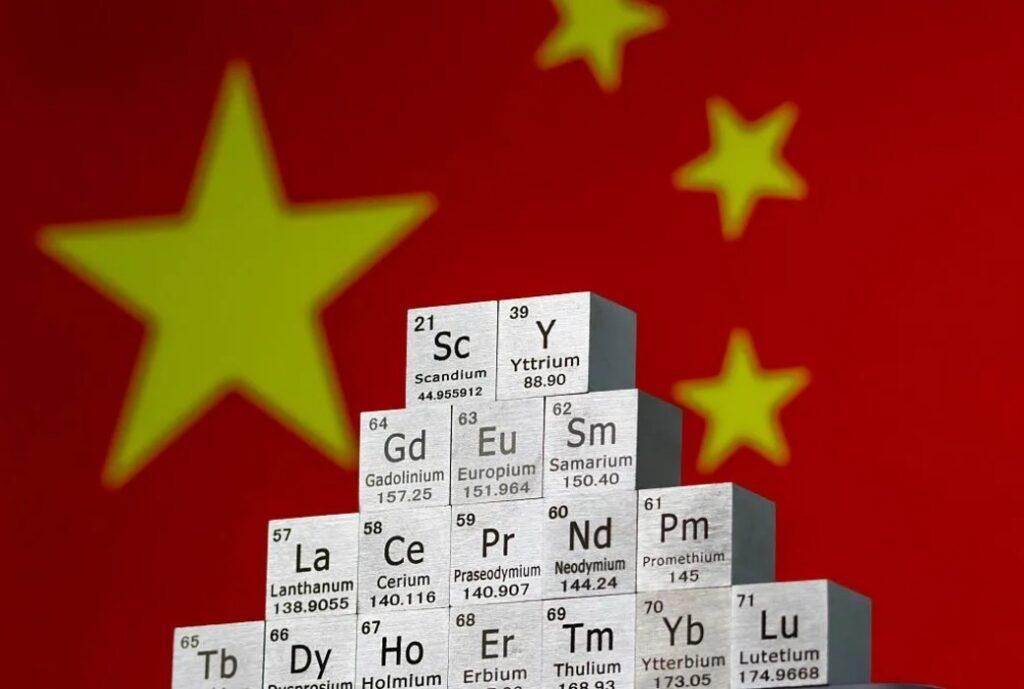
    In a surprise shift in the ongoing U.S.–China trade tensions, the White House announced that China will suspend several key export controls on rare earth minerals and related materials, effectively reversing earlier restrictions implemented by Beijing in April 2025 and October 2022. According to the fact sheet released by the White House, China has agreed to resume issuing general licences for the export of rare earths, gallium, germanium, antimony and graphite to U.S. end-users and their global supply chains. TechCrunch reports this as a meaningful concession given China’s dominant role in critical minerals. At the same time, previous analyses by Reuters and Associated Press highlight that while this development offers a reprieve for U.S. manufacturing, it does not guarantee a lasting structural shift in China’s leverage over global supply chains—a dynamic that remains strategically fraught.

    Sources: AP News, Reuters

    Key Takeaways

    – China’s willingness to suspend its export controls signals a tactical concession in the trade battle, giving the U.S. breathing room for critical minerals used in defence, electronics and EV supply chains.

    – Despite the apparent rollback, analysts caution that China’s fundamental dominance over rare earth mining, refining and processing remains intact, meaning the structural risk to U.S. supply chains is still real.

    – The deal underscores the strategic importance of rare earths in both economic and national-security terms and may represent a short-term “window” for U.S. and allied firms to diversify supply chains before China potentially reasserts control.

    In-Depth

    The recent announcement by the White House that China will suspend key export controls on rare earth minerals marks a noteworthy development in the ongoing tug-of-war over global supply chains and strategic manufacturing. For years, China has held a near-monopoly over the processing and export of rare earth elements—vital materials for everything from electric vehicle batteries and wind turbines to jet engines and radar systems. According to previous reporting, China accounts for about 90 % of the world’s refined rare earth supply.

    In April 2025, Beijing imposed sweeping export restrictions on a wide range of rare earths and related items, in response to U.S. tariffs. The move sparked concerns across global auto, electronics and defence sectors about supply disruptions and surging prices. Reuters data indicated exports of rare earth magnets to the U.S. plunged significantly. These restrictions created logistical headaches for manufacturers that rely on precision alloys and magnets incorporating heavy rare earths.

    Against this volatile backdrop, the new agreement signals a tactical retreat by China, at least for now. The general licences to resume exports of rare earths, gallium, germanium, antimony and graphite to U.S. entities will ease a significant chokepoint for American high-tech and defence manufacturers. At a time when the U.S. is striving to rebuild its industrial base and reduce reliance on foreign adversaries for critical inputs, the easing of these export curbs offers a welcome respite.

    However, the cautious tone from analysts is well-justified. While the restrictions have been suspended, there is no guarantee China will not reimpose them should its strategic interests dictate it. The underlying imbalance—China’s near-dominance of processing capability and the U.S.’s limited refining capacity—remains unresolved. In fact, just a few weeks prior, China announced expanded controls targeting dual-use technology and exports to defence and semiconductor sectors, underscoring that its leverage is far from relinquished.

    From a conservative vantage point, the deal highlights the urgency for the U.S. to accelerate its own domestic critical-minerals infrastructure, diversify supply partnerships with trusted allies, and enhance resilience in its manufacturing supply chains. This moment of concession by China should not lull policymakers into complacency; rather, it should serve as a stark reminder that strategic dependencies on a single foreign actor—especially one with adversarial potential—represent a vulnerability. Better supply-chain security, combined with robust investment in domestic processing, will ensure the U.S. is not caught flat-footed the next time Beijing wields its resource hegemony as a bargaining chip.

    In sum, while the rollback is a positive near-term outcome for U.S. industry, it is far from a permanent resolution. Until the structural imbalance in rare earths supply is reversed or meaningfully mitigated, the U.S. and its allies remain exposed to the strategic whims of China. For now, the window of opportunity is open: it is incumbent on the U.S. to act decisively, not merely celebrate the concession.

    Share. Facebook Twitter Pinterest LinkedIn Tumblr Email
    Previous ArticleChicago Tribune Sues Perplexity Over Alleged Copyright Infringement
    Next Article China Develops Breakthrough Analog Chip, Claims to “Solve Century-Old Problem” of Computing Efficiency

    Related Posts

    U.S. Automakers Recalibrate EV Strategy as Federal Subsidies End and Demand Wanes

    February 17, 2026

    Roku Plans Streaming Bundles Push to Boost Profitability in 2026

    February 17, 2026

    Meta Plans Facial Recognition for Smart Glasses Amid Privacy Pushback

    February 17, 2026

    Spotify Developers Haven’t Written Code Since December Thanks to AI Transformation

    February 16, 2026
    Add A Comment
    Leave A Reply Cancel Reply

    Editors Picks

    U.S. Automakers Recalibrate EV Strategy as Federal Subsidies End and Demand Wanes

    February 17, 2026

    Roku Plans Streaming Bundles Push to Boost Profitability in 2026

    February 17, 2026

    Meta Plans Facial Recognition for Smart Glasses Amid Privacy Pushback

    February 17, 2026

    Spotify Developers Haven’t Written Code Since December Thanks to AI Transformation

    February 16, 2026
    Top Reviews
    Tallwire
    Facebook X (Twitter) LinkedIn Threads Instagram RSS
    • Tech
    • Entertainment
    • Business
    • Government
    • Academia
    • Transportation
    • Legal
    • Press Kit
    © 2026 Tallwire. Optimized by ARMOUR Digital Marketing Agency.

    Type above and press Enter to search. Press Esc to cancel.