

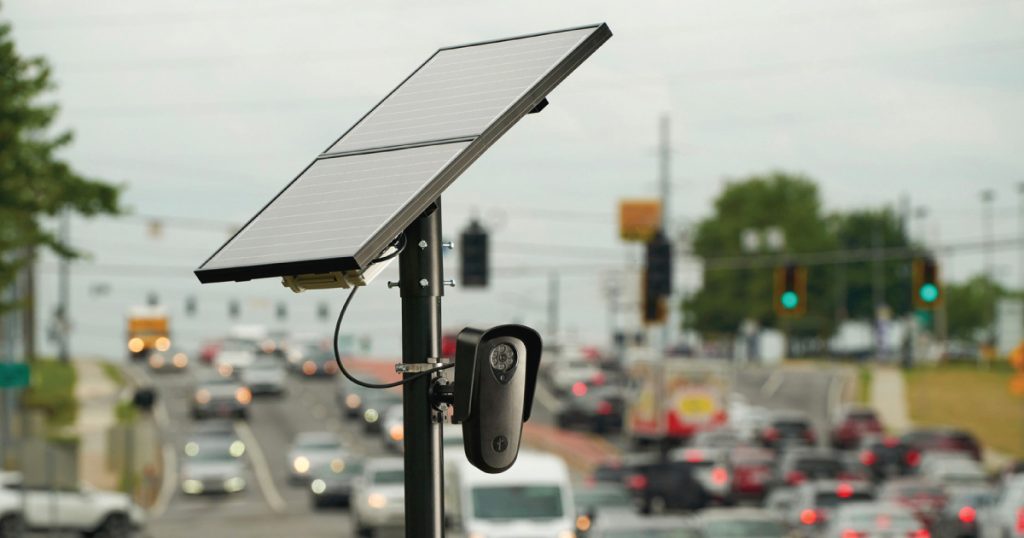
Congress is intensifying scrutiny of Flock Safety and other companies operating artificial-intelligence-powered surveillance cameras as lawmakers question whether privately managed networks capable of tracking Americans’ movements have expanded beyond adequate constitutional and legislative safeguards. Flock operates roughly 120,000 cameras across 49 states and says its systems process more than 20 billion vehicle scans monthly. At a Senate Judiciary subcommittee hearing, lawmakers from both parties raised concerns about data retention, access, erroneous identifications, unauthorized searches and the possibility that interconnected license-plate readers are effectively creating a searchable national record of Americans’ movements. Flock maintains that its technology helps police solve crimes and locate missing people and says it has introduced safeguards against misuse, but lawmakers are considering measures ranging from warrant requirements and retention limits to restrictions on federal funding for automated surveillance systems.
Key Takeaways
- Flock’s approximately 120,000 cameras operate across 49 states and reportedly generate more than 20 billion vehicle scans each month, giving law enforcement access to a surveillance capability far more extensive than traditional stand-alone license-plate readers.
- Congressional scrutiny is bipartisan. Republican and Democratic senators have raised concerns about unauthorized searches, data sharing, security, retention and potential constitutional implications, while House lawmakers have introduced multiple proposals that would restrict federal use or funding of automated surveillance technology.
- Documented cases have sharpened the debate, including allegations that law-enforcement personnel used Flock databases for personal purposes and cases in which incorrect vehicle identifications contributed to innocent motorists being detained. Flock says its technology has legitimate public-safety applications and has introduced additional safeguards intended to prevent abuse.
In-Depth
Congress is confronting a surveillance question that technology has allowed to develop faster than federal law: whether thousands of interconnected cameras can transform ordinary police tools into a nationwide system capable of reconstructing Americans’ movements.
Flock Safety operates roughly 120,000 cameras across 49 states, generating more than 20 billion vehicle scans monthly. Unlike conventional license-plate readers deployed for limited purposes, modern AI-enabled systems can place enormous quantities of information into searchable databases. That distinction has attracted bipartisan attention because most motorists recorded by the cameras are not suspected of committing crimes.
Sen. Josh Hawley launched an investigation into Flock’s collection, retention and distribution of information, requesting documentation about access, security, accuracy, government contracts and reported misuse. Democratic senators have separately sought answers concerning alleged abuses and privacy protections. At a September 23 hearing, lawmakers discussed possible warrant requirements, limits on data retention and restrictions against creation of a nationwide database.
The concern is reinforced by documented misuse. Investigations have identified officers accused of searching license plates for personal purposes, while erroneous matches have contributed to innocent people being detained. Flock says its systems provide valuable crime-fighting capabilities and has announced stronger controls, including mandatory case information and automated reviews designed to identify abnormal searches.
The issue ultimately reaches beyond one company. Law enforcement has a legitimate interest in technologies that locate stolen vehicles, suspects and missing children. But a free society also has a legitimate interest in preventing useful investigative tools from quietly becoming permanent mass-surveillance infrastructure. Congress now faces the task of establishing enforceable boundaries before technological capability, rather than constitutional principle, determines where those boundaries lie.
Sources
- https://rollcall.com/2026/09/23/flock-cameras-draw-bipartisan-concerns-at-senate-hearing/
- https://www.hawley.senate.gov/chairman-hawley-investigates-ai-powered-flock-cameras-amidst-privacy-concerns/
- https://www.schiff.senate.gov/news/press-releases/news-sens-schiff-wyden-press-flock-ceo-for-answers-on-troubling-abuse-of-technology-amid-surveillance-network-concerns-push-to-protect-americans-privacy/
- https://www.atlantanewsfirst.com/2026/09/23/senators-question-use-flock-cameras-data-access-subcommittee-hearing/