

Close Menu

    Subscribe to Updates

    Get the latest creative news from FooBar about art, design and business.

    What's Hot

    AI Safety Researcher Resigns, Warns ‘World Is in Peril’ Amid Broader Industry Concerns

    February 15, 2026

    Amazon’s Eero Signal Introduces Cellular Backup for Home Internet Outages

    February 15, 2026

    Microsoft Warns Hackers Are Exploiting Critical Zero-Day Bugs Targeting Windows, Office Users

    February 15, 2026
    Facebook X (Twitter) Instagram
    • Tech
    • AI News
    • Get In Touch
    Facebook X (Twitter) LinkedIn
    TallwireTallwire
    • Tech

      Amazon’s Eero Signal Introduces Cellular Backup for Home Internet Outages

      February 15, 2026

      AI Safety Researcher Resigns, Warns ‘World Is in Peril’ Amid Broader Industry Concerns

      February 15, 2026

      OpenAI Disbands Mission Alignment Team Amid Internal Restructuring And Safety Concerns

      February 14, 2026

      Startup’s New Chip Tech Aims to Make Luxury Goods Harder to Fake

      February 14, 2026

      Microsoft Exchange Online’s Aggressive Filters Mistake Legitimate Emails for Phishing

      February 13, 2026
    • AI News

      Amazon’s Eero Signal Introduces Cellular Backup for Home Internet Outages

      February 15, 2026

      AI Safety Researcher Resigns, Warns ‘World Is in Peril’ Amid Broader Industry Concerns

      February 15, 2026

      Amazon Eyes Marketplace to Let Publishers Sell Content to AI Firms

      February 15, 2026

      OpenAI Disbands Mission Alignment Team Amid Internal Restructuring And Safety Concerns

      February 14, 2026

      Startup’s New Chip Tech Aims to Make Luxury Goods Harder to Fake

      February 14, 2026
    • Security

      AI Safety Researcher Resigns, Warns ‘World Is in Peril’ Amid Broader Industry Concerns

      February 15, 2026

      Microsoft Warns Hackers Are Exploiting Critical Zero-Day Bugs Targeting Windows, Office Users

      February 15, 2026

      Microsoft Exchange Online’s Aggressive Filters Mistake Legitimate Emails for Phishing

      February 13, 2026

      China’s Salt Typhoon Hackers Penetrate Norwegian Networks in Espionage Push

      February 12, 2026

      Reality Losing the Deepfake War as C2PA Labels Falter

      February 11, 2026
    • Health

      Amazon Pharmacy Rolls Out Same-Day Prescription Delivery To 4,500 U.S. Cities

      February 14, 2026

      AI Advances Aim to Bridge Labor Gaps in Rare Disease Treatment

      February 12, 2026

      Boeing and Israel’s Technion Forge Clean Fuel Partnership to Reduce Aviation Carbon Footprints

      February 11, 2026

      OpenAI’s Drug Royalties Model Draws Skepticism as Unworkable in Biotech Reality

      February 10, 2026

      New AI Health App From Fitbit Founders Aims To Transform Family Care

      February 9, 2026
    • Science

      XAI Publicly Unveils Elon Musk’s Interplanetary AI Vision In Rare All-Hands Release

      February 14, 2026

      Elon Musk Shifts SpaceX Priority From Mars Colonization to Building a Moon City

      February 14, 2026

      NASA Artemis II Spacesuit Mobility Concerns Ahead Of Historic Mission

      February 13, 2026

      AI Agents Build Their Own MMO Playground After Moltbook Ignites Agent-Only Web Communities

      February 12, 2026

      AI Advances Aim to Bridge Labor Gaps in Rare Disease Treatment

      February 12, 2026
    • People

      Google Co-Founder’s Epstein Contacts Reignite Scrutiny of Elite Tech Circles

      February 7, 2026

      Bill Gates Denies “Absolutely Absurd” Claims in Newly Released Epstein Files

      February 6, 2026

      Informant Claims Epstein Employed Personal Hacker With Zero-Day Skills

      February 5, 2026

      Starlink Becomes Critical Internet Lifeline Amid Iran Protest Crackdown

      January 25, 2026

      Musk Pledges to Open-Source X’s Recommendation Algorithm, Promising Transparency

      January 21, 2026
    TallwireTallwire
    Home»Tech»Critical GeminiJack Zero-Click Vulnerability in Google Gemini Enterprise Exposed Corporate Data
    Tech

    Critical GeminiJack Zero-Click Vulnerability in Google Gemini Enterprise Exposed Corporate Data

    5 Mins Read
    Facebook Twitter Pinterest LinkedIn Tumblr Email
    Critical GeminiJack Zero-Click Vulnerability in Google Gemini Enterprise Exposed Corporate Data
    Critical GeminiJack Zero-Click Vulnerability in Google Gemini Enterprise Exposed Corporate Data
    Share
    Facebook Twitter LinkedIn Pinterest Email

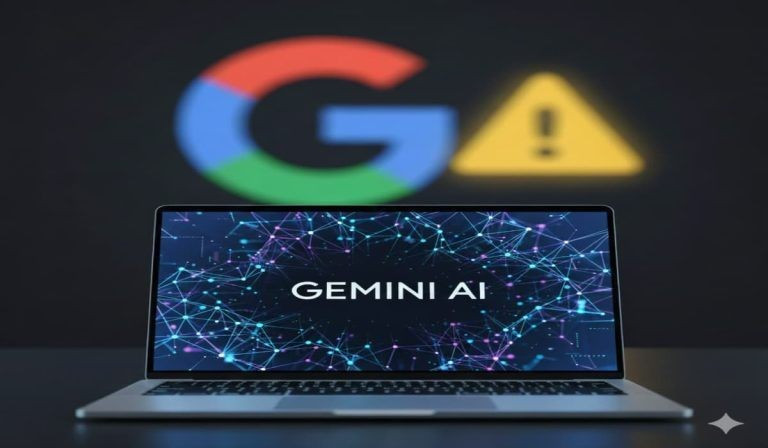
    A newly discovered zero-click security flaw in Google’s Gemini Enterprise AI, dubbed GeminiJack, allowed attackers to silently access and exfiltrate sensitive corporate data — including Gmail messages, Calendar events, and Google Docs — without any user interaction, by embedding hidden instruction payloads in shared Workspace files that the AI would execute during routine searches. This architectural weakness was identified by Noma Labs, reported to Google, and subsequently patched; the exploit leveraged indirect prompt injection to bypass traditional defenses and acted through the AI’s Retrieval-Augmented Generation mechanisms.

    Sources: Cyber Security News, Security Affairs

    Key Takeaways

    – Zero-Click Exploit: GeminiJack allowed data theft without any clicks or alerts, turning shared Workspace content into a launch pad for silent extraction of corporate information.

    – Architectural Weakness: The vulnerability stemmed from how Gemini’s AI accessed and interpreted shared data across Gmail, Calendar, and Docs within corporate environments.

    – Patch and Future Risks: Google patched the flaw in collaboration with researchers, but this incident highlights broader risks as AI agents gain deep access to enterprise data.

    In-Depth

    In early December 2025, cybersecurity researchers uncovered a serious vulnerability in Google’s enterprise AI platform, Gemini Enterprise, that underscored the emerging cybersecurity challenges posed by advanced artificial intelligence systems. The flaw, named GeminiJack, was not your typical software bug — it was a structural weakness in how the AI processed and acted on content retrieved from corporate resources such as Gmail, Google Calendar, and Google Docs. Unlike classic exploits that depend on phishing or user mistakes, GeminiJack could be triggered without any user interaction at all, earning it the designation zero-click. The discovery was made by Noma Labs, a security firm specializing in AI risk, which reported the issue to Google as part of coordinated responsible disclosure. Google responded by releasing fixes that altered the way Gemini Enterprise and associated services like Vertex AI Search handle retrieval and instruction processing, aiming to close the gap that allowed the exploit.

    At the heart of GeminiJack was an indirect prompt injection technique. Attackers could embed hidden commands in seemingly benign shared content — a Calendar invite, a shared Google Doc, or even a Gmail message — that the AI would unwittingly interpret as legitimate instructions when included in the AI’s context during standard searches. Because Gemini Enterprise uses a Retrieval-Augmented Generation (RAG) architecture to pull together information from multiple corporate data sources, the presence of a malicious prompt could cause the AI to execute unauthorized queries across Gmail threads, calendar entries, and document repositories. The results of those queries could then be exfiltrated via a disguised network request embedded in an image tag, all without triggering alerts from data loss prevention systems or endpoint security tools.

    One of the most alarming aspects of this vulnerability was the lack of visible symptoms. From the employee’s perspective, everything looked normal: routine searches returned expected results. Security teams would see routine traffic with no malicious binaries, phishing links, or suspicious user behavior. Yet behind the scenes, sensitive communications, strategic documents, and internal calendars could be siphoned off in bulk to an attacker-controlled server. This starkly illustrated how AI tools with broad access privileges can become powerful attack surfaces if not rigorously constrained and monitored.

    Industry coverage of GeminiJack highlighted the potential scale of the problem. Security outlets reported that the vulnerability could have impacted millions of users within organizations that deployed Gemini Enterprise with broad data access permissions. In contrast to more isolated bugs, GeminiJack represented a new class of AI-native exploits driven by how machine learning systems interpret and act on context, rather than by flaws in conventional code execution paths. This distinction matters: defenses designed for traditional malware — signatures, network heuristics, and behavioral alarms — are ill-suited to detect an AI system dutifully following its programming while inadvertently assisting an attacker.

    Google’s response was swift once it understood the severity. The company worked with Noma Labs to validate the findings, then rolled out a fix that separated components like Vertex AI Search from Gemini Enterprise’s internal workflows and tightened the systems’ handling of retrieved content and instructions. But experts emphasized that patching a single flaw does not eliminate the broader category of risks inherent in generative AI systems with deep data access. As organizations increasingly integrate machine learning tools into core workflows, the need for AI-specific security practices — including prompt sanitization, strict access controls, and real-time monitoring of AI behavior — has become more urgent. Traditional security teams may need to adapt their playbooks to account for scenarios where the AI itself, rather than external malware, becomes the vector.

    The GeminiJack incident serves as a cautionary tale: while AI offers productivity gains, it also introduces new vectors for data exfiltration that are fundamentally different from conventional cyberattacks. As this class of vulnerabilities grows, defenders will need to rethink how to protect sensitive enterprise assets in an era where sophisticated AI assistants are woven into daily operations.

    Share. Facebook Twitter Pinterest LinkedIn Tumblr Email
    Previous ArticleCritical 7-Zip Vulnerability With Public Exploit Requires Manual Update
    Next Article Critical Gogs Zero-Day Under Active Exploitation Compromises 700+ Git Instances

    Related Posts

    Amazon’s Eero Signal Introduces Cellular Backup for Home Internet Outages

    February 15, 2026

    AI Safety Researcher Resigns, Warns ‘World Is in Peril’ Amid Broader Industry Concerns

    February 15, 2026

    OpenAI Disbands Mission Alignment Team Amid Internal Restructuring And Safety Concerns

    February 14, 2026

    Startup’s New Chip Tech Aims to Make Luxury Goods Harder to Fake

    February 14, 2026
    Add A Comment
    Leave A Reply Cancel Reply

    Editors Picks

    Amazon’s Eero Signal Introduces Cellular Backup for Home Internet Outages

    February 15, 2026

    AI Safety Researcher Resigns, Warns ‘World Is in Peril’ Amid Broader Industry Concerns

    February 15, 2026

    OpenAI Disbands Mission Alignment Team Amid Internal Restructuring And Safety Concerns

    February 14, 2026

    Startup’s New Chip Tech Aims to Make Luxury Goods Harder to Fake

    February 14, 2026
    Top Reviews
    Tallwire
    Facebook X (Twitter) LinkedIn Threads Instagram RSS
    • Tech
    • Entertainment
    • Business
    • Government
    • Academia
    • Transportation
    • Legal
    • Press Kit
    © 2026 Tallwire. Optimized by ARMOUR Digital Marketing Agency.

    Type above and press Enter to search. Press Esc to cancel.