

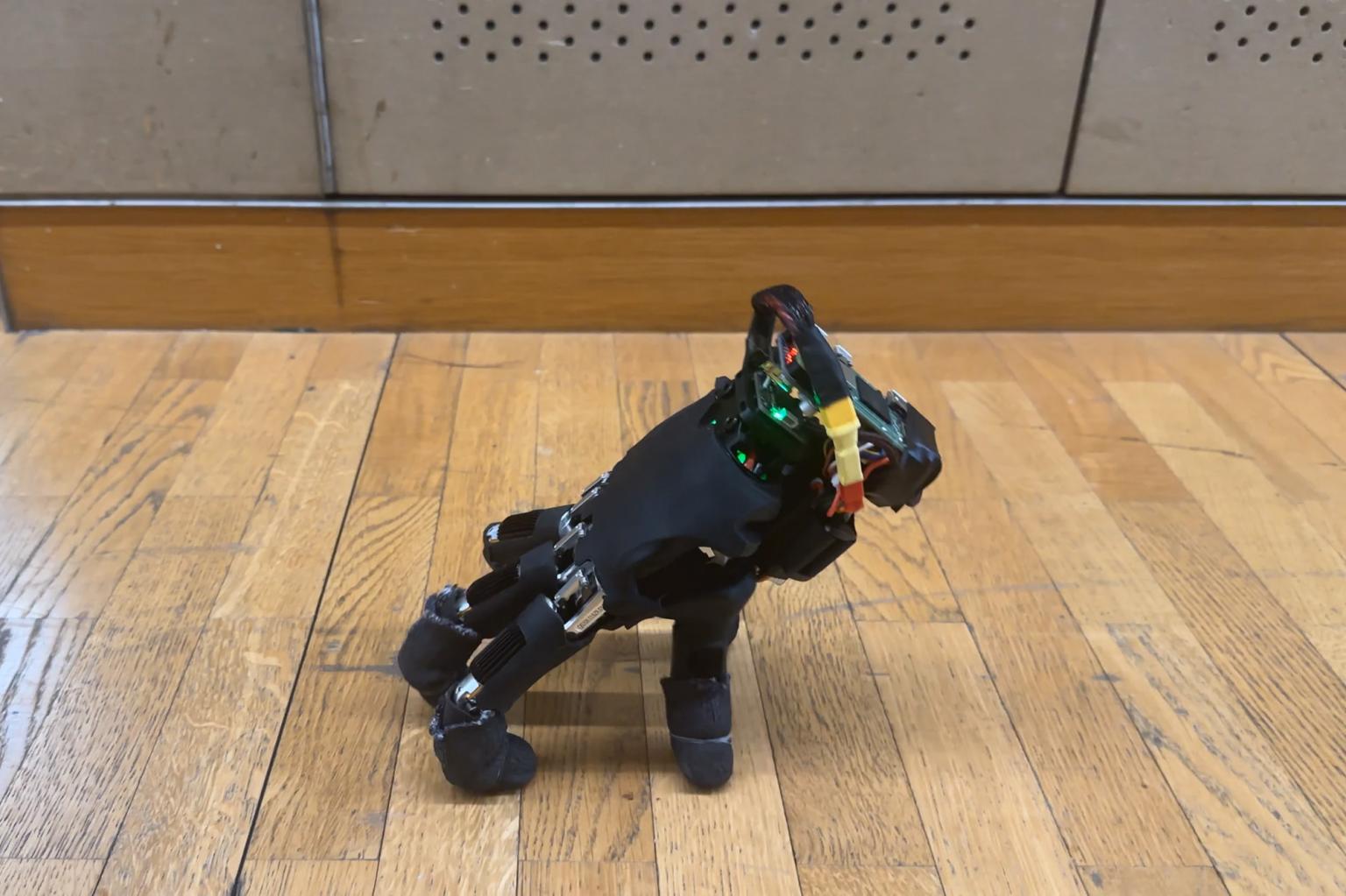
A robotic hand that looks more like something from science fiction than a conventional industrial machine can detach from its arm, crawl across a surface, retrieve multiple objects and return to reconnect with its robotic host. Developed by researchers at Switzerland’s EPFL with involvement from MIT, the device abandons the traditional assumption that robotic hands should simply imitate human anatomy. Instead, its symmetrical design can accommodate as many as six reversible fingers capable of bending in both directions, allowing either side of the hand to function as a palm and any suitable pair of fingers to operate like opposing thumbs. The hand can reproduce all 33 standard human grasp types, lift loads up to roughly 2 kilograms, manipulate multiple objects and perform tasks normally requiring two human hands. More significantly, it can detach from its arm and use its fingers as legs, crawling to objects beyond the arm’s normal reach before retrieving them and returning. Researchers envision applications in manufacturing, confined environments, exploration, service robotics and potentially future prosthetic or human-augmentation technologies.
Key Takeaways
- The robotic hand can autonomously detach from a robotic arm, crawl using its fingers, retrieve objects beyond the arm’s normal reach and return to reconnect while still carrying its cargo.
- Its reversible, symmetrical architecture rejects conventional human-hand imitation: fingers can bend in both directions, either side can function as the palm, and different finger combinations can serve as opposing “thumbs.”
- Researchers see potential applications in industrial automation, exploration, disaster or confined-space operations and service robotics, while also suggesting that elements of the technology could eventually contribute to advanced prosthetics or human augmentation.
In-Depth
For decades, robotic engineers largely treated the human hand as the standard worth copying. Researchers at EPFL have taken a decidedly different approach: instead of asking how faithfully a machine can reproduce human anatomy, they asked what a mechanical hand could accomplish if it were freed from biological limitations.
The result is a reversible robotic hand that can use as many as six fingers and operate effectively from either side. It can reproduce the 33 grasping patterns used to benchmark human dexterity, manipulate multiple objects and perform operations ordinarily requiring two hands, including opening containers and using tools.
Its most remarkable feature is mobility. The hand can detach from its robotic arm, turn its fingers into legs, crawl across a surface, collect objects and return to reconnect. That gives a conventional robotic arm something it normally lacks: the ability to extend its working area without moving the entire machine.
The practical implications extend well beyond an entertaining demonstration. A mobile manipulator could retrieve objects from underneath equipment, operate behind obstructions or enter confined spaces where a conventional industrial arm cannot reach. Similar principles could eventually assist robots operating in hazardous environments where flexibility matters more than humanlike appearance.
The broader lesson may prove even more consequential. Robotics does not have to reproduce human biology to complement human labor. Machines can be designed around function rather than imitation, creating capabilities biology never provided. The crawling hand is an unusual example of that philosophy becoming a functioning machine rather than remaining a laboratory concept.
Sources
- https://nypost.com/2026/09/28/tech/disembodied-robo-hand-straight-out-of-addams-family/
- https://news.epfl.ch/news/reversible-detachable-robotic-hand-redefines-dex-2/
- https://www.nature.com/articles/s41467-025-67675-8
- https://pubmed.ncbi.nlm.nih.gov/41559054/
- https://www.dongascience.com/en/news/76045