

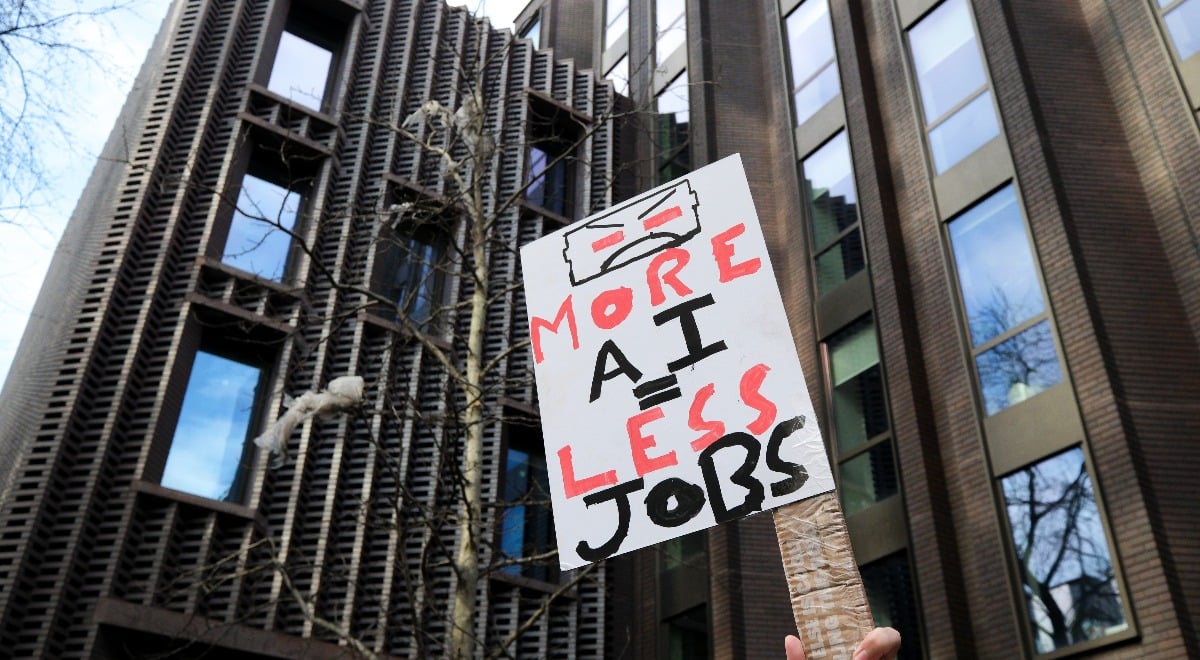
Federal law enforcement and intelligence agencies are reportedly broadening their domestic security focus to include what officials describe as “anti-tech extremism,” a category tied to growing public anger over artificial intelligence, data center expansion, automation-driven job displacement, and the increasing influence of major technology companies. Internal reports obtained through public records requests indicate agencies are monitoring the potential for protests and anti-technology activism to evolve into criminal activity or violence. Critics warn that the emerging framework risks blurring the line between legitimate political dissent and genuine security threats, especially as public skepticism toward AI continues to grow. The development highlights a widening divide between government, Big Tech interests, and citizens concerned about privacy, economic disruption, and centralized technological power.
Sources
- https://www.wired.com/story/us-law-enforcement-warns-of-anti-tech-extremism
- https://arstechnica.com/ai/2026/05/us-law-enforcement-warns-of-anti-tech-extremism-as-ai-hatred-grows
- https://www.tomshardware.com/tech-industry/artificial-intelligence/leaks-reveal-us-authorities-concerned-about-the-rise-of-anti-tech-extremists-as-ai-data-center-issues-become-increasingly-contentious-critics-say-this-could-lead-to-surveillance-criminalization-of-peaceful-opposition
- https://gizmodo.com/the-feds-and-law-enforcement-are-worried-ai-backlash-could-turn-into-anti-tech-violent-extremism-2000763505
Key Takeaways
- Federal agencies are increasingly treating hostility toward AI infrastructure, automation, and large-scale technology projects as a potential domestic security concern rather than merely a political or economic issue.
- Opposition to data centers is growing nationwide due to concerns about energy consumption, water usage, environmental impact, property values, and the displacement of human labor by artificial intelligence.
- Civil liberties advocates warn that expansive definitions of “anti-tech extremism” could result in heightened surveillance of citizens engaging in lawful protest, public meetings, or political activism against AI-related policies.
In-Depth
The emergence of “anti-tech extremism” as a focus of federal law enforcement represents a significant development in the ongoing struggle over the future of artificial intelligence and the growing power of the technology sector. According to reports, officials are increasingly concerned that public frustration over AI-driven job losses, sprawling data center construction, and the concentration of economic influence within a handful of technology corporations could fuel acts of sabotage, vandalism, or even violence.
While protecting critical infrastructure is a legitimate government responsibility, the broader implications of this new classification deserve careful scrutiny. Americans have every right to question whether artificial intelligence will eliminate jobs, erode privacy, or concentrate unprecedented power in unelected corporate hands. Skepticism toward emerging technology is not extremism; it is often the first line of defense against government and corporate overreach.
The concern among many observers is that federal agencies may be laying the groundwork to monitor and categorize ordinary citizens who oppose AI expansion, data center construction, or aggressive automation initiatives. History has shown that government bureaucracies frequently expand the scope of threat assessments once new categories are established. What begins as a focus on genuine criminals can gradually extend to activists, community groups, and political opponents.
As AI continues to transform the economy and society, policymakers face a difficult balancing act. They must protect infrastructure from genuine threats while ensuring that Americans retain the freedom to challenge powerful institutions without fear of being treated as security risks. The debate over artificial intelligence is only beginning, and efforts to police that debate may prove just as controversial as the technology itself.