

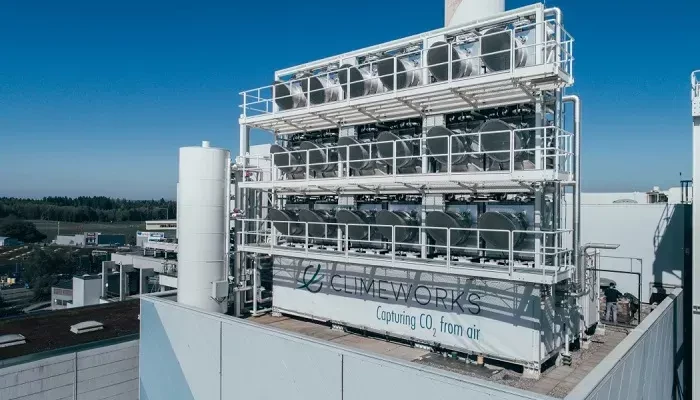
Tech giant Google has just announced a groundbreaking corporate power-purchase deal supporting a 400-megawatt natural-gas power plant in Decatur, Illinois — one that plans to capture and permanently store about 90% of its CO₂ emissions via carbon capture and storage (CCS) technology. This first-of-its-kind agreement marks a strategic move by Google to secure “clean, firm” power for its data-centers even as renewable energy sources struggle with intermittency and grid constraints. The plant is scheduled for commercial operation by the early 2030s and is being developed by Low Carbon Infrastructure at a site next to an existing carbon-storage ethanol facility. Yet despite the optimism, CCS has a well-documented track record of under-delivering: several large projects worldwide fell short of promised capture rates or faced operational disruptions. On the gas side, concerns also ramp up around upstream methane leakage—an especially potent greenhouse gas that can erode the climate benefits of CCS if left unmanaged. For Google, the critical test will be execution: whether ongoing operations live up to the claimed efficiencies, whether the storage integrity holds over time, and if methane emissions are kept tightly in check. If any of those slip, this could be more corporate optics than climate progress.
Sources: Reuters, Google Blog
Key Takeaways
– Google is committing to purchase power from a gas plant equipped with CCS technology (capturing ~90% CO₂) in Illinois, signaling an evolution from renewables to “clean firm” power procurement.
– CCS technology has a mixed commercial history: numerous plants worldwide have failed to reach advertised capture rates or experienced operational reliability issues, raising concerns about scalability.
– Methane leakage in the natural-gas supply chain remains a critical unknown that could negate the CO₂ benefits of CCS; for Google’s plan to hold water, upstream emissions must be aggressively managed.
In-Depth
When a heavyweight like Google steps into the ring with a bold energy procurement deal, it warrants careful scrutiny. At face value, the announcement — backing a 400 MW natural-gas plant in Decatur, Illinois, that intends to capture roughly 90% of its CO₂ emissions — provides a narrative of innovation and decarbonization. But upon further inspection, the move is layered with technical risk, policy dependencies, and opportunities for unintended consequences. From a conservative viewpoint, the key questions become: Is this real progress or complicated green signaling? And will taxpayers, energy rate-payers or the climate itself pay the price if things go off script?
Let’s unpack. Google’s motivation is clear: its data-centers require massive volumes of electricity on a 24/7 basis. Wind and solar, however, face intermittency, modest capacity factors, and interconnection/back-transmission bottlenecks. So Google is shifting toward “clean firm” solutions — technologies that can run whenever the grid demands. That explains why carbon-capture coupled with natural-gas generation is part of the mix: gas provides dispatchability, CCS claims to knock out the CO₂ output. On paper, this delivers the reliability of traditional fossil generation with the climate benefit of deep decarbonization.
But the devil is always in the implementation details. History suggests CCS plants have under-performed. One recent analysis of 13 major CCS facilities — representing more than half of global capture capacity — found many failed to meet design capture targets. One example: the Boundary Dam Power Station in Canada, retrofitted for CCS, struggled to maintain its advertised 90% capture rate, falling far short in some years. The Texas-based Petra Nova project captured significant CO₂ when running, but was mothballed for extended periods and faced economic challenges. Meanwhile, geological storage, the other half of the CCS equation, isn’t risk-free: issues such as well integrity, brine migration, seismicity, and verification of permanence remain topics of regulatory concern. In Illinois, for example, an injection pause occurred after regulators identified brine migration into zones outside the targeted reservoir.
From a conservative lens, key risks include: operational reliability (will the plant capture 90% permanently and consistently?), storage integrity (will the CO₂ stay safely underground for decades?), and upstream emissions leakage (especially methane). Methane is 84 times stronger than CO₂ over 20 years, per the Intergovernmental Panel on Climate Change (IPCC). If the gas supply chain leaks 1-3% of methane (a realistic level for some regions), the net climate benefit of the plant could be erased or reversed. So Google’s promise of “clean firm” power hinges on not just the capture equipment, but the entire system — from field to storage. And history shows those entire-system rollouts often cost more, take longer, and deliver less than advertised.
Another dimension: policy and economics. The U.S. 45Q tax credit provides a key incentive (up to $85/ton of CO₂ permanently stored) but eligible plants still require robust modeling, permitting, grid interconnection, long-term contracts and financing. If any of those stages slip, the economics get squeezed. Conservatives often point out that subsidy-reliant green technologies can become white elephants when incentives fade, or worse, lead to stranded assets. With technology risk and regulatory complexity, one might ask whether Google’s procurement commitment truly unlocks low-carbon dispatchable power at competitive rates—or whether it simply shifts risk (and likely cost) to the broader grid and consumers.
Then there’s the scale issue. The plant is 400 megawatts — meaningful, but minor in the context of U.S. power generation (hundreds of gigawatts). Real decarbonization requires scaling technologies by orders of magnitude. As many critics note, CCS in power generation remains an unproven commercial play at scale. So while Google’s step is bold, the question remains: can this model be replicated affordably, reliably and across thousands of plants? Until that question is answered, one could argue Apple-style green commitments risk becoming “green theater” more than climate impact.
From a conservative perspective that values reliability, affordability, and outcomes over optics, Google’s move is both intriguing and cautionary. It shows the tech sector feeling the squeeze: their AI, cloud and data-center loads are soaring, and the grid infrastructure isn’t keeping pace. To maintain operations, they’re forced into marginal technologies and partnerships with fossil-adjacent generation methods. That’s worth noting: the transition isn’t all wind turbines and batteries. It’s messy, expensive and fraught with trade-offs. If the plant works as promised — no major leaks, high uptime, solid storage — this could be a template for “dispatchable decarbonization.” But if it fails — or costs balloon, capture drops, methane leaks rise — then it may become an example of over-hyped transition strategy.
Conservatives often advocate energy policy grounded in markets, transparency, and accountability: Does the plant deliver value? Who pays if it doesn’t? Are rate-payers insulated? Is this truly cheaper and more reliable than alternatives — like advanced nuclear, geothermal, or even simply sticking with reliable natural gas while renewables scale? These questions matter.
In sum: Google’s announcement is bold and signals an interesting shift in how major corporations procure power — embracing fossil assets with carbon mitigation rather than pure renewables alone. That blend may underscore the realities of large-scale decarbonization: reliability matters, technological thresholds are high, and the grid is not a smooth transition. But for all the promise, the execution will determine whether this is a genuine breakthrough or a high-profile experiment. And from a conservative, results-oriented view, the risk remains that cost overruns, under-performance or unintended emissions could turn this into more of a cautionary tale than a path forward.