

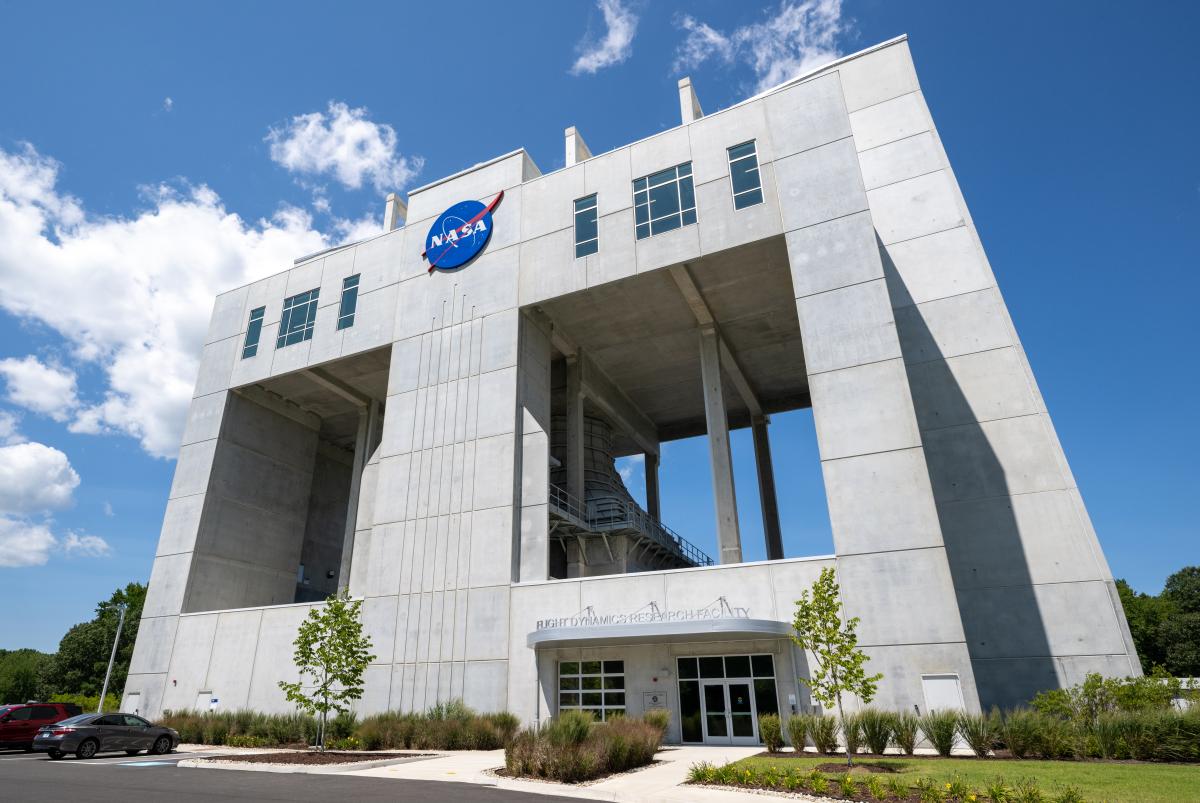
NASA has formally opened the Flight Dynamics Research Facility at Langley Research Center in Hampton, Virginia, marking the agency’s first major new wind tunnel in more than 40 years. The 25,000-square-foot facility replaces two aging wind tunnels that had been operating for more than 80 years and is designed to support next-generation aviation and space exploration research. Equipped with a large vertical test chamber capable of producing wind speeds up to 117 mph, the tunnel will be used to evaluate future aircraft, drones, autonomous flight systems, X-planes, and spacecraft destined for missions to the Moon, Mars, Venus, Titan, and Earth reentry. NASA officials described the project as a critical modernization effort intended to preserve America’s leadership in aerospace technology while reducing the maintenance burden of outdated infrastructure.
Sources
- https://nypost.com/2026/08/03/tech/nasa-opens-first-major-new-wind-tunnel-in-over-40-years-in-virginia
- https://www.nasa.gov/centers-and-facilities/langley/nasas-newest-wind-tunnel-builds-on-legacy-of-innovation/
- https://www.nasa.gov/news-release/nasa-to-showcase-agencys-newest-wind-tunnel-in-virginia/
Key Takeaways
- NASA is investing in modern research infrastructure rather than continuing to rely on increasingly expensive legacy facilities, signaling a renewed emphasis on maintaining America’s aerospace leadership.
- The Flight Dynamics Research Facility will support both civilian aviation innovation and future space exploration, providing testing capabilities for missions ranging from Earth reentry vehicles to lunar, Martian, Venus, and Titan exploration.
- The project reflects a broader recognition that sustained American technological competitiveness depends on continued investment in cutting-edge engineering, research, and advanced testing capabilities.
In-Depth
For decades, America’s aerospace dominance rested not only on brilliant engineers and astronauts but also on the research infrastructure that allowed revolutionary ideas to be tested before they ever left the ground. The opening of NASA’s Flight Dynamics Research Facility demonstrates that Washington is finally making meaningful investments in replacing critical assets that had long exceeded their intended service lives. Replacing wind tunnels that had operated for more than eight decades is not merely an upgrade; it is recognition that technological leadership requires continual modernization.
The new facility is expected to play a central role in developing safer aircraft, advanced autonomous aviation systems, and spacecraft capable of supporting increasingly ambitious exploration missions. Its ability to simulate demanding atmospheric conditions will improve testing accuracy while accelerating development of vehicles intended for Earth, the Moon, Mars, Venus, and Titan. Those capabilities become increasingly important as international competitors expand their own aerospace ambitions and seek to challenge long-standing American leadership.
While space exploration often captures headlines through rocket launches and planetary missions, facilities such as this wind tunnel represent the less visible foundation upon which those achievements depend. Engineering breakthroughs begin with rigorous testing, careful validation, and reliable scientific infrastructure. By investing in next-generation research tools instead of simply maintaining aging facilities indefinitely, NASA is reinforcing the industrial and technological base that has historically given the United States a decisive advantage. Continued commitment to that philosophy will likely prove just as important as any individual mission launched into space.