

Close Menu

    Subscribe to Updates

    Get the latest creative news from FooBar about art, design and business.

    What's Hot

    DeSantis Pushes Aggressive State AI Regulation With AI Bill of Rights and Data Center Limits

    February 9, 2026

    Lawmakers, Parents Renew Push To Sunset Section 230 And Make Big Tech Liable

    February 9, 2026

    Slovenia Proposes Ban On Social Media For Under-15s Amid Growing Global Push

    February 8, 2026
    Facebook X (Twitter) Instagram
    • Tech
    • AI News
    • Get In Touch
    Facebook X (Twitter) LinkedIn
    TallwireTallwire
    • Tech

      Lawmakers, Parents Renew Push To Sunset Section 230 And Make Big Tech Liable

      February 9, 2026

      NASA Clears Smartphones for Artemis Moon Mission

      February 7, 2026

      SpaceX Acquires xAI in Record-Setting Merger, Pivots Toward Space-Based AI Data Centers

      February 7, 2026

      Iran’s Government Blackout of the Internet Amid Protests Stifles Communication and Masks Violence

      February 6, 2026

      Israeli Aerospace Startup Unveils Heavy-Lift Cargo Drone at Singapore Airshow

      February 6, 2026
    • AI News

      DeSantis Pushes Aggressive State AI Regulation With AI Bill of Rights and Data Center Limits

      February 9, 2026

      EU Drove Global Censorship Through Tech Platforms: House Judiciary Report

      February 8, 2026

      China’s Porn Spam Tactic on X Draws Red Flags Over Digital Censorship

      February 8, 2026

      Amazon Begins Closed Beta Testing of AI Tools to Reshape Film and TV Production

      February 8, 2026

      European University Offline for Days After Major Cyberattack Disrupts Systems

      February 7, 2026
    • Security

      EU Drove Global Censorship Through Tech Platforms: House Judiciary Report

      February 8, 2026

      Slovenia Proposes Ban On Social Media For Under-15s Amid Growing Global Push

      February 8, 2026

      NSW Moves to Make Employers Liable for AI and Digital System Harms Under Work Safety Law

      February 8, 2026

      Hackers Dump Millions of Harvard and UPenn Records After Refused Ransom Demands

      February 8, 2026

      European University Offline for Days After Major Cyberattack Disrupts Systems

      February 7, 2026
    • Health

      AI Technology Offers Early Warning System for Deadly Coral Bleaching

      February 6, 2026

      Israel’s New Soreq B Desalination Plant Reaches Full Operational Capacity Boosting Water Supply

      February 3, 2026

      Institutions Are Missing AI’s Potential For Drug Discovery, Experts Say

      February 2, 2026

      Landmark Legal Battles Ignite Over Alleged Social Media Addiction Impacting Youth and Schools

      February 1, 2026

      OpenAI Deploys Free AI-Powered Scientific Workspace Prism to Reshape Research

      January 31, 2026
    • Science

      Pacific Fusion Advances Cheaper Path to Fusion Through Sandia Reactor Experiments

      February 8, 2026

      Trump’s Critical Minerals Reserve Signals U.S. Adapts to Electric Future Amid China Competition

      February 7, 2026

      NASA Clears Smartphones for Artemis Moon Mission

      February 7, 2026

      Elon Musk Pushes Forward With Orbital Data Center Ambitions

      February 7, 2026

      AI Technology Offers Early Warning System for Deadly Coral Bleaching

      February 6, 2026
    • People

      Google Co-Founder’s Epstein Contacts Reignite Scrutiny of Elite Tech Circles

      February 7, 2026

      Bill Gates Denies “Absolutely Absurd” Claims in Newly Released Epstein Files

      February 6, 2026

      Informant Claims Epstein Employed Personal Hacker With Zero-Day Skills

      February 5, 2026

      Starlink Becomes Critical Internet Lifeline Amid Iran Protest Crackdown

      January 25, 2026

      Musk Pledges to Open-Source X’s Recommendation Algorithm, Promising Transparency

      January 21, 2026
    TallwireTallwire
    Home»Tech»Netflix Goes “All In” on Generative AI as Entertainment Industry Remains Divided
    Tech

    Netflix Goes “All In” on Generative AI as Entertainment Industry Remains Divided

    4 Mins Read
    Facebook Twitter Pinterest LinkedIn Tumblr Email
    Netflix Goes “All In” on Generative AI as Entertainment Industry Remains Divided
    Netflix Goes “All In” on Generative AI as Entertainment Industry Remains Divided
    Share
    Facebook Twitter LinkedIn Pinterest Email

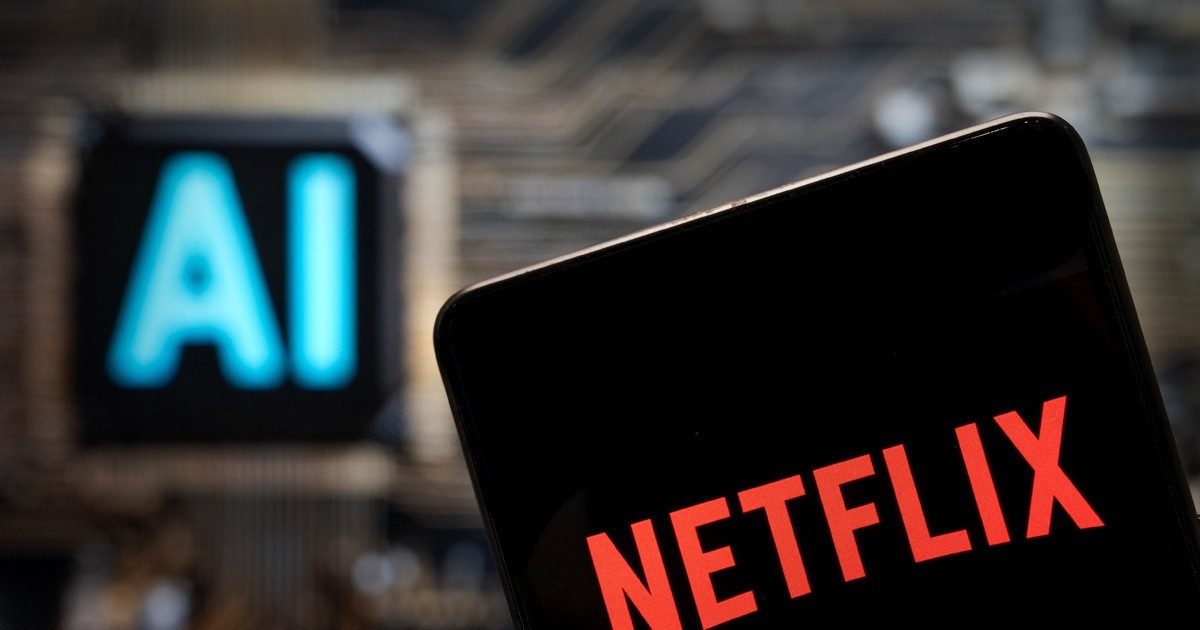
    In a bold strategic pivot, streaming giant Netflix has declared itself “all in” on generative artificial intelligence (AI), embracing the technology as a key tool in content creation and production workflows. The company has signaled it will not use AI to fully replace human creativity, but rather to enhance visual effects, pre-production, set design and other behind-the-scenes tasks. At the same time, many corners of Hollywood remain deeply divided over this shift—creators, unions and studios are raising alarm about job displacement, artistic integrity and intellectual-property risks as generative AI becomes increasingly integrated into entertainment.

    Sources: RudeBaguette.com, TechCrunch

    Key Takeaways

    – Netflix views generative AI as a force multiplier for creativity—especially in cost-intensive areas like visual effects and pre-production—rather than seeking to eliminate human storytellers.

    – The entertainment industry is split: while streaming platforms are increasingly deploying AI tools, talent groups and unions are concerned about the impact on jobs, compensation and artistic authenticity.

    – Broadly, this move signals a turning point in media production: content companies that embrace AI aggressively may gain efficiency and competitive edge—but they also risk backlash if stakeholders feel sidelined or unprotected.

    In-Depth

    For decades, the entertainment industry has operated under a familiar paradigm: large budgets, vast crews, manually crafted sets, visual effects teams, on-location shoots and post-production heavy workflows. But as AI technologies advance—particularly generative AI capable of creating or augmenting imagery, video, audio or even entire scenes—the landscape is shifting. Enter Netflix, which has publicly committed to leaning into these changes. In its latest statements, Netflix leadership emphasized that generative AI will not replace the human creative process—rather, it will enable it to work faster, smarter and with more ambitious scale.

    In practice, Netflix has already employed generative AI in one of its Argentine original series to render a building-collapse sequence at a fraction of the cost and time compared with traditional effects. This early deployment illustrates the appeal of AI: whether it’s generating environment assets, visual effects, pre-visualization or variant-creative explorations, the technology can reduce production friction and cost while enabling storytelling that would otherwise exceed budget or schedule constraints. From a conservative viewpoint, this is precisely the kind of innovation that a competitive, market-driven entertainment company should pursue—leveraging technological advances to secure a strategic advantage, increase output, and satisfy subscriber expectations.

    Yet, the flip side is real and complex. Creators, visual-effects artists, voice actors and other guild members are warning that generative AI may erode their bargaining power, replace tasks historically performed by humans, and blur the line between human craft and algorithmic output. In Europe, for example, voice actors have pushed back against AI-generated dubbing, citing fears of job loss, diminished earnings and loss of artistic control. The broader industry also worries about intellectual-property rights, data-training transparency and ethical boundaries: if models generate imagery or performances derived from copyrighted content, there may be exposure to legal risk or creative backlash.

    Netflix’s approach—publicly stating that AI is a “tool” rather than a “replacement”—is savvy from a management and stakeholder-relations angle. It allows the company to pursue cost-efficiencies and creative scale without (at least superficially) undermining human talent. From a conservative vantage, this model aligns with free-enterprise values: use the best available tools, invest in innovation, generate value, and let market feedback determine winners and losers. If Netflix can assemble distinctive content faster or at lower cost, it will reinforce its competitive moat and reward shareholders.

    However, the broader industry may not be so accommodating. If AI supplants routine tasks and displaces workers, then regulatory, labor and reputational headwinds could follow. The narrative of “creativity replaced by machine” resonates politically and socially, particularly when jobs in Hollywood have historically lacked the protections and scale of other major industries. Moreover, public trust in entertainment brands may suffer if audiences come to feel they’re watching algorithmic churn rather than genuine human-driven storytelling.

    In sum: Netflix is banking hard on generative AI to strengthen its production engine and content pipeline. If all goes according to plan, the company could set a new template for how streaming firms integrate next-gen tools into media workflows. But the divide in the entertainment industry remains wide. On one side is the tech-forward, efficiency-seeking streaming business; on the other is a creative ecosystem worried about its future. How this tension resolves will shape not only who wins in streaming, but how creative work is valued and managed in the age of AI.

    Share. Facebook Twitter Pinterest LinkedIn Tumblr Email
    Previous ArticleNetflix and Spotify Join Forces to Bring Video Podcasts to Streaming in 2026
    Next Article Netflix Rolls Out Real-Time Viewer Voting for Live Shows to Boost Engagement

    Related Posts

    Lawmakers, Parents Renew Push To Sunset Section 230 And Make Big Tech Liable

    February 9, 2026

    NASA Clears Smartphones for Artemis Moon Mission

    February 7, 2026

    SpaceX Acquires xAI in Record-Setting Merger, Pivots Toward Space-Based AI Data Centers

    February 7, 2026

    Iran’s Government Blackout of the Internet Amid Protests Stifles Communication and Masks Violence

    February 6, 2026
    Add A Comment
    Leave A Reply Cancel Reply

    Editors Picks

    Lawmakers, Parents Renew Push To Sunset Section 230 And Make Big Tech Liable

    February 9, 2026

    NASA Clears Smartphones for Artemis Moon Mission

    February 7, 2026

    SpaceX Acquires xAI in Record-Setting Merger, Pivots Toward Space-Based AI Data Centers

    February 7, 2026

    Iran’s Government Blackout of the Internet Amid Protests Stifles Communication and Masks Violence

    February 6, 2026
    Top Reviews
    Tallwire
    Facebook X (Twitter) LinkedIn Threads Instagram RSS
    • Tech
    • Entertainment
    • Business
    • Government
    • Academia
    • Transportation
    • Legal
    • Press Kit
    © 2026 Tallwire. Optimized by ARMOUR Digital Marketing Agency.

    Type above and press Enter to search. Press Esc to cancel.