

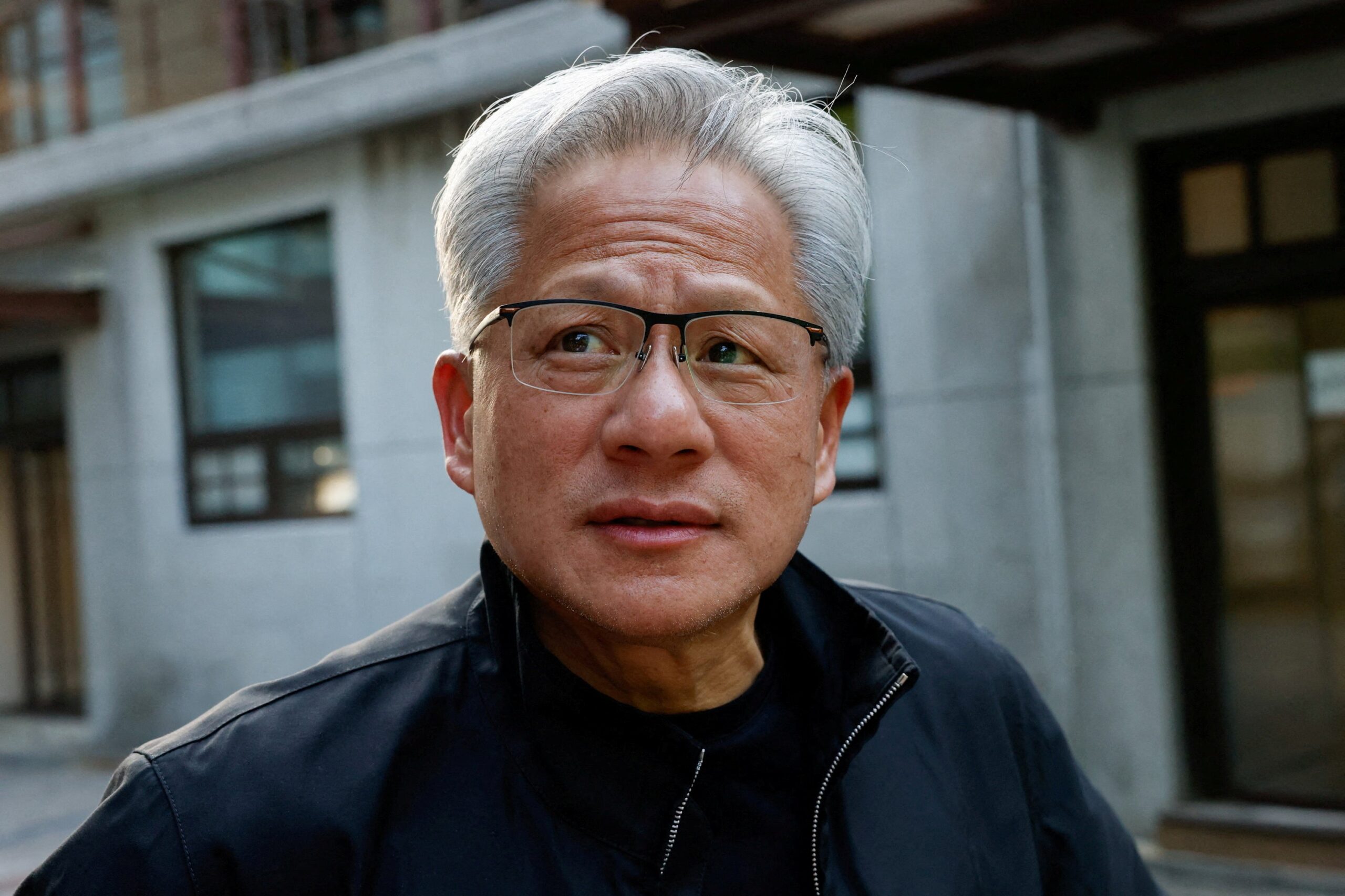
Nvidia CEO Jensen Huang has flatly rejected warnings that artificial intelligence could cause human extinction by 2030, saying there is a “0% chance” of such an outcome and arguing that predictions of imminent AI catastrophe are not grounded in science. His comments place him on the opposite side of a widening technology-industry debate from researchers and executives who favor slowing frontier AI development. Huang maintains that AI is ultimately human-built hardware and software whose risks can be addressed through engineering, responsible deployment, product liability, cybersecurity laws, and other existing legal mechanisms rather than sweeping new regulations inspired by speculative worst-case scenarios. He also argues that slowing American AI development could carry economic and strategic costs as the United States competes with China for technological leadership.
Key Takeaways
- Huang rejects predictions of an AI-driven extinction event by 2030, characterizing near-term doomsday warnings as unsupported by science and unnecessarily frightening to the public.
- His position extends beyond the extinction debate: Huang argues that existing cybersecurity, liability, contract, and property laws should be enforced before governments create expansive new AI-specific regulatory structures.
- The dispute highlights a fundamental divide over whether rapidly advancing AI requires precautionary government intervention or whether innovation should continue rapidly while developers remain accountable for demonstrable harms caused by their products.
In-Depth
Nvidia chief executive Jensen Huang has drawn a sharp line in the escalating debate over artificial intelligence, rejecting predictions that advanced AI could extinguish humanity by 2030. He argues that such forecasts are not grounded in science and that frightening the public with near-term apocalypse scenarios is irresponsible. His position challenges prominent researchers and technology executives who contend that increasingly capable systems warrant slower development and stronger safeguards.
Huang’s broader argument is equally consequential. He maintains that AI remains a human-built computing system and that safety should primarily be treated as an engineering responsibility. Rather than constructing an entirely new regulatory regime around speculative existential threats, he says governments should first enforce existing laws governing cybersecurity, unauthorized access, contracts, product liability, and damages. That approach puts accountability on companies when their products cause identifiable harm instead of granting regulators new authority based on hypothetical future catastrophes.
The dispute also carries economic and geopolitical consequences. Nvidia supplies much of the computing infrastructure driving the AI boom, giving Huang an obvious commercial interest in continued development. At the same time, the United States is competing with China for technological leadership, making any coordinated slowdown difficult to enforce without potentially surrendering strategic ground.
None of this eliminates legitimate concerns about cybersecurity, autonomous behavior, misuse, or defective systems. The stronger question is whether those risks justify sweeping preemptive controls. Huang’s answer is no: develop quickly, enforce existing laws, demand responsible products, and avoid allowing worst-case predictions to dictate policy before evidence establishes the danger.
Sources
- https://www.cbsnews.com/news/jensen-huang-nvidia-rejects-ai-extinction-warnings/
- https://techcrunch.com/2026/09/15/we-dont-need-ai-regulation-leave-safety-to-us-nvidias-jensen-huang-says/
- https://www.theguardian.com/technology/2026/sep/21/nvidia-boss-jensen-huang-dismisses-warnings-ai-destroys-world-anthropic