

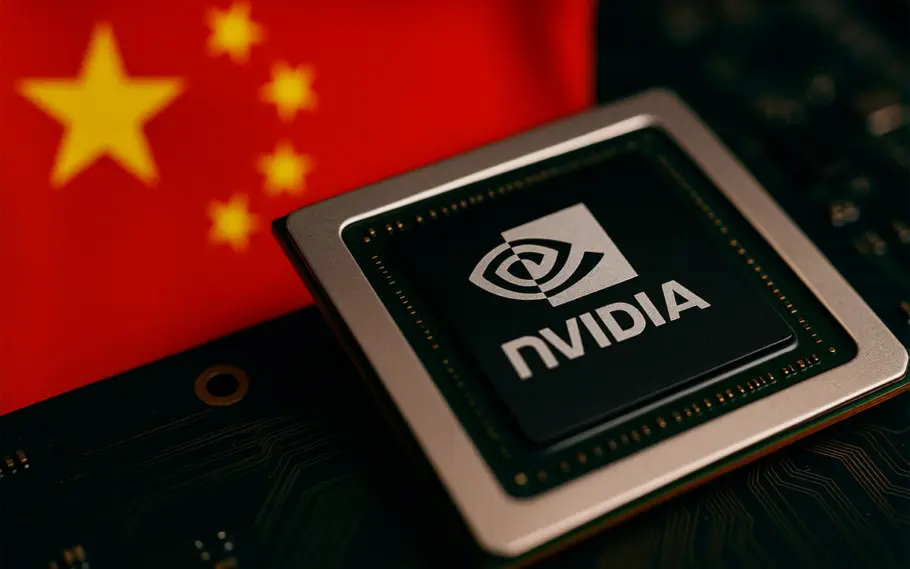
• Nvidia has suspended shipments of U.S.-licensed artificial intelligence chips to China despite federal authorization for certain exports.
• The company reported $2.4 billion in licensed Hopper-generation chip sales to China during its latest fiscal quarter.
• Expanding U.S. export controls and concerns over technology diversion are intensifying scrutiny of China’s access to advanced American semiconductors.
Nvidia has stopped shipping U.S.-licensed artificial intelligence chips to China despite authorization for some sales, highlighting uncertainty over technology trade with Beijing. Interim CEO Colette Kress disclosed that the company sold $2.4 billion in licensed Hopper-generation data center products to Chinese customers during the quarter ended Oct. 25. She did not specify why shipments stopped or whether the suspension would continue. The decision follows tighter American scrutiny of computing exports and concerns about restricted technology reaching Chinese companies through overseas intermediaries.
Washington has allowed limited exports of Nvidia’s H200 processors under licensing requirements, including inspections and national security safeguards. Nvidia previously reported that Chinese government restrictions had prevented it from completing all authorized H200 sales. New American measures targeting access to powerful chips through foreign data centers add another obstacle. The developments expose competing priorities: protecting sensitive technology, preserving American commercial leadership and limiting China’s access to advanced computing capabilities.
Why It Matters
The shipment halt underscores a fundamental national security challenge: American companies can profit from Chinese demand while providing technology that could strengthen a strategic rival. Advanced AI processors support commercial research, but they can also accelerate capabilities relevant to intelligence gathering, cyberoperations and military modernization. Export licenses alone cannot eliminate the risks of diversion or indirect access through foreign intermediaries.
For policymakers, the issue is whether restrictions can be enforced without surrendering the global semiconductor market to competitors. Loopholes undermine safeguards, while inconsistent rules complicate investment and long-term planning for American manufacturers. China’s efforts to develop domestic alternatives also mean tighter controls may carry economic consequences without permanently preventing technological progress. A credible strategy requires rigorous licensing, transparent oversight and coordination with allies. The central test is whether Washington can protect America’s technological advantages while maintaining the industrial strength and innovation that created those advantages in the first place.
Sources
• https://www.reuters.com/world/china/nvidia-stops-shipping-us-approved-ai-chips-china-2026-11-18/
• https://www.sec.gov/Archives/edgar/data/1045810/000104581026000075/nvda-20260726.htm
• https://apnews.com/article/alibaba-ai-chip-china-us-nvidia-huang-922a7ccb3ee1b1336af112ace0e3b288