

Close Menu

    Subscribe to Updates

    Get the latest tech news from Tallwire.

      What's Hot

      Meta Plans More San Francisco Office Cuts as AI Boom Raises Questions About City’s Economy

      November 24, 2026

      AI-Powered Alpha Schools Expand in Los Angeles With Tuition Exceeding $75,000 Annually

      November 24, 2026

      Virginia, Oregon Sue Elon Musk’s SpaceX Over Grok AI-Generated Sexual Images of Children and Adults

      November 24, 2026
      Facebook X (Twitter) Instagram
      • Tech
      • AI
      • Get In Touch
      Facebook X (Twitter) LinkedIn
      TallwireTallwire
      • AI

        AI-Powered Alpha Schools Expand in Los Angeles With Tuition Exceeding $75,000 Annually

        November 24, 2026

        Republicans Challenge Trump Over Nvidia CEO Jensen Huang’s Return

        November 24, 2026

        Virginia, Oregon Sue Elon Musk’s SpaceX Over Grok AI-Generated Sexual Images of Children and Adults

        November 24, 2026

        U.N. Fails to Reach Binding Agreement on AI Killer Robots, Extends Autonomous Weapons Talks

        November 23, 2026

        Qualcomm Cuts 517 California Jobs as San Diego Tech Layoffs Accelerate

        November 23, 2026
      • Tech

        Delta Air Lines System Outage Triggers Nationwide Flight Delays Ahead of Thanksgiving Travel Rush

        November 24, 2026

        BepiColombo Reaches Mercury Orbit After Eight-Year Journey

        November 24, 2026

        Silicon Valley’s Push to Give AI Good Taste Raises Concerns About Creativity, Digital Culture

        November 23, 2026

        Nissan Cyberattack Forces Shutdown of Vehicle Repair Systems, Delaying Electronic Repairs

        November 23, 2026

        AI Stock Market Sell-Off Triggers Worst Nasdaq Weekly Loss Since 2020

        November 22, 2026
      • Business/Finance
      • Cybersecurity
      • Government
        • Legal
      • Health

        Medicare Delays Remote Patient Monitoring Restrictions Until 2029, Giving Tech Firms Reprieve

        November 11, 2026

        Anthropic’s AI Cancer Cure Claims Draw Scientific Skepticism as Drug Research Expands

        November 10, 2026

        Australia’s High Court Hears Constitutional Challenges to Social Media Ban

        November 7, 2026

        Majority of AI Health Users Trust Chatbots Over Doctors, Raising Patient Safety Concerns

        November 4, 2026

        Quantum Computing Breakthrough Could Transform AI Data Centers and Slash Energy Costs

        November 2, 2026
      • Science
        • Academia
      • Entertainment/Communications
      • People
      • Transportation
      • Opinion
      TallwireTallwire
      Home»Tech»OpenAI Converts to Public Benefit Corporation with Microsoft Taking 27% Stake
      Tech

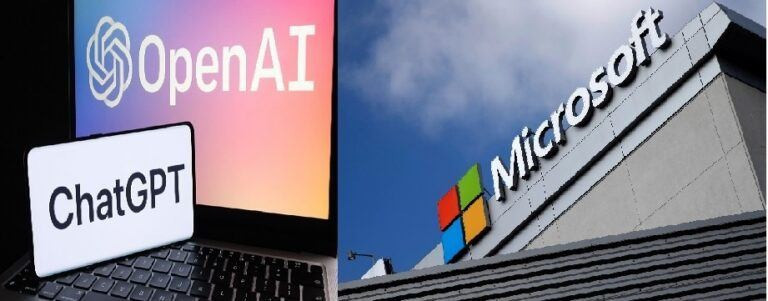
      OpenAI Converts to Public Benefit Corporation with Microsoft Taking 27% Stake

      Updated:February 21, 20265 Mins Read
      Facebook Twitter Pinterest LinkedIn Tumblr Email
      OpenAI Converts to Public Benefit Corporation with Microsoft Taking 27% Stake
      OpenAI Converts to Public Benefit Corporation with Microsoft Taking 27% Stake
      Share
      Facebook Twitter LinkedIn Pinterest Email

      In a landmark shift for the artificial-intelligence sector, OpenAI has officially completed its transformation into a public benefit corporation (PBC), simplifying its operating structure and positioning itself for expanded capital access. According to the company’s own blog post, its for-profit arm will now operate under the PBC model, with the nonprofit parent retaining oversight. Source material indicates that Microsoft has secured approximately a 27 % equity stake in the new entity, reflecting a valuation in the neighborhood of $500 billion. The updated deal also re-works Microsoft’s rights to OpenAI’s technology in the event the company reaches artificial general intelligence (AGI), and signals that the nonprofit foundation will hold large equity interests while focusing on philanthropic aims such as healthcare and AI resilience.

      Sources: Wall Street Journal, The Guardian

      Key Takeaways

      – The restructuring to a PBC gives OpenAI a clearer path toward raising capital and potentially pursuing an IPO while maintaining its mission-oriented oversight.

      – Microsoft’s ~27 % stake underlines its major role in the AI ecosystem and secures its access to OpenAI’s models — but the new agreement also limits Microsoft’s rights in certain hardware areas and beyond 2030–2032 for model/IP rights.

      – The nonprofit arm of OpenAI will hold substantial equity and focus on charitable/mission-driven initiatives (e.g., health, AI resilience), signaling a hybrid approach of profit-and-purpose in AI development.

      In-Depth

      The decision by OpenAI to convert its for-profit arm into a public benefit corporation marks a significant moment in the intersection of deep-tech investment, corporate governance, and public-mission accountability. Historically founded as a nonprofit research lab in 2015, OpenAI moved in 2019 to a “capped-profit” for-profit structure in order to attract the capital and talent needed to scale its models. However, that structure proved increasingly unwieldy given the explosion of demand for large-language models and the massive infrastructure needed to train and serve them.

      Under the newly-announced PBC framework, OpenAI’s nonprofit parent retains controlling oversight of the enterprise, while the for-profit PBC can issue shares and operate more like a conventional company — but with a built-in mission balance between shareholder returns and public benefit. This dual-track structure addresses a key tension: large-scale AI requires billions of dollars in investment and global commercial deployment, yet the technology carries profound societal and governance implications (e.g., AGI risk, concentration of power, safety concerns). By becoming a PBC, OpenAI signals that it intends to marry mission and monetization rather than purely private-profit maximization.

      Microsoft’s role is central to this development. The new agreement gives Microsoft approximately 27 % ownership of the PBC, reflecting a very large valuation (on the order of half-a-trillion dollars in some reports). In return, Microsoft benefits from continued access to OpenAI’s models and infrastructure, notably via Azure and other services. At the same time, the deal revises some of the earlier arrangement’s terms: notably, Microsoft’s exclusive hosting rights are curtailed in certain consumer-hardware areas, and its IP rights tied to AGI are time-limited (to 2030 or 2032, depending on scenario). These adjustments suggest both sides sought to renegotiate the power dynamics in the relationship — Microsoft as major investor and cloud partner, OpenAI as rising sovereign actor in AI.

      From a conservative perspective, this shift underscores the reality that advanced-AI firms are increasingly becoming strategic national and economic assets. The hybrid mission-plus-profit governance model may help reconcile investor incentives with oversight demands, but it also raises questions about accountability, capital leakage, influence of large tech firms, and the path toward eventual public listing. For the U.S. and markets at large, the transparency and regulatory implications of this new structure will bear close scrutiny — especially given AI’s global competition, regulation, and the potential for concentrated power.

      In practical terms, OpenAI’s new status may open up larger rounds of investment, facilitate recruitment of talent (since equity can now be more conventional), and accelerate the commercialization of AI models. On the philanthropy side, the nonprofit stake and the stated focus on health and resilience signal that OpenAI intends to allocate portions of value toward societal challenges. Nevertheless, the notion of “public benefit” in a corporation with hundreds of billions in value remains contested: critics might ask whether mission oversight alone suffices to constrain profit-seeking behavior, especially when shareholders and investment returns loom large.

      For conservative observers, the restructuring may also prompt questions about government influence, antitrust risk, and the role of major technology platforms in critical sectors like AI. The deals surrounding Microsoft suggest that while the partnership strengthens U.S. competitiveness in AI, it also consolidates power within a few firms — which may require regulatory vigilance. The PBC approach could serve as a template for future AI firms, but whether it genuinely tilts toward broader public good or simply masks a conventional profit-seeking enterprise is an open question.

      In sum, OpenAI’s conversion to a public benefit corporation with Microsoft’s major stake marks a new phase in the evolution of the AI industry — one where governance, mission, capital, and commercial strategy converge. The real test going forward will be how the company balances scale and shareholder returns with mission fidelity, transparency, and alignment with broader societal interests.

      Microsoft OpenAI
      Share. Facebook Twitter Pinterest LinkedIn Tumblr Email
      Previous ArticleOpenAI Confirms Mixpanel Data Breach Impacting Some API Users
      Next Article OpenAI Cuts Ties With Mixpanel After November 2025 Vendor Breach Exposes API User Data

      Related Posts

      Delta Air Lines System Outage Triggers Nationwide Flight Delays Ahead of Thanksgiving Travel Rush

      November 24, 2026

      BepiColombo Reaches Mercury Orbit After Eight-Year Journey

      November 24, 2026

      Silicon Valley’s Push to Give AI Good Taste Raises Concerns About Creativity, Digital Culture

      November 23, 2026

      Nissan Cyberattack Forces Shutdown of Vehicle Repair Systems, Delaying Electronic Repairs

      November 23, 2026
      Add A Comment
      Leave A Reply Cancel Reply

      Editors Picks

      Delta Air Lines System Outage Triggers Nationwide Flight Delays Ahead of Thanksgiving Travel Rush

      November 24, 2026

      BepiColombo Reaches Mercury Orbit After Eight-Year Journey

      November 24, 2026

      Silicon Valley’s Push to Give AI Good Taste Raises Concerns About Creativity, Digital Culture

      November 23, 2026

      Nissan Cyberattack Forces Shutdown of Vehicle Repair Systems, Delaying Electronic Repairs

      November 23, 2026
      Popular Topics
      Stocks Tim Cook Software starlink Sundar Pichai Taiwan Tech Viral Satya Nadella trending spotlight Tesla Cybertruck Series A Space SpaceX Series B UAE Tech Satellite Startup Samsung Tesla
      Major Tech Companies
      • Apple News
      • Google News
      • Meta News
      • Microsoft News
      • Amazon News
      • Samsung News
      • Nvidia News
      • OpenAI News
      • Tesla News
      • AMD News
      • Anthropic News
      • Elbit News
      AI & Emerging Tech
      • AI Regulation News
      • AI Safety News
      • AI Adoption
      • Quantum Computing News
      • Robotics News
      Key People
      • Sam Altman News
      • Jensen Huang News
      • Elon Musk News
      • Mark Zuckerberg News
      • Sundar Pichai News
      • Tim Cook News
      • Satya Nadella News
      • Mustafa Suleyman News
      Global Tech & Policy
      • Israel Tech News
      • India Tech News
      • Taiwan Tech News
      • UAE Tech News
      Startups & Emerging Tech
      • Series A News
      • Series B News
      • Startup News
      Tallwire
      Facebook X (Twitter) LinkedIn Threads Instagram RSS
      • AI
      • Tech
      • Business/Finance
      • Cybersecurity
      • Government
      • Legal
      • Health
      • Science
      • Academia
      • Entertainment/Communications
      • People
      • Transportation
      • Opinion
      • Press Kit
      © 2026 Tallwire. Optimized by ARMOUR Digital Marketing Agency.

      Type above and press Enter to search. Press Esc to cancel.