

Close Menu

    Subscribe to Updates

    Get the latest tech news from Tallwire.

      What's Hot

      Teleprompter Operator Suspended Amid Investigation Into Kalshi Betting on Trump Speeches

      July 22, 2026

      AI-Generated Biography Scam Highlights Growing Amazon Content Crisis

      July 22, 2026

      Guardrails or Gag Orders? The Uneasy Balance Between Protecting Teens and Preserving Free Speech

      July 22, 2026
      Facebook X (Twitter) Instagram
      • Tech
      • AI
      • Get In Touch
      Facebook X (Twitter) LinkedIn
      TallwireTallwire
      • Tech

        Global Smartphone Shipments Sink to 13-Year Low as AI Chip Demand Reshapes Consumer Electronics

        July 22, 2026

        India Launches First Hydrogen-Powered Passenger Train as Rail Modernization Accelerates

        July 20, 2026

        Caribbean Nation Pursues U.S.-Backed AI Data Center Expansion Amid Growth and Infrastructure Concerns

        July 20, 2026

        Space-Based Golden Dome Receives Major Funding Boost as U.S. Accelerates Missile Defense

        July 19, 2026

        Parents Fear AI Is Replacing Real Learning for America’s Children

        July 19, 2026
      • AI

        AI-Generated Biography Scam Highlights Growing Amazon Content Crisis

        July 22, 2026

        China’s Moonshot AI Challenges U.S. Dominance and Jolts Global Tech Markets

        July 22, 2026

        Meta and Anthropic Reportedly Explore Multibillion-Dollar AI Computing Partnership

        July 22, 2026

        Global Smartphone Shipments Sink to 13-Year Low as AI Chip Demand Reshapes Consumer Electronics

        July 22, 2026

        White House Launches AI Cybersecurity Initiative to Protect Critical Infrastructure

        July 21, 2026
      • Security

        White House Launches AI Cybersecurity Initiative to Protect Critical Infrastructure

        July 21, 2026

        xAI Takes Legal Action Against User Accused of Misusing Grok for Child Exploitation Material

        July 21, 2026

        DOJ Clears Return of TikTok to Federal Government Devices

        July 21, 2026

        Space-Based Golden Dome Receives Major Funding Boost as U.S. Accelerates Missile Defense

        July 19, 2026

        Europe Revives Controversial Chat Control Despite Majority Opposition

        July 18, 2026
      • Health

        UK Expands Social Media Restrictions With Default Overnight Curfew for Older Teenagers

        July 22, 2026

        Parents Fear AI Is Replacing Real Learning for America’s Children

        July 19, 2026

        AI Chatbots Face Growing Scrutiny as Mental Health Risks Draw Medical Alarm

        July 16, 2026

        AI Chatbots Increasingly Clash With Eating Disorder Treatment

        July 15, 2026

        Personalized UVB Device Promises Vitamin D Benefits While Raising Questions About Medicalizing Everyday Health

        July 15, 2026
      • Science

        India Launches First Hydrogen-Powered Passenger Train as Rail Modernization Accelerates

        July 20, 2026

        MIT Researchers Develop Bird-Inspired Robot That Flies, Dives, and Returns to the Air

        July 19, 2026

        Palisades Nuclear Restart Faces Legal Victory but Operational Delays

        July 18, 2026

        Trump Takes Measured Approach to Winning the Quantum Race

        July 17, 2026

        AI Chatbots Face Growing Scrutiny as Mental Health Risks Draw Medical Alarm

        July 16, 2026
      • Tech

        AI-Generated Biography Scam Highlights Growing Amazon Content Crisis

        July 22, 2026

        AI Revolution Outpaces Workplace Readiness as Productivity Gains Lag

        July 20, 2026

        Wisconsin Panel Refers Elon Musk Voter Giveaway Case for Possible Criminal Prosecution

        July 20, 2026

        AI Protesters March on Silicon Valley Giants Demanding Development Freeze

        July 14, 2026

        Palo Alto Networks CEO Warns AI Costs Must Plunge Before Enterprise Adoption Can Accelerate

        July 14, 2026
      TallwireTallwire
      Home»Opinion»Orbital Power and Digital Sovereignty: The Case for Space-Based Data Centers
      Opinion

      Orbital Power and Digital Sovereignty: The Case for Space-Based Data Centers

      5 Mins Read
      Facebook Twitter Pinterest LinkedIn Tumblr Email
      Share
      Facebook Twitter LinkedIn Pinterest Email

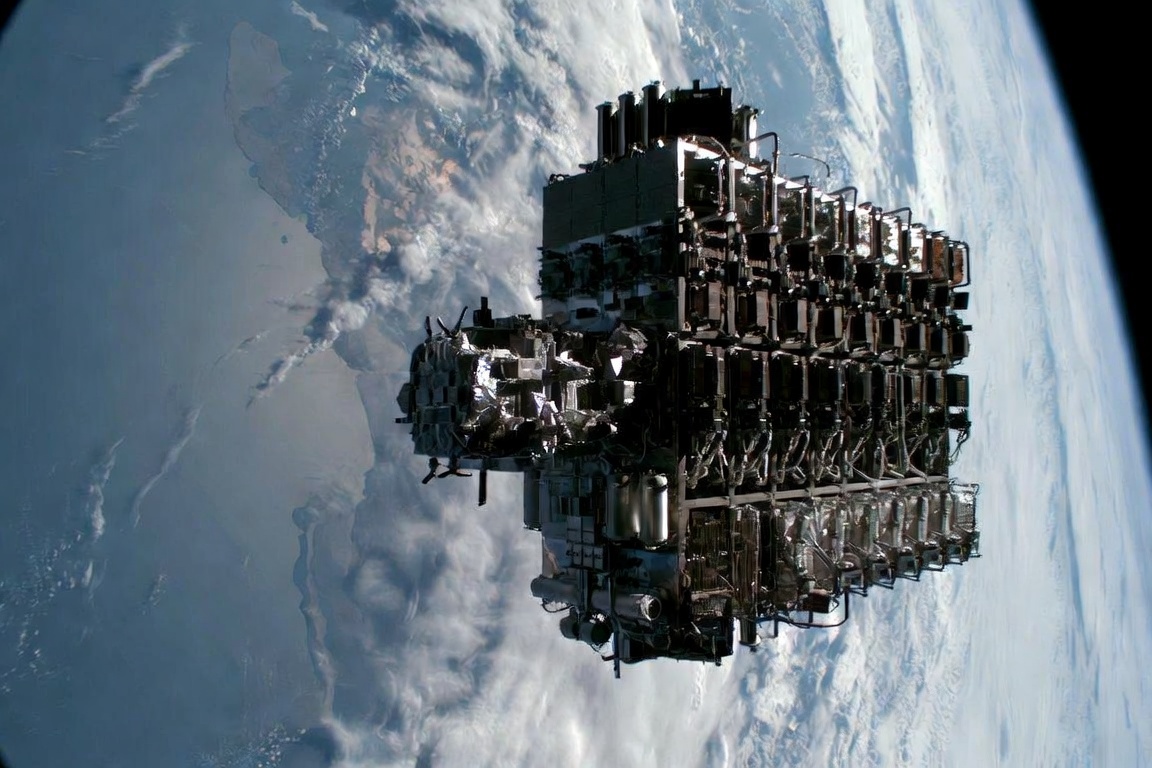
      For decades, the trajectory of technological progress has followed a predictable path: more data, more computing power, and more strain on the physical infrastructure that supports it. What once fit inside a server closet now demands sprawling campuses the size of small towns, consuming vast quantities of electricity and water. The modern data center has become one of the most energy-intensive components of the global economy, and its growth shows no signs of slowing. Against that backdrop, the idea of moving data centers—and their power generation—into space has shifted from science fiction to a serious strategic consideration.

      At first glance, the concept sounds extravagant. Launching servers into orbit, maintaining them in the harsh environment of space, and transmitting data back to Earth seems like an engineering and financial mountain. But when examined through the lens of long-term infrastructure planning and national competitiveness, the proposition begins to look less like fantasy and more like inevitability.

      The central advantage is energy. Terrestrial data centers are constrained by the availability and reliability of power grids. Even in energy-rich regions, they compete with residential, industrial, and governmental demand. In contrast, space offers an effectively limitless supply of solar energy. Satellites already harness solar power efficiently, operating continuously without the interruptions caused by weather or the day-night cycle—particularly in certain orbital paths. A space-based data center could theoretically generate far more power per square meter than its Earth-bound counterpart, without drawing from strained domestic grids.

      There is also a strategic argument to be made about resilience. Ground-based data centers are vulnerable—to natural disasters, cyberattacks on physical infrastructure, and even geopolitical instability. Concentrating massive amounts of critical data in fixed terrestrial locations creates obvious targets. Moving key components of digital infrastructure into orbit introduces a layer of separation that is difficult to replicate on Earth. While space assets are not immune to threats, they operate in a domain that requires significantly more capability to disrupt. That alone changes the calculus.

      Cooling, often cited as a major challenge for data centers, becomes an interesting paradox in space. On Earth, cooling systems consume enormous amounts of energy to prevent servers from overheating. In the vacuum of space, heat dissipation behaves differently, relying on radiation rather than convection. While this presents engineering challenges, it also eliminates the need for water-intensive cooling systems that are increasingly controversial in drought-prone regions. If solved effectively, space-based cooling could become more efficient and less environmentally contentious than terrestrial methods.

      Of course, none of this comes without cost. Launching hardware into orbit remains expensive, even with the advancements made by private aerospace firms. Maintenance is another hurdle. Unlike a facility in Arizona or Texas, a malfunctioning server in orbit cannot simply be swapped out by a technician with a toolbox. It would require robotic servicing or costly replacement missions. That reality means space-based data centers would need to be designed with unprecedented durability and redundancy from the outset.

      Latency is another factor that cannot be ignored. The physical distance between Earth and orbit introduces delays in data transmission. For some applications—high-frequency trading, real-time communications, or mission-critical control systems—those delays could be unacceptable. However, not all computing tasks require instantaneous response times. Archival storage, large-scale data processing, and certain forms of artificial intelligence training could be well-suited to an orbital environment where latency is less of a constraint.

      Then there is the question of sovereignty. In an era where data is increasingly viewed as a national asset, the location of data storage and processing carries political weight. Space-based infrastructure could blur traditional jurisdictional boundaries. Who regulates a server farm in orbit? Which laws apply? These are not trivial questions, and they will require careful consideration. Yet they also present an opportunity. Nations that establish early leadership in this domain could shape the rules, rather than react to them.

      From a conservative standpoint, the appeal lies in long-term strategic thinking and infrastructure independence. Relying solely on terrestrial solutions for an exponentially growing digital economy may prove shortsighted. Diversifying where and how critical data is stored and processed aligns with principles of resilience, competition, and national security. It also reduces pressure on domestic resources, particularly energy and water, which are already under strain in many parts of the country.

      Private enterprise will ultimately play a decisive role. Governments can set the framework and provide initial investment, but the innovation required to make space-based data centers viable will come from companies willing to take calculated risks. The same entrepreneurial spirit that transformed the launch industry could do the same for orbital computing infrastructure. What seems prohibitively expensive today may, within a decade, become economically competitive.

      Skepticism is warranted. Not every ambitious idea justifies its cost, and the history of technology is littered with overpromises. But dismissing the concept outright would ignore the broader trend: the relentless expansion of digital demand and the limitations of existing infrastructure. Space-based data centers are not a near-term replacement for terrestrial facilities, but they may become an essential complement.

      In the end, the question is not whether humanity can move parts of its digital backbone into space, but whether it will choose to do so before necessity forces the issue. The countries and companies that recognize the strategic implications early—and invest accordingly—will not just adapt to the future of computing. They will define it.

      what happens after the ma

      Intel Satellite Space
      Share. Facebook Twitter Pinterest LinkedIn Tumblr Email
      Previous ArticleChicago Program Seeks To Teach AI Literacy Without More Screen Time
      Next Article JPMorgan’s Anthropic Restriction Signals Growing AI Cold War With China

      Related Posts

      AI-Generated Biography Scam Highlights Growing Amazon Content Crisis

      July 22, 2026

      Guardrails or Gag Orders? The Uneasy Balance Between Protecting Teens and Preserving Free Speech

      July 22, 2026

      China’s Moonshot AI Challenges U.S. Dominance and Jolts Global Tech Markets

      July 22, 2026

      Meta and Anthropic Reportedly Explore Multibillion-Dollar AI Computing Partnership

      July 22, 2026
      Add A Comment
      Leave A Reply Cancel Reply

      Editors Picks

      Global Smartphone Shipments Sink to 13-Year Low as AI Chip Demand Reshapes Consumer Electronics

      July 22, 2026

      India Launches First Hydrogen-Powered Passenger Train as Rail Modernization Accelerates

      July 20, 2026

      Caribbean Nation Pursues U.S.-Backed AI Data Center Expansion Amid Growth and Infrastructure Concerns

      July 20, 2026

      Space-Based Golden Dome Receives Major Funding Boost as U.S. Accelerates Missile Defense

      July 19, 2026
      Popular Topics
      Stocks Series A SpaceX Tim Cook Startup Samsung Taiwan Tech spotlight Software Sundar Pichai Tesla Viral trending Space starlink UAE Tech Satya Nadella Series B Tesla Cybertruck Satellite
      Major Tech Companies
      • Apple News
      • Google News
      • Meta News
      • Microsoft News
      • Amazon News
      • Samsung News
      • Nvidia News
      • OpenAI News
      • Tesla News
      • AMD News
      • Anthropic News
      • Elbit News
      AI & Emerging Tech
      • AI Regulation News
      • AI Safety News
      • AI Adoption
      • Quantum Computing News
      • Robotics News
      Key People
      • Sam Altman News
      • Jensen Huang News
      • Elon Musk News
      • Mark Zuckerberg News
      • Sundar Pichai News
      • Tim Cook News
      • Satya Nadella News
      • Mustafa Suleyman News
      Global Tech & Policy
      • Israel Tech News
      • India Tech News
      • Taiwan Tech News
      • UAE Tech News
      Startups & Emerging Tech
      • Series A News
      • Series B News
      • Startup News
      Tallwire
      Facebook X (Twitter) LinkedIn Threads Instagram RSS
      • Tech
      • Entertainment
      • Business
      • Government
      • Academia
      • Transportation
      • Legal
      • Press Kit
      © 2026 Tallwire. Optimized by ARMOUR Digital Marketing Agency.

      Type above and press Enter to search. Press Esc to cancel.