

Close Menu

    Subscribe to Updates

    Get the latest tech news from Tallwire.

      What's Hot

      Guardrails or Gag Orders? The Uneasy Balance Between Protecting Teens and Preserving Free Speech

      July 22, 2026

      Meta and Anthropic Reportedly Explore Multibillion-Dollar AI Computing Partnership

      July 22, 2026

      China’s Moonshot AI Challenges U.S. Dominance and Jolts Global Tech Markets

      July 22, 2026
      Facebook X (Twitter) Instagram
      • Tech
      • AI
      • Get In Touch
      Facebook X (Twitter) LinkedIn
      TallwireTallwire
      • Tech

        Global Smartphone Shipments Sink to 13-Year Low as AI Chip Demand Reshapes Consumer Electronics

        July 22, 2026

        India Launches First Hydrogen-Powered Passenger Train as Rail Modernization Accelerates

        July 20, 2026

        Caribbean Nation Pursues U.S.-Backed AI Data Center Expansion Amid Growth and Infrastructure Concerns

        July 20, 2026

        Space-Based Golden Dome Receives Major Funding Boost as U.S. Accelerates Missile Defense

        July 19, 2026

        Parents Fear AI Is Replacing Real Learning for America’s Children

        July 19, 2026
      • AI

        China’s Moonshot AI Challenges U.S. Dominance and Jolts Global Tech Markets

        July 22, 2026

        Meta and Anthropic Reportedly Explore Multibillion-Dollar AI Computing Partnership

        July 22, 2026

        Global Smartphone Shipments Sink to 13-Year Low as AI Chip Demand Reshapes Consumer Electronics

        July 22, 2026

        White House Launches AI Cybersecurity Initiative to Protect Critical Infrastructure

        July 21, 2026

        AUS Treasurer Rejects AI-Driven Public Service Layoff Fears

        July 21, 2026
      • Security

        White House Launches AI Cybersecurity Initiative to Protect Critical Infrastructure

        July 21, 2026

        xAI Takes Legal Action Against User Accused of Misusing Grok for Child Exploitation Material

        July 21, 2026

        DOJ Clears Return of TikTok to Federal Government Devices

        July 21, 2026

        Space-Based Golden Dome Receives Major Funding Boost as U.S. Accelerates Missile Defense

        July 19, 2026

        Europe Revives Controversial Chat Control Despite Majority Opposition

        July 18, 2026
      • Health

        UK Expands Social Media Restrictions With Default Overnight Curfew for Older Teenagers

        July 22, 2026

        Parents Fear AI Is Replacing Real Learning for America’s Children

        July 19, 2026

        AI Chatbots Face Growing Scrutiny as Mental Health Risks Draw Medical Alarm

        July 16, 2026

        AI Chatbots Increasingly Clash With Eating Disorder Treatment

        July 15, 2026

        Personalized UVB Device Promises Vitamin D Benefits While Raising Questions About Medicalizing Everyday Health

        July 15, 2026
      • Science

        India Launches First Hydrogen-Powered Passenger Train as Rail Modernization Accelerates

        July 20, 2026

        MIT Researchers Develop Bird-Inspired Robot That Flies, Dives, and Returns to the Air

        July 19, 2026

        Palisades Nuclear Restart Faces Legal Victory but Operational Delays

        July 18, 2026

        Trump Takes Measured Approach to Winning the Quantum Race

        July 17, 2026

        AI Chatbots Face Growing Scrutiny as Mental Health Risks Draw Medical Alarm

        July 16, 2026
      • Tech

        AI Revolution Outpaces Workplace Readiness as Productivity Gains Lag

        July 20, 2026

        Wisconsin Panel Refers Elon Musk Voter Giveaway Case for Possible Criminal Prosecution

        July 20, 2026

        AI Protesters March on Silicon Valley Giants Demanding Development Freeze

        July 14, 2026

        Palo Alto Networks CEO Warns AI Costs Must Plunge Before Enterprise Adoption Can Accelerate

        July 14, 2026

        DeepMind Unionization Effort Encounters Early Resistance as Labor Talks Stall

        July 11, 2026
      TallwireTallwire
      Home»Uncategorized»Silicon Sovereignty at Stake
      Uncategorized

      Silicon Sovereignty at Stake

      5 Mins Read
      Facebook Twitter Pinterest LinkedIn Tumblr Email
      AI Asia
      Share
      Facebook Twitter LinkedIn Pinterest Email

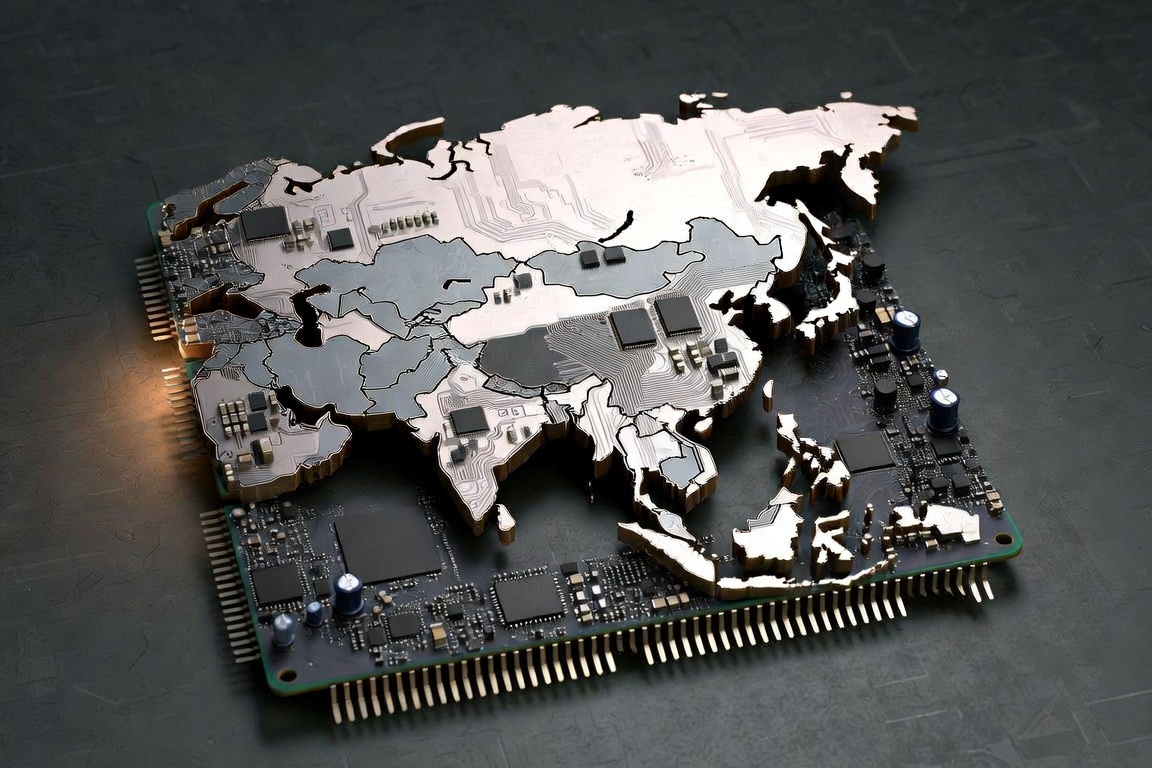
      There’s a quiet but consequential shift underway in the global balance of power, and it isn’t happening on a battlefield or in a diplomatic chamber—it’s unfolding inside semiconductor fabrication plants. If Asia becomes the predominant producer of advanced AI chips, the consequences will ripple far beyond the tech sector. This isn’t just about supply chains or corporate profits; it’s about economic independence, national security, and the future of technological leadership.

      At the heart of the issue is the central role AI chips now play in modern life. These aren’t just components for smartphones or laptops anymore. They power everything from military systems and cybersecurity defenses to financial markets, healthcare diagnostics, and the infrastructure behind artificial intelligence itself. Whoever controls their production effectively holds the keys to the next era of innovation—and influence.

      Allowing Asia—particularly countries like Taiwan, South Korea, and increasingly China—to dominate this space creates a structural vulnerability for the United States and its allies. For decades, America led the world in semiconductor innovation, even if much of the manufacturing gradually moved offshore for cost reasons. That trade-off made sense in a different era, when chips were seen as interchangeable commodities. Today, that assumption looks dangerously outdated.

      The most immediate risk is supply chain fragility. We’ve already seen how disruptions—whether from pandemics, geopolitical tensions, or natural disasters—can choke off access to critical components. Now imagine a future where a regional conflict in East Asia, especially involving Taiwan, halts the production of the world’s most advanced AI chips. The economic shock would be severe, but the strategic implications would be even more alarming. Defense systems, intelligence operations, and critical infrastructure in the United States could find themselves dependent on a supply that no longer exists.

      Then there’s the issue of leverage. Nations that dominate essential technologies gain bargaining power, whether they choose to use it overtly or subtly. If the United States becomes reliant on foreign-produced AI chips, it risks ceding not just economic advantage but strategic autonomy. Decisions that should be made in Washington could instead be influenced—directly or indirectly—by the realities of foreign control over key resources.

      China’s ambitions add another layer of complexity. Beijing has made no secret of its goal to achieve self-sufficiency in semiconductors and to lead in artificial intelligence. While it still lags in cutting-edge chip manufacturing, it is investing heavily to close the gap. If China were to succeed, it wouldn’t just be another competitor—it would be a competitor operating under a fundamentally different political and economic system, one that blends state control with technological expansion. That combination raises legitimate concerns about how such power could be used, particularly in areas like surveillance, cyber warfare, and global influence campaigns.

      Even when production is concentrated in friendly nations like Taiwan and South Korea, the situation isn’t entirely comfortable. Alliances can shift, and even strong partners must prioritize their own national interests. The reality is that dependence—on anyone—limits flexibility. A nation that cannot produce its own critical technologies is, by definition, less capable of charting its own course.

      There’s also a longer-term economic consequence to consider. High-end semiconductor manufacturing isn’t just about chips; it’s about ecosystems. It drives research, talent development, and entire industries that cluster around innovation. If Asia continues to dominate production, it will attract more of the world’s best engineers, more investment capital, and more cutting-edge research. Over time, that gravitational pull could erode America’s position as the global hub of technological innovation.

      To be clear, this isn’t an argument for isolationism or for cutting off global trade. The United States has long benefited from open markets and international collaboration. But there’s a difference between cooperation and dependency. Strategic industries—especially those tied to national security and foundational technologies—require a level of domestic capability that ensures resilience.

      Efforts like the CHIPS and Science Act represent a recognition of this reality, aiming to bring semiconductor manufacturing back to American soil. But legislation alone isn’t enough. Rebuilding a robust domestic semiconductor industry will require sustained investment, regulatory clarity, and a commitment to competing globally rather than retreating inward. It will also require a cultural shift—one that recognizes manufacturing not as a relic of the past, but as a pillar of future strength.

      Ultimately, the question isn’t whether Asia should play a major role in AI chip production. It already does, and it likely always will. The real question is whether the United States is willing to accept a future where it plays a secondary role in a technology that will define the 21st century. That’s not just a business decision—it’s a strategic one.

      If America allows itself to fall behind in this race, the consequences won’t be immediate or dramatic. They’ll be gradual, subtle, and cumulative. Influence will shift. Options will narrow. And by the time the full impact is felt, reversing course may no longer be possible.

      That’s the real risk: not a sudden loss, but a slow surrender of leadership in the most important technological frontier of our time.

      Intel Manufacturing Space
      Share. Facebook Twitter Pinterest LinkedIn Tumblr Email
      Previous ArticleFlorida Escalates Fight Against TikTok Over Child Safety Violations
      Next Article Beijing-Linked Cyberespionage Campaign Exposes Vulnerabilities in North American Research Networks

      Related Posts

      Guardrails or Gag Orders? The Uneasy Balance Between Protecting Teens and Preserving Free Speech

      July 22, 2026

      China’s Moonshot AI Challenges U.S. Dominance and Jolts Global Tech Markets

      July 22, 2026

      Meta and Anthropic Reportedly Explore Multibillion-Dollar AI Computing Partnership

      July 22, 2026

      Global Smartphone Shipments Sink to 13-Year Low as AI Chip Demand Reshapes Consumer Electronics

      July 22, 2026
      Add A Comment
      Leave A Reply Cancel Reply

      Editors Picks

      Global Smartphone Shipments Sink to 13-Year Low as AI Chip Demand Reshapes Consumer Electronics

      July 22, 2026

      India Launches First Hydrogen-Powered Passenger Train as Rail Modernization Accelerates

      July 20, 2026

      Caribbean Nation Pursues U.S.-Backed AI Data Center Expansion Amid Growth and Infrastructure Concerns

      July 20, 2026

      Space-Based Golden Dome Receives Major Funding Boost as U.S. Accelerates Missile Defense

      July 19, 2026
      Popular Topics
      Satya Nadella Tesla Sundar Pichai Taiwan Tech Samsung Software spotlight SpaceX Series A Stocks UAE Tech Tesla Cybertruck Series B Space trending Satellite starlink Tim Cook Viral Startup
      Major Tech Companies
      • Apple News
      • Google News
      • Meta News
      • Microsoft News
      • Amazon News
      • Samsung News
      • Nvidia News
      • OpenAI News
      • Tesla News
      • AMD News
      • Anthropic News
      • Elbit News
      AI & Emerging Tech
      • AI Regulation News
      • AI Safety News
      • AI Adoption
      • Quantum Computing News
      • Robotics News
      Key People
      • Sam Altman News
      • Jensen Huang News
      • Elon Musk News
      • Mark Zuckerberg News
      • Sundar Pichai News
      • Tim Cook News
      • Satya Nadella News
      • Mustafa Suleyman News
      Global Tech & Policy
      • Israel Tech News
      • India Tech News
      • Taiwan Tech News
      • UAE Tech News
      Startups & Emerging Tech
      • Series A News
      • Series B News
      • Startup News
      Tallwire
      Facebook X (Twitter) LinkedIn Threads Instagram RSS
      • Tech
      • Entertainment
      • Business
      • Government
      • Academia
      • Transportation
      • Legal
      • Press Kit
      © 2026 Tallwire. Optimized by ARMOUR Digital Marketing Agency.

      Type above and press Enter to search. Press Esc to cancel.