

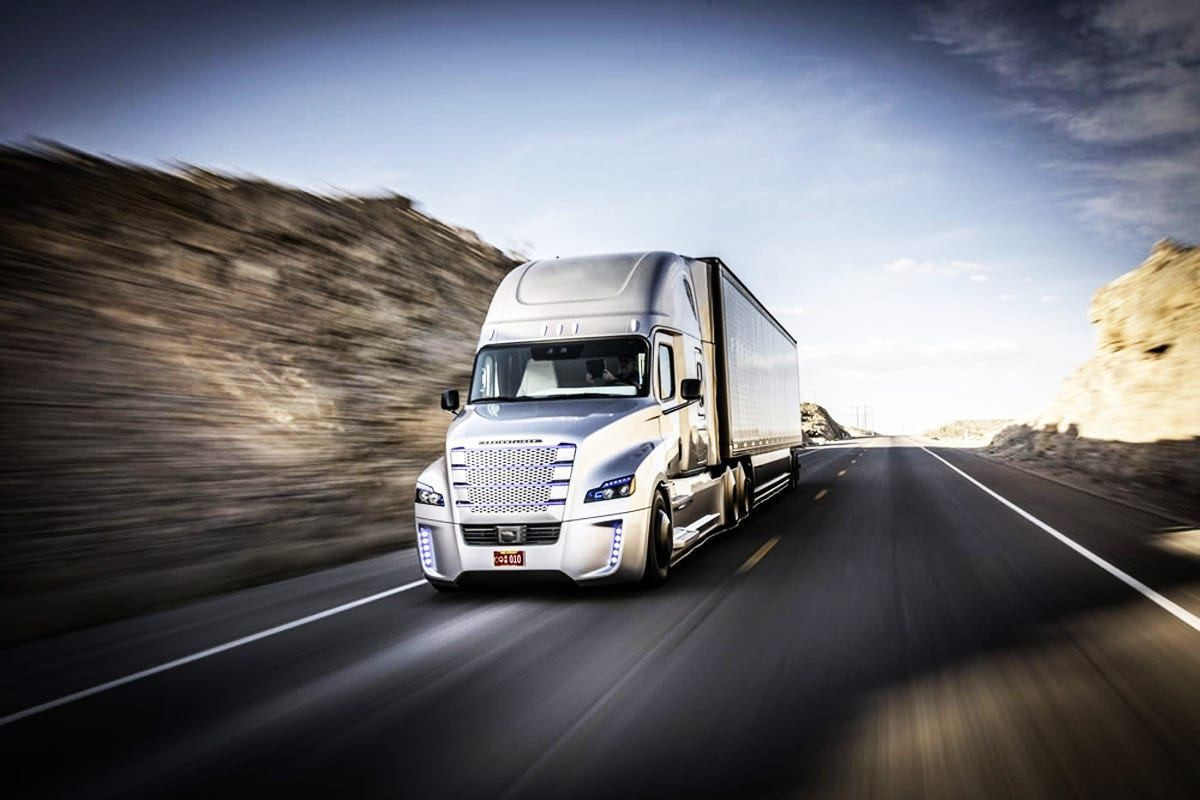
California’s latest move to permit the testing and eventual commercial deployment of autonomous heavy-duty trucks has sparked a major legal battle, with the Teamsters filing suit to block the state’s regulations. The union argues that the California Department of Motor Vehicles failed to adequately consider both public safety risks and the economic consequences for roughly 200,000 professional truck drivers whose livelihoods could be threatened by automation. State regulators contend the new framework includes extensive safety oversight, phased permitting requirements, and enforcement mechanisms designed to responsibly introduce autonomous trucking technology. The lawsuit represents the latest escalation in a years-long conflict between organized labor, technology developers, and policymakers over how quickly artificial intelligence should replace human operators in one of America’s largest industries.
Sources
- https://nypost.com/2026/08/06/tech/teamsters-sue-california-over-self-driving-truck-rules
- https://teamster.org/2026/04/teamsters-california-condemns-rushed-reckless-dmv-rules-allowing-driverless-trucks
- https://www.overdriveonline.com/regulations/article/15823974/teamsters-vow-fight-after-california-clears-road-for-autonomous-trucks
Key Takeaways
- California has become the central battleground in the national debate over balancing technological innovation with protecting existing American jobs.
- The Teamsters contend autonomous heavy-duty trucks present unresolved public safety concerns while threatening hundreds of thousands of trucking careers.
- The outcome of the lawsuit could establish an important legal precedent for how other states regulate AI-powered commercial transportation.
In-Depth
The clash over autonomous trucking reflects a broader question confronting the American economy: whether government should prioritize rapid technological adoption or exercise greater caution when innovation threatens both public safety and middle-class employment. California’s regulatory framework attempts to create a pathway for self-driving commercial trucks through a phased permitting process, but organized labor argues the state has moved faster than the technology has proven itself.
Supporters of autonomous trucking point to potential gains in efficiency, lower shipping costs, and reduced driver shortages. They also argue that advanced sensing systems and artificial intelligence could eventually reduce accidents caused by fatigue, distraction, or human error. Those benefits, however, remain largely prospective, while the risks of large-scale deployment continue to generate skepticism among many professional drivers and safety advocates.
Critics argue that replacing experienced truck drivers with automated systems carrying tens of thousands of pounds of freight represents an unnecessary gamble. From a conservative perspective, government has a fundamental obligation to protect public safety before accommodating the interests of large technology firms eager to commercialize emerging products. Equally significant is the economic impact. Trucking remains one of the nation’s most important blue-collar professions, supporting hundreds of thousands of families whose livelihoods could be disrupted by policies that accelerate automation without sufficient safeguards or transition planning. The Teamsters’ lawsuit therefore extends beyond California, serving as a national test of whether elected officials and regulators will place the interests of workers and public safety ahead of Silicon Valley’s push to rapidly transform the transportation industry.