

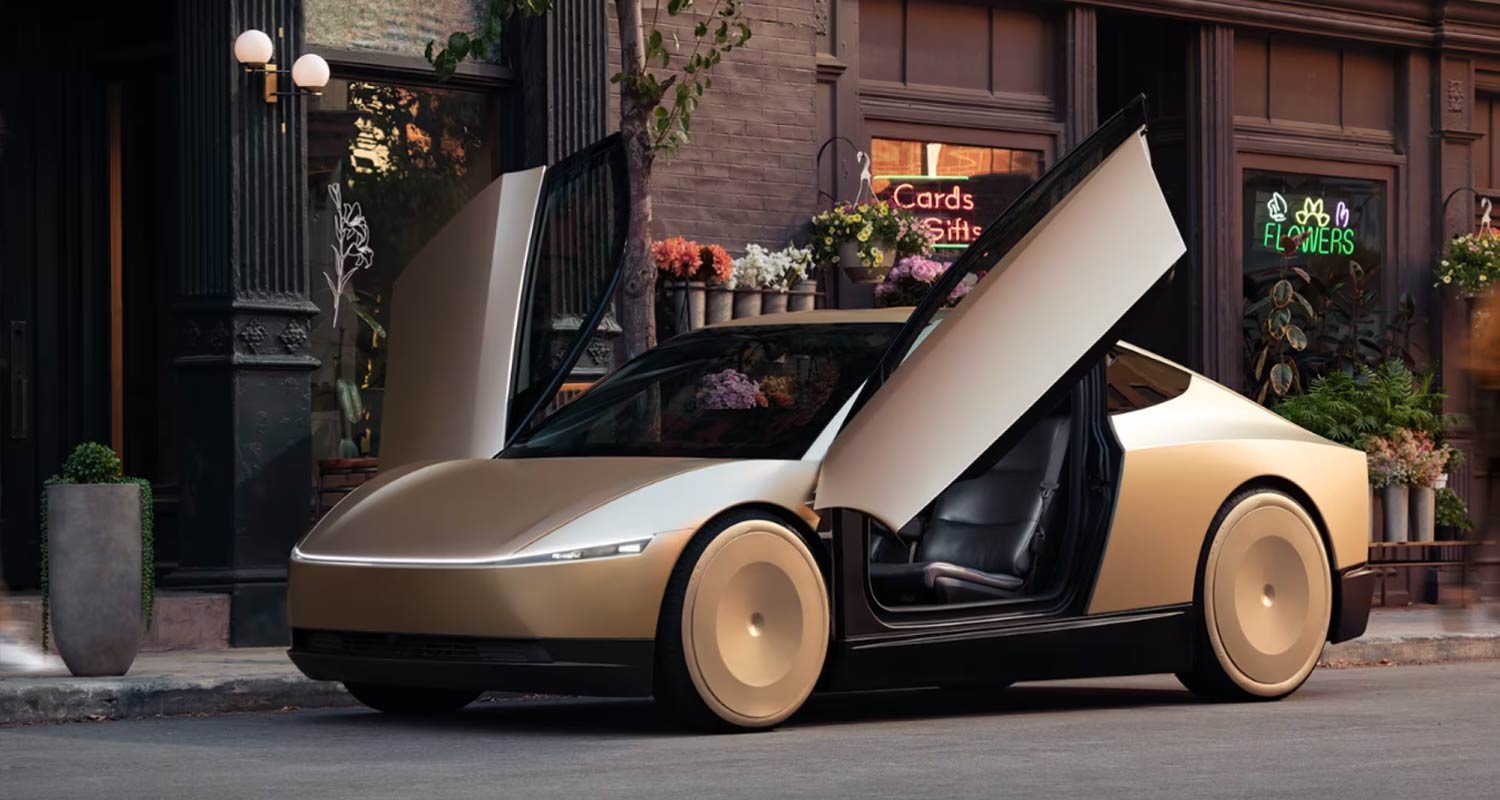
A striking gold Tesla Cybercab has begun appearing on the streets of San Francisco, drawing widespread public attention while highlighting the company’s continued effort to expand its robotaxi ambitions in California. Although the futuristic vehicle has been spotted with a human behind the wheel, it remains unclear whether that individual was actively driving or supervising automated operation. The debut comes as Tesla broadens its Bay Area ride-hailing service, including trips to San Francisco International Airport under a permit that still requires a human driver. At the same time, the company continues testing autonomous technology in multiple states while navigating heightened regulatory scrutiny in California over how it markets its self-driving capabilities. The highly visible Cybercab represents both Tesla’s technological aspirations and the regulatory hurdles that still separate its vision from fully autonomous commercial deployment.
Key Takeaways
- Tesla’s gold Cybercab is now being tested on San Francisco streets, but current sightings include a human behind the wheel, indicating the vehicle is not yet operating as a fully autonomous commercial robotaxi.
- California regulations continue to limit Tesla’s autonomous ambitions. While the company can provide ride-hailing service under existing permits, fully driverless passenger operations remain unauthorized in the state.
- The Cybercab’s appearance underscores intensifying competition in autonomous transportation, as Tesla works to establish a presence in a market already occupied by established robotaxi operators while attempting to satisfy increasingly demanding regulatory requirements.
In-Depth
Tesla’s appearance on San Francisco streets with a gleaming gold Cybercab represents far more than an eye-catching marketing exercise. It reflects the company’s determination to establish itself in one of the nation’s most closely watched autonomous vehicle markets while continuing to test the boundaries of existing transportation regulations. The unmistakable vehicle has generated considerable public interest, but its most important characteristic may be the person seated behind the steering wheel. That detail reinforces the reality that Tesla’s California operations remain subject to restrictions requiring human oversight rather than unrestricted driverless service.
The timing is equally significant. Tesla recently expanded its Bay Area ride-hailing operations to include service to San Francisco International Airport under a limousine-style operating permit that requires human drivers. Although the company continues advancing automated driving technology through testing programs in California, Texas, and Florida, California regulators have maintained a cautious approach toward commercial autonomous deployment. That caution has been reinforced by previous disputes over Tesla’s marketing of “Autopilot” and “Full Self-Driving,” prompting changes to how the company describes those technologies within the state.
For supporters of technological innovation, the Cybercab demonstrates how rapidly autonomous transportation continues to evolve. Yet it also illustrates an important principle: innovation succeeds most effectively when it earns public confidence through proven performance and regulatory compliance. As Tesla pushes toward broader robotaxi deployment, its ability to balance technological advancement with demonstrable safety and transparent communication will likely determine how quickly Californians embrace its vision for autonomous transportation.