

Close Menu

    Subscribe to Updates

    Get the latest tech news from Tallwire.

      What's Hot

      The Rise of Physical AI: When Machines Leave the Screen and Enter Our World

      July 11, 2026

      Apple Privacy Promise Undermined by Long-Running Hide My Email Vulnerability

      July 11, 2026

      Alleged Scattered Spider Hacker Extradited to U.S. as Cybercrime Crackdown Intensifies

      July 11, 2026
      Facebook X (Twitter) Instagram
      • Tech
      • AI
      • Get In Touch
      Facebook X (Twitter) LinkedIn
      TallwireTallwire
      • Tech

        Alleged Scattered Spider Hacker Extradited to U.S. as Cybercrime Crackdown Intensifies

        July 11, 2026

        Ransomware Alliance Signals Dangerous New Era of Industrialized Cybercrime

        July 11, 2026

        Georgia Data Center and Power Plant Hit with Permit Violation Claims

        July 10, 2026

        WhatsApp Moves to Usernames in Major Privacy Shift

        July 10, 2026

        AI Spending Surge Reshapes Global Economy as Investment Boom Sparks Opportunity and Risk

        July 10, 2026
      • AI

        UK Businesses Discover the Hidden Price of AI Adoption

        July 11, 2026

        Anthropic Pushes Beyond AI Software With Ambitious Drug Development Strategy

        July 10, 2026

        Georgia Data Center and Power Plant Hit with Permit Violation Claims

        July 10, 2026

        AI Spending Surge Reshapes Global Economy as Investment Boom Sparks Opportunity and Risk

        July 10, 2026

        India’s AI Stock Gap Becomes an Unexpected Market Advantage

        July 10, 2026
      • Security

        Alleged Scattered Spider Hacker Extradited to U.S. as Cybercrime Crackdown Intensifies

        July 11, 2026

        Apple Privacy Promise Undermined by Long-Running Hide My Email Vulnerability

        July 11, 2026

        Ransomware Alliance Signals Dangerous New Era of Industrialized Cybercrime

        July 11, 2026

        Anthropic Reverses Course After Hidden China-Tracking Code Sparks Backlash

        July 10, 2026

        AI Deepfake Romance Scam Empties Woman’s Life Savings, Underscoring Growing Fraud Threat

        July 9, 2026
      • Health

        Anthropic Pushes Beyond AI Software With Ambitious Drug Development Strategy

        July 10, 2026

        Always-On Workplace Culture Pushes Employees Toward the Breaking Point

        July 10, 2026

        AI Brings the Dead Back to Life, Raising Difficult Questions About Grief, Ethics, and Human Connection

        July 8, 2026

        AI Chatbot Design Faces Growing Scrutiny Over Risks of Reinforcing Delusional Thinking

        July 7, 2026

        House Approves Children’s Online Safety Bill, Setting Up Senate Showdown

        July 5, 2026
      • Science

        NASA Moon Base Push Signals Renewed American Commitment to Space Leadership

        July 7, 2026

        NASA’s Bold Bid to Save Aging Swift Telescope Could Pioneer a New Era of Orbital Servicing

        July 7, 2026

        Groundbreaking Robotic Mastectomy Offers New Hope For Breast Cancer Patients

        July 3, 2026

        Tabletop Fusion Reactor Raises Millions to Advance Next-Generation Cancer Treatments

        July 2, 2026

        AI Is Rapidly Transforming Scientific Research, Supercharging the Next Generation of PhD Talent

        July 2, 2026
      • Tech

        Always-On Workplace Culture Pushes Employees Toward the Breaking Point

        July 10, 2026

        High-Income Families Embrace AI-Driven Schools as Alternative Education Expands

        July 9, 2026

        San Francisco Tech Workers Struggle as AI Boom Inflates Costs

        July 6, 2026

        Tech Skeptics Miss the Mark on Musk’s Bold AI Orbit Vision

        July 3, 2026

        Bipartisan Coalition Targets AI Workforce Disruption with Massive Retraining Push

        July 2, 2026
      TallwireTallwire
      Home»Opinion»The Rise of Physical AI: When Machines Leave the Screen and Enter Our World
      Opinion

      The Rise of Physical AI: When Machines Leave the Screen and Enter Our World

      4 Mins Read
      Facebook Twitter Pinterest LinkedIn Tumblr Email
      Share
      Facebook Twitter LinkedIn Pinterest Email

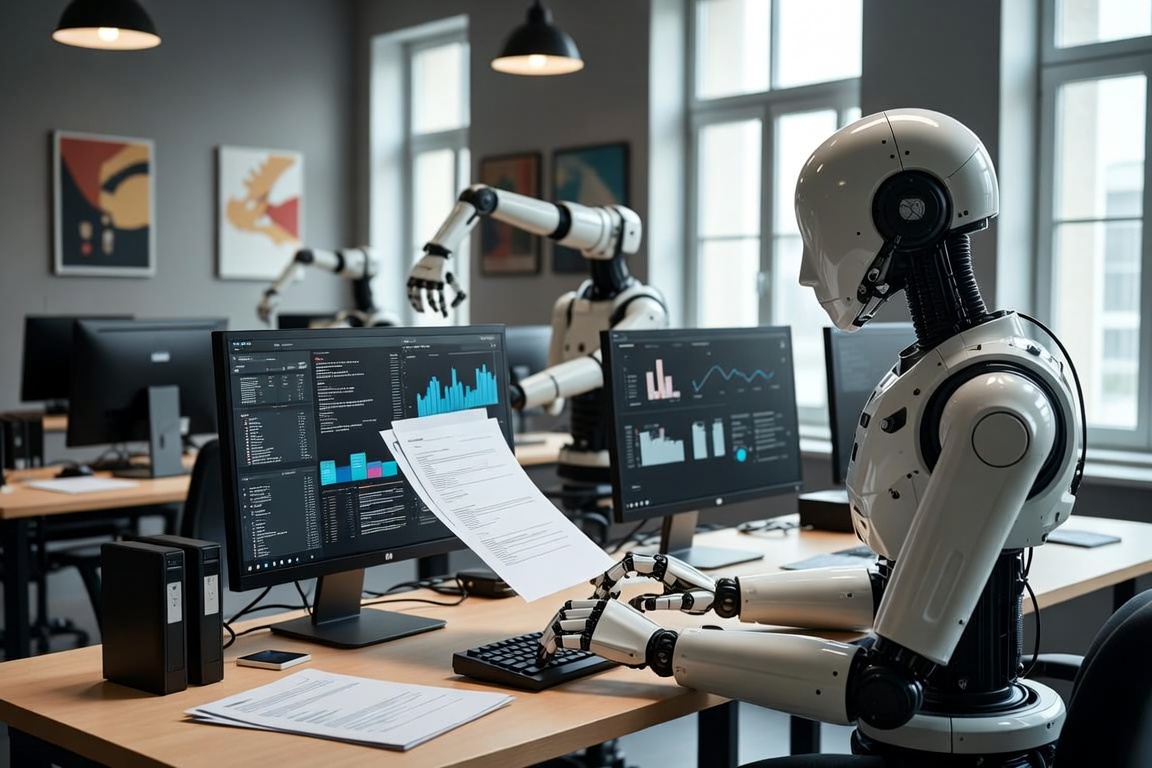
      For years, artificial intelligence has lived largely behind glass—confined to screens, servers, and abstract digital workflows. That era is ending. The next phase of the technological revolution is not just about smarter software, but about machines that can see, move, and act in the real world. Humanoid robots and what is now broadly termed “physical AI” are poised to reshape the economy in ways far more tangible—and disruptive—than anything we have yet experienced.

      The implications are not theoretical. They are already beginning to take shape across factories, warehouses, homes, and even the most intimate domains of human life.

      Start with factory robots. Industrial automation is nothing new, but it has traditionally relied on rigid, pre-programmed machines that perform repetitive tasks in controlled environments. Physical AI changes that equation. Equipped with advanced vision systems and adaptive learning models, next-generation robots can respond dynamically to variability—handling irregular objects, adjusting to changes in workflow, and even collaborating alongside human workers. The result is not merely efficiency, but a fundamental redefinition of labor. Factories of the near future may operate with minimal human oversight, raising hard questions about workforce displacement while offering undeniable gains in productivity and precision.

      Warehouse automation represents the next logical step. Already, fulfillment centers are filled with robotic systems moving goods with mechanical precision. But the addition of humanoid robots capable of navigating complex environments, climbing, lifting, and making decisions in real time pushes this further. Imagine a warehouse where every task—from unloading trucks to picking items to packing shipments—is handled by machines that require neither breaks nor benefits. The economic incentives are overwhelming. Labor shortages, rising wages, and the demand for faster delivery all point in one direction: fewer human workers and more autonomous systems.

      Yet the real societal shift may come not in industry, but in the home. Home assistants have long been limited to voice-activated devices that can answer questions or control appliances. Physical AI introduces the possibility of machines that can perform physical tasks—cleaning, cooking, organizing, and even providing companionship. A humanoid robot that can fold laundry, prepare meals, and monitor household safety is no longer science fiction. It is a product category waiting to mature. The convenience is obvious, but so too are the cultural implications. What does it mean for family structure, personal responsibility, and human interaction when machines take over daily life’s most basic functions?

      Nowhere are the stakes higher than in elder care. Aging populations in developed nations are creating a growing demand for caregivers that the current workforce cannot meet. Physical AI offers a solution that is both practical and controversial. Elder care robots could assist with mobility, medication management, and daily living tasks, allowing seniors to maintain independence longer. They could also provide constant monitoring, reducing risks and improving outcomes. But there is an uncomfortable tradeoff. Replacing human caregivers with machines may solve a labor shortage, but it risks eroding the human connection that is essential to dignity and well-being in old age. Efficiency alone cannot answer the moral questions this technology raises.

      Autonomous delivery is another domain where physical AI will assert itself. While much attention has been given to self-driving vehicles, the last mile—the actual handoff of goods to consumers—remains a challenge. Humanoid or semi-humanoid delivery robots could bridge that gap, navigating sidewalks, climbing stairs, and interacting with customers. This could drastically reduce delivery costs and accelerate logistics networks, but it also threatens millions of low-skill jobs that currently serve as entry points into the workforce.

      Finally, consider AI-powered manufacturing as a whole. When intelligent robots are integrated across the entire production process—from design to assembly to quality control—the result is a system that can optimize itself continuously. Errors are identified and corrected in real time. Production lines can be reconfigured instantly to meet changing demand. The efficiency gains could be staggering, potentially ushering in a new era of domestic manufacturing competitiveness. At the same time, this level of automation concentrates power in the hands of those who control the technology, raising concerns about economic centralization and the hollowing out of the middle class.

      Taken together, these developments point to a future where physical AI is not an adjunct to human labor, but a replacement for it in many domains. The benefits—greater productivity, lower costs, and enhanced capabilities—are undeniable. But so are the risks. Societies will have to grapple with the displacement of workers, the redefinition of human roles, and the ethical boundaries of machine integration into daily life.

      The question is not whether humanoid robots and physical AI will arrive. They are already here. The real question is whether we are prepared for the world they will create—and whether we will shape that world deliberately, or simply react to it after the fact.

      Apple Intel Manufacturing Software
      Share. Facebook Twitter Pinterest LinkedIn Tumblr Email
      Previous ArticleApple Privacy Promise Undermined by Long-Running Hide My Email Vulnerability

      Related Posts

      Alleged Scattered Spider Hacker Extradited to U.S. as Cybercrime Crackdown Intensifies

      July 11, 2026

      Apple Privacy Promise Undermined by Long-Running Hide My Email Vulnerability

      July 11, 2026

      Ransomware Alliance Signals Dangerous New Era of Industrialized Cybercrime

      July 11, 2026

      UK Businesses Discover the Hidden Price of AI Adoption

      July 11, 2026
      Add A Comment
      Leave A Reply Cancel Reply

      Editors Picks

      Alleged Scattered Spider Hacker Extradited to U.S. as Cybercrime Crackdown Intensifies

      July 11, 2026

      Ransomware Alliance Signals Dangerous New Era of Industrialized Cybercrime

      July 11, 2026

      Georgia Data Center and Power Plant Hit with Permit Violation Claims

      July 10, 2026

      WhatsApp Moves to Usernames in Major Privacy Shift

      July 10, 2026
      Popular Topics
      trending starlink Tesla Taiwan Tech Viral Tesla Cybertruck Stocks SpaceX Series B Satellite Space Startup spotlight Tim Cook Series A UAE Tech Software Sundar Pichai Samsung Satya Nadella
      Major Tech Companies
      • Apple News
      • Google News
      • Meta News
      • Microsoft News
      • Amazon News
      • Samsung News
      • Nvidia News
      • OpenAI News
      • Tesla News
      • AMD News
      • Anthropic News
      • Elbit News
      AI & Emerging Tech
      • AI Regulation News
      • AI Safety News
      • AI Adoption
      • Quantum Computing News
      • Robotics News
      Key People
      • Sam Altman News
      • Jensen Huang News
      • Elon Musk News
      • Mark Zuckerberg News
      • Sundar Pichai News
      • Tim Cook News
      • Satya Nadella News
      • Mustafa Suleyman News
      Global Tech & Policy
      • Israel Tech News
      • India Tech News
      • Taiwan Tech News
      • UAE Tech News
      Startups & Emerging Tech
      • Series A News
      • Series B News
      • Startup News
      Tallwire
      Facebook X (Twitter) LinkedIn Threads Instagram RSS
      • Tech
      • Entertainment
      • Business
      • Government
      • Academia
      • Transportation
      • Legal
      • Press Kit
      © 2026 Tallwire. Optimized by ARMOUR Digital Marketing Agency.

      Type above and press Enter to search. Press Esc to cancel.