

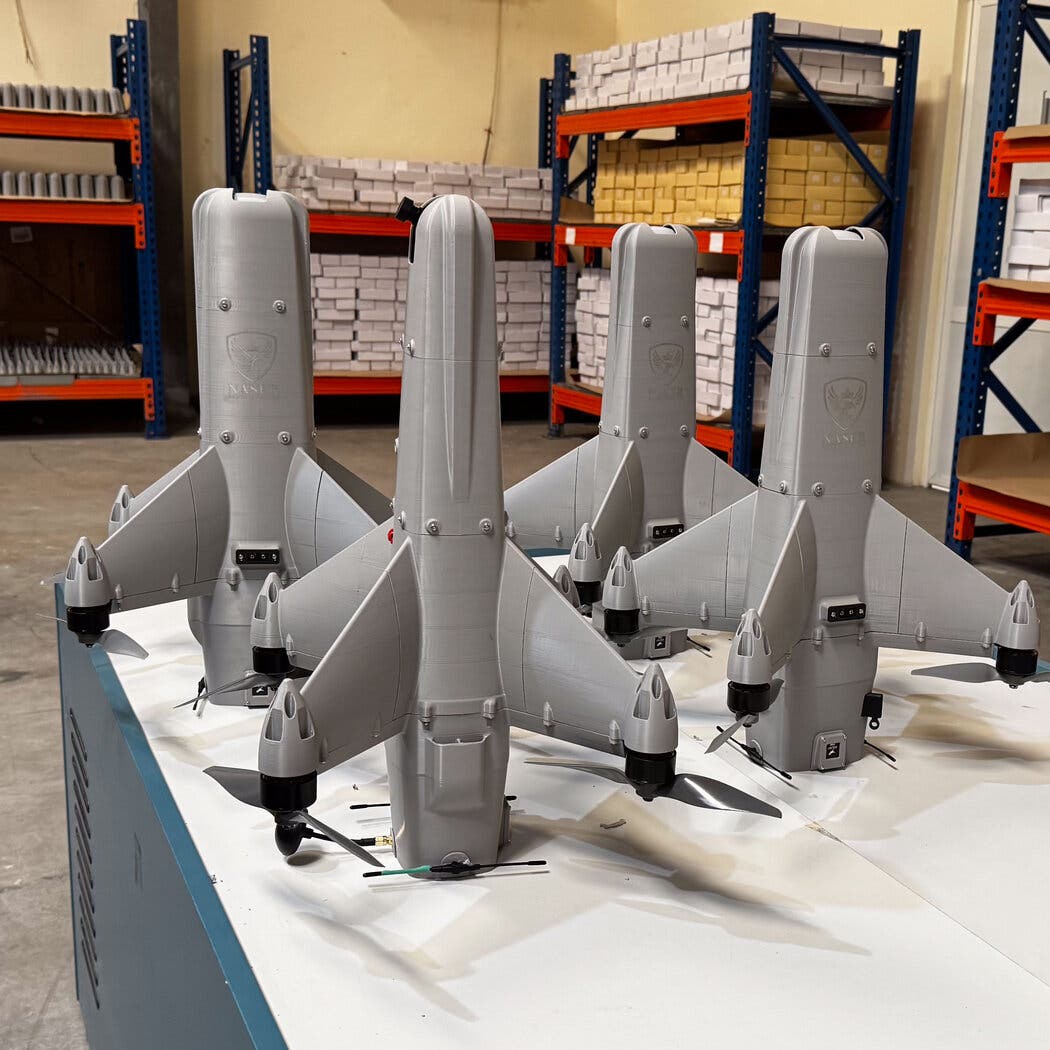
A Florida-based defense startup is rapidly expanding production of inexpensive drone interceptors in the United Arab Emirates as military planners confront the growing challenge of defeating large numbers of relatively cheap Iranian drones without exhausting inventories of costly air-defense missiles. The company has adopted a decentralized manufacturing model, partnering with regional producers to assemble its Guardian interceptor closer to end users while aiming to increase global production dramatically over the next year. The effort reflects a broader shift in modern warfare, where affordability, manufacturing speed, and scalable production are becoming as strategically important as technological sophistication. Recent commercial contracts protecting Middle Eastern energy infrastructure further underscore growing demand for layered counter-drone defenses as governments and private industry adapt to evolving aerial threats.
Key Takeaways
- • Modern conflicts are demonstrating that nations cannot sustainably defend against inexpensive mass-produced drones with multimillion-dollar interceptors, increasing demand for affordable counter-drone solutions.
- • Regional manufacturing partnerships are emerging as a practical way to accelerate weapons production, shorten supply chains, and place defensive capabilities closer to areas facing persistent drone threats.
- • The counter-drone market is expanding beyond military applications as critical infrastructure operators, particularly in the energy sector, seek integrated detection and interception systems to defend against increasingly sophisticated aerial attacks.
In-Depth
The increasing use of inexpensive drones in modern warfare is forcing a fundamental reassessment of air-defense strategy. Rather than relying exclusively on sophisticated missile systems costing hundreds of thousands or even millions of dollars per engagement, defense planners are searching for lower-cost alternatives capable of defeating mass drone attacks economically. The emergence of companies producing affordable interceptors reflects a recognition that cost exchange ratios matter just as much as technical performance during prolonged conflicts.
Equally significant is the shift in manufacturing philosophy. Instead of concentrating production in the United States and exporting finished systems worldwide, companies are increasingly partnering with manufacturers in allied nations to assemble defensive systems near anticipated operational theaters. This approach reduces transportation delays, strengthens allied industrial capacity, and allows production to scale more rapidly when demand surges during regional crises.
From a conservative perspective, these developments reinforce the importance of maintaining a robust defense-industrial base capable of adapting to changing battlefield realities. Military superiority increasingly depends not only on technological innovation but also on the ability to manufacture capable systems quickly, affordably, and in sufficient quantities. As drone warfare continues to evolve, the nations and companies that master efficient production while preserving technological advantages are likely to shape the next generation of defensive capabilities.
Sources
- https://www.power.us/insights/swing-variable-is-a-drone
- https://www.unmannedairspace.info/counter-uas-systems-and-policies/powerus-to-protect-oil-and-gas-infrastructure-in-the-middle-east-from-uas-threats/
- https://www.jpost.com/defense-and-tech/article-906338
- https://energynews.oedigital.com/oil-gas/2026/08/20/us-firm-powerus-secures-223-million-contract-for-drone-protection-of-middle-east-energy-infrastructure
- https://finance.yahoo.com/news/us-firm-powerus-wins-22-205937051.html