

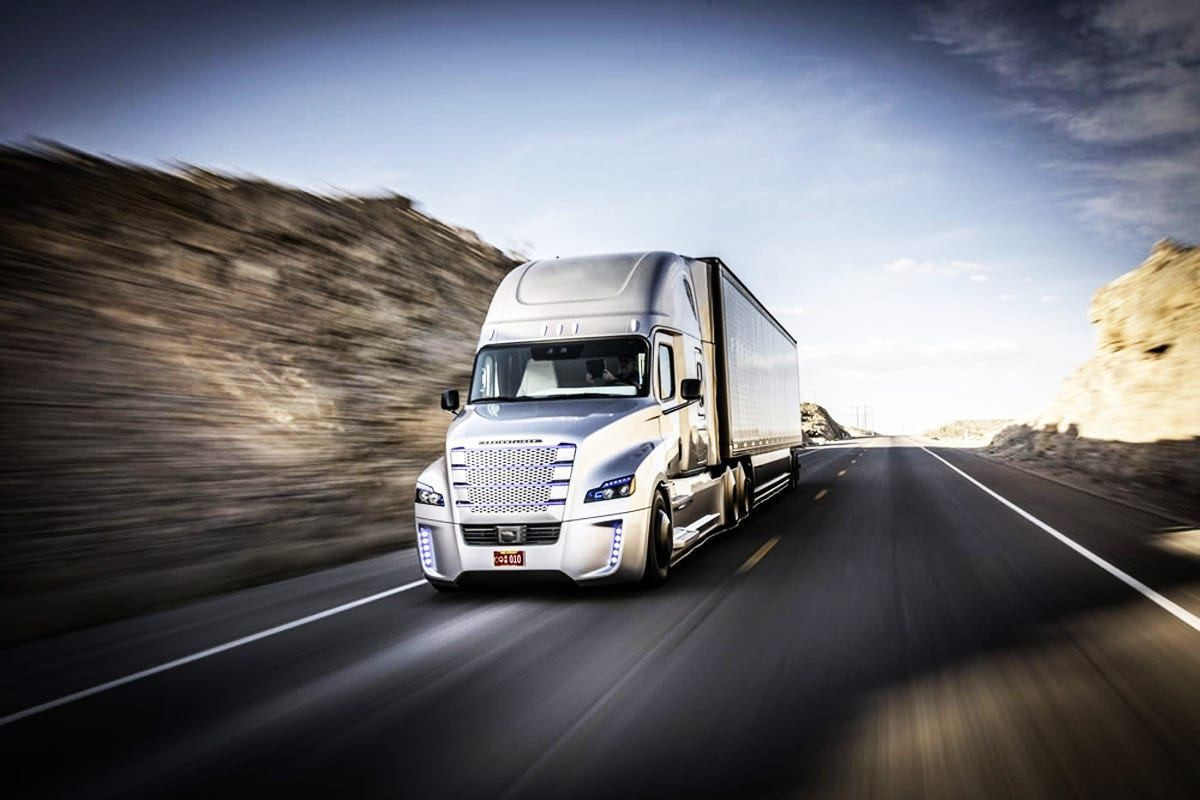
The Trump administration has granted a five-year federal safety exemption allowing autonomous commercial trucks to replace traditional roadside warning triangles and flares with high-visibility warning beacons mounted on their cabs. The Federal Motor Carrier Safety Administration (FMCSA) approved the exemption for Aurora Operations and other qualifying operators of Level 4 autonomous trucks, concluding that the alternative warning systems would likely provide safety equivalent to or greater than existing requirements. Effective October 7, 2026, through October 7, 2031, the decision removes a regulatory obstacle for driverless trucking operations, where no human driver is available to deploy roadside warning devices. The exemption reflects the administration’s broader effort to modernize transportation regulations, encourage American technological innovation, and expand commercial autonomous vehicle operations while maintaining federal safety oversight.
Key Takeaways
• Regulatory Modernization: Federal regulators approved cab-mounted warning beacons as an alternative to traditional roadside safety devices for qualifying autonomous commercial trucks through October 2031.
• Economic and Technological Advancement: The exemption eliminates a significant operational barrier for driverless trucking companies, potentially accelerating commercial deployment, improving freight efficiency, and strengthening American leadership in autonomous transportation.
• Safety and Accountability: Participating operators must satisfy federal notification and reporting requirements, while regulators retain authority to revoke the exemption if safety performance proves inadequate.
In-Depth
The federal government’s decision to grant autonomous trucking companies a five-year exemption from traditional roadside warning requirements represents another significant step toward modernizing America’s commercial transportation industry. The exemption allows qualifying driverless trucks to substitute cab-mounted warning beacons for reflective triangles and other conventional devices historically deployed by human operators.
Aurora Operations, a leading developer of autonomous trucking technology, secured the exemption following years of regulatory negotiations. The company and Waymo initially pursued regulatory relief in 2023, recognizing that existing requirements presented practical obstacles for trucks operating without human drivers.
The Federal Motor Carrier Safety Administration determined that properly equipped warning beacons could provide protection equivalent to or greater than conventional roadside equipment. The authorization extends beyond Aurora to qualifying operators using Level 4 autonomous driving systems, provided they satisfy federal conditions.
The decision also illustrates the Trump administration’s broader approach to transportation policy: eliminating outdated regulatory requirements while preserving measurable safety standards. Rather than forcing emerging technologies into rules designed for human-operated vehicles, federal officials are allowing alternative methods of achieving established safety objectives.
For the trucking industry, the implications extend beyond warning equipment. Autonomous freight transportation promises greater operational flexibility, potentially lower shipping costs, and improved supply-chain efficiency. However, questions surrounding technological reliability, employment displacement, and liability remain important considerations as deployment expands.
Federal regulators will continue monitoring participating operators, including crash reporting and compliance obligations. Ultimately, the success of this regulatory adjustment will depend on demonstrated safety performance rather than technological promises alone.
Sources
• https://www.theepochtimes.com/us/us-grants-safety-feature-exemption-for-self-driving-trucks-6101057
• https://www.fmcsa.dot.gov/safety/carrier-safety/grant-application-exemption-aurora-operations-inc
• https://www.govinfo.gov/content/pkg/FR-2026-10-09/html/2026-20734.htm
• https://www.transportation.gov/regulations/federal-register-documents/2026-20734