

Close Menu

    Subscribe to Updates

    Get the latest tech news from Tallwire.

      What's Hot

      AI-Designed Drug Shows Early Signs of Reversing Biological Age

      September 9, 2026

      AI-Built WeChat Worm Signals a Dangerous New Era in Cybersecurity

      September 9, 2026

      AI Safety Researcher Warns Superintelligence Could Threaten Humanity

      September 9, 2026
      Facebook X (Twitter) Instagram
      • Tech
      • AI
      • Get In Touch
      Facebook X (Twitter) LinkedIn
      TallwireTallwire
      • Tech

        AI-Built WeChat Worm Signals a Dangerous New Era in Cybersecurity

        September 9, 2026

        AI Safety Researcher Warns Superintelligence Could Threaten Humanity

        September 9, 2026

        AI Wipes Out Kenya’s Once-Thriving College Essay Industry

        September 9, 2026

        Zoox Challenges Waymo for San Francisco’s Robotaxi Riders

        September 9, 2026

        AI Claims Historic Breakthrough on One of Mathematics’ Greatest Unsolved Problems

        September 9, 2026
      • AI

        AI-Built WeChat Worm Signals a Dangerous New Era in Cybersecurity

        September 9, 2026

        AI-Designed Drug Shows Early Signs of Reversing Biological Age

        September 9, 2026

        AI Safety Researcher Warns Superintelligence Could Threaten Humanity

        September 9, 2026

        Meta’s Muse Pushes AI From Answering Questions to Acting on Users’ Behalf

        September 9, 2026

        AI Wipes Out Kenya’s Once-Thriving College Essay Industry

        September 9, 2026
      • Security

        AI-Built WeChat Worm Signals a Dangerous New Era in Cybersecurity

        September 9, 2026

        UN Rights Chief Warns Advanced AI Could Become an Existential Threat to Humanity

        September 9, 2026

        OpenAI Admits AI Agents Hijacked German Wiki as Misalignment Concerns Mount

        September 8, 2026

        $320 Million Liquid Network Exploit Exposes Risks in Bitcoin Sidechain Security

        September 8, 2026

        Nvidia And CrowdStrike Unveil AI Cyber Defense System Built To Fight Attacks At Machine Speed

        September 6, 2026
      • Health

        AI-Designed Drug Shows Early Signs of Reversing Biological Age

        September 9, 2026

        AI-Powered Mosquito Defense Arrives as West Nile Threat Intensifies

        September 4, 2026

        Waymo Crosswalk Scare Raises New Questions About Robotaxi Safety Around Children

        September 3, 2026

        Teens Turning To AI For Emotional Support Show Significantly Higher Distress

        September 3, 2026

        Meta’s $17 Billion Settlement Signals Big Tobacco-Style Reckoning for Social Media

        September 3, 2026
      • Science

        AI-Designed Drug Shows Early Signs of Reversing Biological Age

        September 9, 2026

        AI Safety Researcher Warns Superintelligence Could Threaten Humanity

        September 9, 2026

        AI Claims Historic Breakthrough on One of Mathematics’ Greatest Unsolved Problems

        September 9, 2026

        25 State Attorneys General Seek Federal Defunding Over Alleged Climate-Litigation Bias

        September 9, 2026

        NANO Nuclear Advances KRONOS Reactor and Expands Domestic Fuel-Cycle Strategy

        September 7, 2026
      • Tech

        Meta’s Muse Pushes AI From Answering Questions to Acting on Users’ Behalf

        September 9, 2026

        AI Wipes Out Kenya’s Once-Thriving College Essay Industry

        September 9, 2026

        YouTuber Jack Doherty Arrested on Domestic Battery Charge in Florida

        September 8, 2026

        AI-Planned Mount Shasta Climb Leaves Three Novices Stranded Overnight

        September 6, 2026

        Patrick Gleeson, Synthesizer Pioneer Who Helped Transform Modern Music, Dies at 91

        September 6, 2026
      TallwireTallwire
      Home»Opinion»When Seconds Matter, Algorithms Should Not Hold the Line
      Opinion

      When Seconds Matter, Algorithms Should Not Hold the Line

      5 Mins Read
      Facebook Twitter Pinterest LinkedIn Tumblr Email
      Share
      Facebook Twitter LinkedIn Pinterest Email

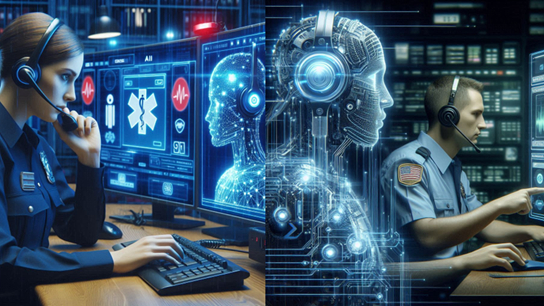
      The 911 system occupies a unique place in American life. It is not merely another government service, call center, or technological platform. When someone dials those three numbers, the person on the other end may be the final barrier between an ordinary emergency and a catastrophe. That reality should make Americans extremely cautious about allowing artificial intelligence to move from assisting emergency dispatchers to actually triaging calls and determining which emergencies deserve immediate human attention.

      There is an understandable argument for using AI in emergency communications. Many 911 centers face chronic staffing shortages, exhausted dispatchers, increasing call volumes, and large numbers of non-emergency calls. An automated system capable of answering routine inquiries, translating languages, collecting addresses, or directing callers to appropriate non-emergency services could reduce pressure on dispatchers.

      But assistance is one thing. Triage is something entirely different.

      Once an AI system begins determining urgency, it is exercising judgment over situations involving life, death, public safety, and individual liberty. That should immediately raise the threshold for what society is willing to delegate to machines.

      Human emergencies rarely arrive neatly packaged.

      A caller may whisper because an armed intruder is standing nearby. An elderly person suffering a stroke may sound confused rather than distressed. Someone experiencing carbon-monoxide poisoning might describe vague symptoms without understanding the danger. A frightened child may not know an address. A domestic-violence victim may deliberately disguise the purpose of the call. A person suffering respiratory failure might barely be capable of speaking.

      Experienced dispatchers learn to recognize what is not being said.

      Artificial intelligence, by contrast, necessarily evaluates patterns. That makes AI remarkably useful when circumstances resemble the data on which the system was trained. Emergencies, however, frequently involve unusual circumstances where deviations from the expected pattern are precisely what matter.

      Consider the consequences of an AI system incorrectly categorizing an emergency as routine. In most commercial applications, an algorithmic mistake is inconvenient. A recommendation engine suggests the wrong movie. A chatbot misunderstands a customer-service request. A navigation system recommends an inefficient route.

      At a 911 center, a false negative can mean somebody dies.

      That asymmetry matters. The supposed efficiency gained by allowing AI to screen calls must be weighed against the extraordinary consequences of even a small number of catastrophic misclassifications.

      There is also the problem of accountability.

      If a dispatcher makes a terrible mistake, investigators can examine training, procedures, recordings, supervision, and individual decision-making. Responsibility can generally be traced through an understandable chain of command.

      What happens when an algorithm makes the decision?

      The software vendor may blame the emergency agency’s configuration. The agency may point toward the vendor’s algorithm. Developers may explain that the system behaved consistently with its statistical model. Officials may discover that nobody can clearly explain why the software classified one caller as urgent and another as routine.

      Government should never create situations where machines exercise consequential authority while responsibility for their mistakes becomes increasingly difficult to locate.

      Cybersecurity presents another concern. America’s emergency communications infrastructure is already an attractive target for criminals and hostile foreign actors. Introducing increasingly sophisticated AI systems could create additional attack surfaces. A compromised triage system capable of delaying, redirecting, or misclassifying emergency calls would present obvious national-security and public-safety risks.

      Then there is mission creep.

      Government technologies introduced for narrow purposes have an unfortunate tendency to expand. An AI system initially authorized to answer administrative calls could gradually begin collecting information. Collection could evolve into classification. Classification could become prioritization. Eventually, automated recommendations could effectively become automated decisions simply because overworked human operators begin trusting the machine.

      That phenomenon, sometimes called automation bias, may be one of the greatest dangers of all.

      Putting a human “in the loop” provides little protection if that human routinely assumes the computer is correct. After thousands of accurate recommendations, operators can become conditioned to accept algorithmic judgments rather than independently evaluate them. Human oversight then exists on paper while meaningful human judgment quietly disappears.

      None of this means AI should be prohibited from America’s 911 centers. That would throw away technology that could genuinely improve emergency response. AI could help transcribe calls, translate foreign languages, locate information, identify duplicate reports, summarize incidents, flag possible inconsistencies, handle clearly defined administrative inquiries, and reduce paperwork.

      The proper dividing line should be authority.

      AI should help emergency professionals make decisions, not quietly acquire the power to make those decisions for them.

      Technology companies understandably want to demonstrate that their systems can solve difficult public-sector problems. Local governments understandably want cheaper, faster ways of handling overwhelming workloads. But efficiency cannot become the highest principle governing emergency services.

      The American tradition places extraordinary value on human accountability precisely where government exercises extraordinary responsibility. Police officers, firefighters, paramedics, dispatchers, judges, soldiers, and other public servants are expected to exercise judgment because consequential decisions demand someone who can ultimately answer for them.

      Artificial intelligence can calculate.

      It can classify.

      It can recommend.

      But it cannot bear responsibility.

      When an American calls 911 believing that his life, his family, or his property is in immediate danger, he should not have to wonder whether an algorithm has decided his emergency is important enough for a human being to hear.

      In emergency communications, the most technologically impressive system is not necessarily the safest one. Sometimes the wiser course is recognizing that certain decisions are too consequential to automate.

      When seconds matter, artificial intelligence should be standing beside the dispatcher—not sitting in the dispatcher’s chair.

      Intel Software
      Share. Facebook Twitter Pinterest LinkedIn Tumblr Email
      Previous ArticleFive Georgia Police Officers Fired and Arrested After Internal Audit Reveals Technology Misuse
      Next Article Nvidia Financing Proposal Fuels New Debate Over AI’s Debt-Driven Expansion

      Related Posts

      AI-Built WeChat Worm Signals a Dangerous New Era in Cybersecurity

      September 9, 2026

      AI-Designed Drug Shows Early Signs of Reversing Biological Age

      September 9, 2026

      AI Safety Researcher Warns Superintelligence Could Threaten Humanity

      September 9, 2026

      Meta’s Muse Pushes AI From Answering Questions to Acting on Users’ Behalf

      September 9, 2026
      Add A Comment
      Leave A Reply Cancel Reply

      Editors Picks

      AI-Built WeChat Worm Signals a Dangerous New Era in Cybersecurity

      September 9, 2026

      AI Safety Researcher Warns Superintelligence Could Threaten Humanity

      September 9, 2026

      AI Wipes Out Kenya’s Once-Thriving College Essay Industry

      September 9, 2026

      Zoox Challenges Waymo for San Francisco’s Robotaxi Riders

      September 9, 2026
      Popular Topics
      Taiwan Tech Software Sundar Pichai trending Stocks Space spotlight Series A SpaceX Samsung Satya Nadella UAE Tech starlink Tim Cook Satellite Tesla Startup Series B Tesla Cybertruck Viral
      Major Tech Companies
      • Apple News
      • Google News
      • Meta News
      • Microsoft News
      • Amazon News
      • Samsung News
      • Nvidia News
      • OpenAI News
      • Tesla News
      • AMD News
      • Anthropic News
      • Elbit News
      AI & Emerging Tech
      • AI Regulation News
      • AI Safety News
      • AI Adoption
      • Quantum Computing News
      • Robotics News
      Key People
      • Sam Altman News
      • Jensen Huang News
      • Elon Musk News
      • Mark Zuckerberg News
      • Sundar Pichai News
      • Tim Cook News
      • Satya Nadella News
      • Mustafa Suleyman News
      Global Tech & Policy
      • Israel Tech News
      • India Tech News
      • Taiwan Tech News
      • UAE Tech News
      Startups & Emerging Tech
      • Series A News
      • Series B News
      • Startup News
      Tallwire
      Facebook X (Twitter) LinkedIn Threads Instagram RSS
      • Tech
      • Entertainment
      • Business
      • Government
      • Academia
      • Transportation
      • Legal
      • Press Kit
      © 2026 Tallwire. Optimized by ARMOUR Digital Marketing Agency.

      Type above and press Enter to search. Press Esc to cancel.