

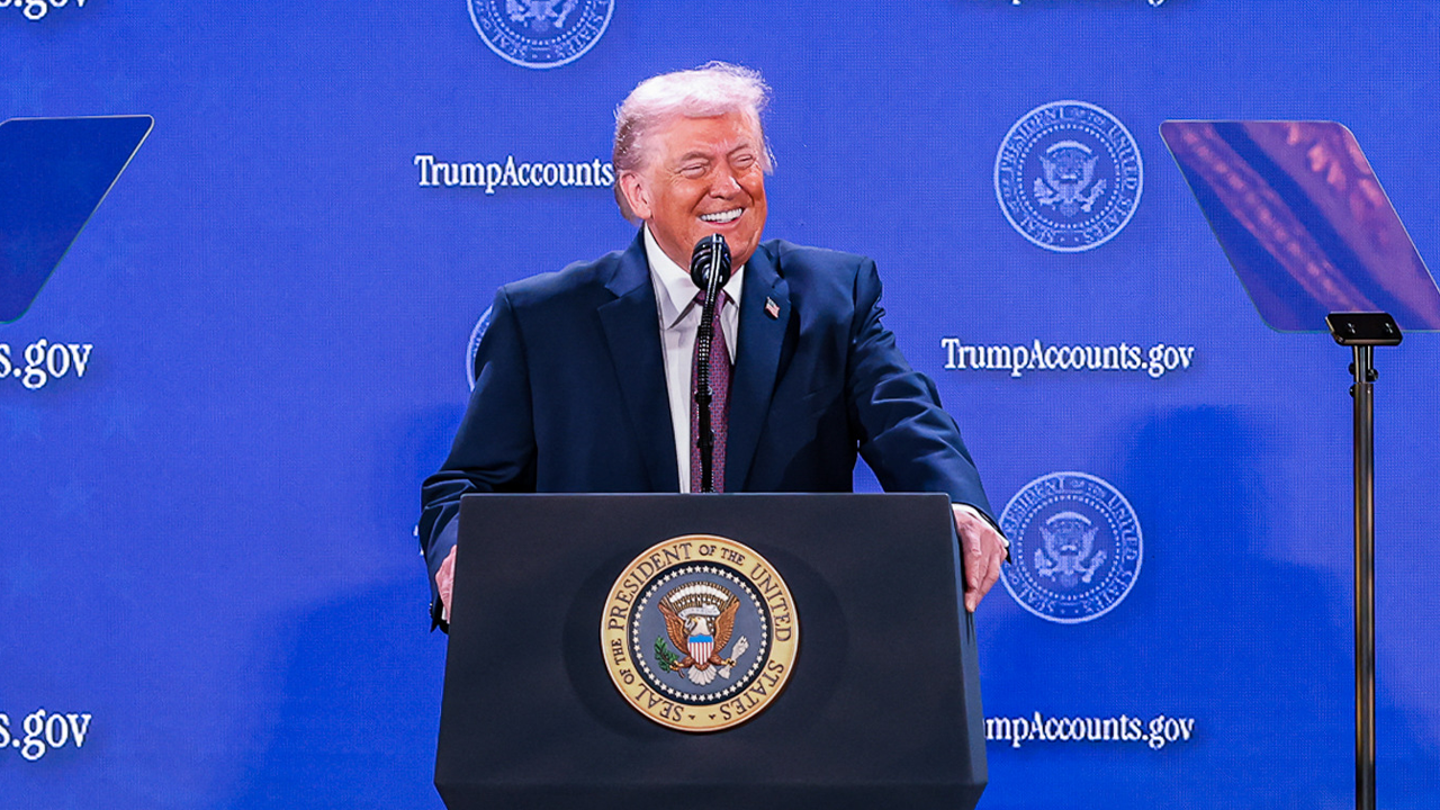
The White House has unveiled the new Trump Accounts mobile application ahead of the program’s official July 4 launch, positioning it as a centerpiece of the administration’s effort to expand investment ownership and financial literacy among American families. The app, developed in partnership with major financial and technology firms, will allow parents to monitor government-seeded investment accounts established for eligible children, track growth, manage contributions, and access educational financial content. Under the program, qualifying children born between January 1, 2025, and December 31, 2028, will receive a $1,000 federal investment contribution, while families may add up to $5,000 annually. Administration officials argue the initiative represents a long-term wealth-building strategy designed to create a new generation of investors and shareholders, while supporters see it as a market-based alternative to traditional government entitlement expansion.
Sources
- https://www.foxbusiness.com/technology/white-house-unveils-trump-accounts-mobile-app-ahead-july-4-rollout
- https://home.treasury.gov/news/press-releases/sb0508
- https://www.reuters.com/business/finance/us-treasury-rolls-out-trump-accounts-app-nationwide-2026-05-28
- https://www.investopedia.com/the-app-for-trump-accounts-just-launched-here-s-what-to-know-11984888
- https://tax.thomsonreuters.com/news/trump-account-app-released-ahead-of-initial-contribution-date
Key Takeaways
- The Trump Accounts program combines a one-time $1,000 federal investment contribution with private-sector participation, aiming to encourage long-term wealth accumulation through market investments rather than expanded government benefit programs.
- Treasury officials are emphasizing financial literacy as a central goal, with the app featuring educational modules designed to familiarize families and young Americans with investing, equity markets, and compound growth.
- Major financial institutions and corporations have aligned with the initiative through technology partnerships, contribution programs, and account-support mechanisms, signaling significant private-sector involvement in the rollout.
In-Depth
The Trump Accounts initiative represents one of the most ambitious attempts in decades to shift the conversation about economic opportunity away from redistribution and toward ownership. Rather than creating another government dependency program, the administration is betting that giving children an early stake in the American economy can foster a culture of investment, responsibility, and long-term financial planning.
The newly released mobile app is central to that strategy. By putting investment performance, contribution tracking, and financial education directly onto smartphones, officials hope to make wealth-building more accessible and understandable for ordinary families. The approach reflects a belief that Americans are more likely to participate in markets when they can see their assets grow in real time rather than view investing as something reserved for financial elites.
Supporters argue the program also reinforces the principle that economic growth should benefit future generations directly. A child receiving a government-seeded investment account tied to American companies is fundamentally different from receiving a traditional welfare benefit. The account grows through market performance, personal contributions, and time—factors that reward participation rather than dependence.
Critics will undoubtedly question the costs and projections attached to the program. Yet the broader political significance is clear. The administration is attempting to create millions of young shareholders, linking family prosperity to the strength of American businesses and capital markets. Whether the initiative ultimately delivers on its lofty promises remains to be seen, but it reflects a distinctly pro-market vision of economic empowerment that stands apart from the government-centered solutions favored by the political left.