

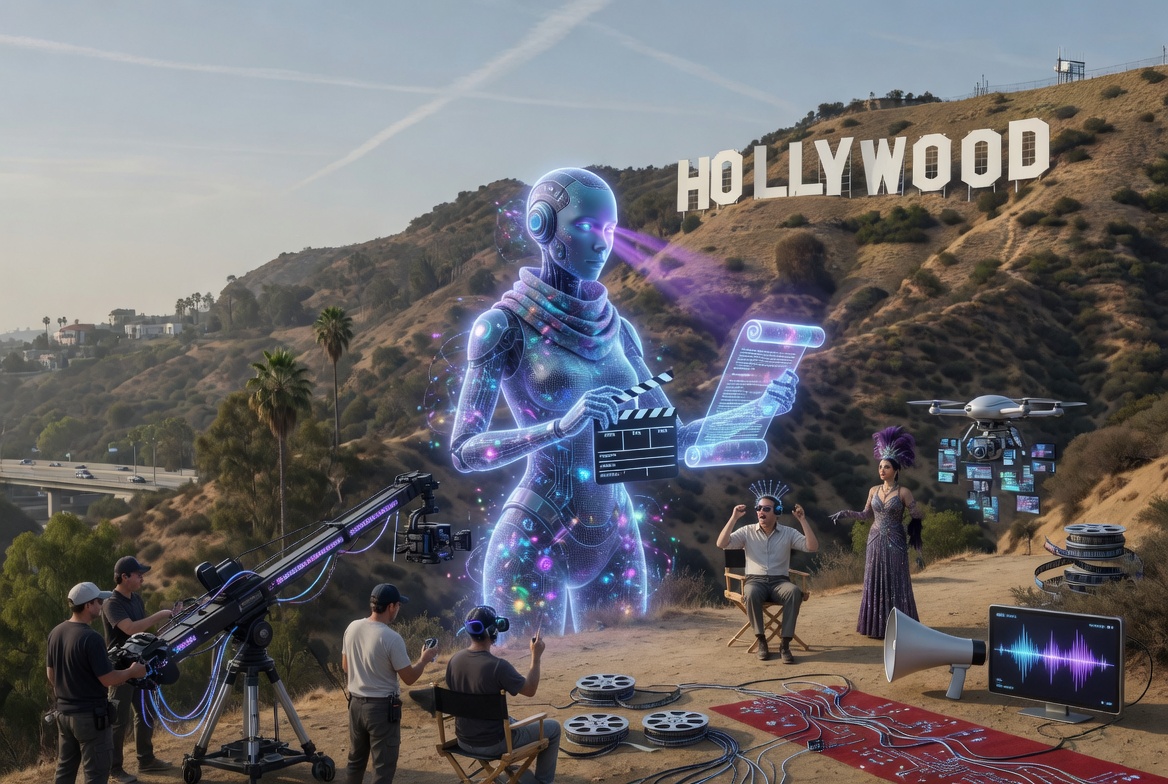
The Writers Guild has withdrawn its support from the Urbanworld Film Festival after organizers announced the creation of a competition for films produced with artificial intelligence tools, arguing that the move undermines professional writers at a time when the entertainment industry is already grappling with AI-driven disruption. Festival organizers have defended the decision as an effort to recognize emerging technology rather than replace human creativity, while the dispute highlights the broader struggle over whether AI should be viewed as a creative assistant or as a substitute for the work of professional artists. The disagreement comes only a few years after Hollywood’s labor battles placed AI protections at the center of negotiations, underscoring that concerns over intellectual property, employment, and artistic integrity remain far from resolved.
Sources
- https://www.nytimes.com/2026/07/28/movies/urbanworld-writers-guild-ai.html
- https://sciencenews.strategian.com/public_html/2026/07/28/writers-guild-withdraws-support-from-film-festival-over-a-i
- https://www.axios.com/2026/04/07/new-york-times-ai-standards
Key Takeaways
- The Writers Guild views AI-generated film competitions as accelerating the displacement of professional writers and weakening contractual protections won during recent labor negotiations.
- Urbanworld maintains that recognizing AI-assisted filmmaking reflects technological change rather than an attempt to replace human creators, illustrating the widening divide within the entertainment industry over AI adoption.
- The dispute demonstrates that questions surrounding copyright, authorship, compensation, and the value of human creativity remain unresolved and are likely to become increasingly contentious as AI capabilities continue to expand.
In-Depth
The Writers Guild’s decision to sever its relationship with the Urbanworld Film Festival represents another significant flashpoint in the ongoing battle over artificial intelligence in the creative industries. While AI developers and many technology advocates argue these tools simply expand artistic possibilities, many professional writers see a very different reality. From their perspective, AI systems trained on enormous libraries of existing creative works threaten to commoditize writing while reducing opportunities for the very people whose work supplied the foundation for those systems.
Supporters of the festival’s decision contend that technological innovation has always reshaped filmmaking, from digital editing to computer-generated visual effects. They argue that excluding AI-generated projects would ignore a rapidly evolving segment of the industry and discourage experimentation by independent filmmakers working with limited budgets.
Critics counter that the comparison is fundamentally flawed. Unlike cameras, editing software, or visual effects, generative AI can produce scripts, dialogue, and story structures that traditionally required skilled human writers. They warn that celebrating AI-generated content risks normalizing a business model in which studios increasingly rely on automation to reduce labor costs while diminishing the economic prospects of professional creatives.
For conservatives, the controversy presents a more nuanced debate than simple opposition to new technology. Free markets reward innovation, but markets also depend upon the protection of property rights and voluntary exchange. If AI companies profit from creative works without meaningful consent or compensation, legitimate questions arise regarding intellectual property, contractual fairness, and the preservation of incentives that encourage original human creativity. As AI continues advancing, policymakers, businesses, and creators will face mounting pressure to strike a balance that fosters innovation without eroding the value of the individuals whose imagination continues to drive the arts.