

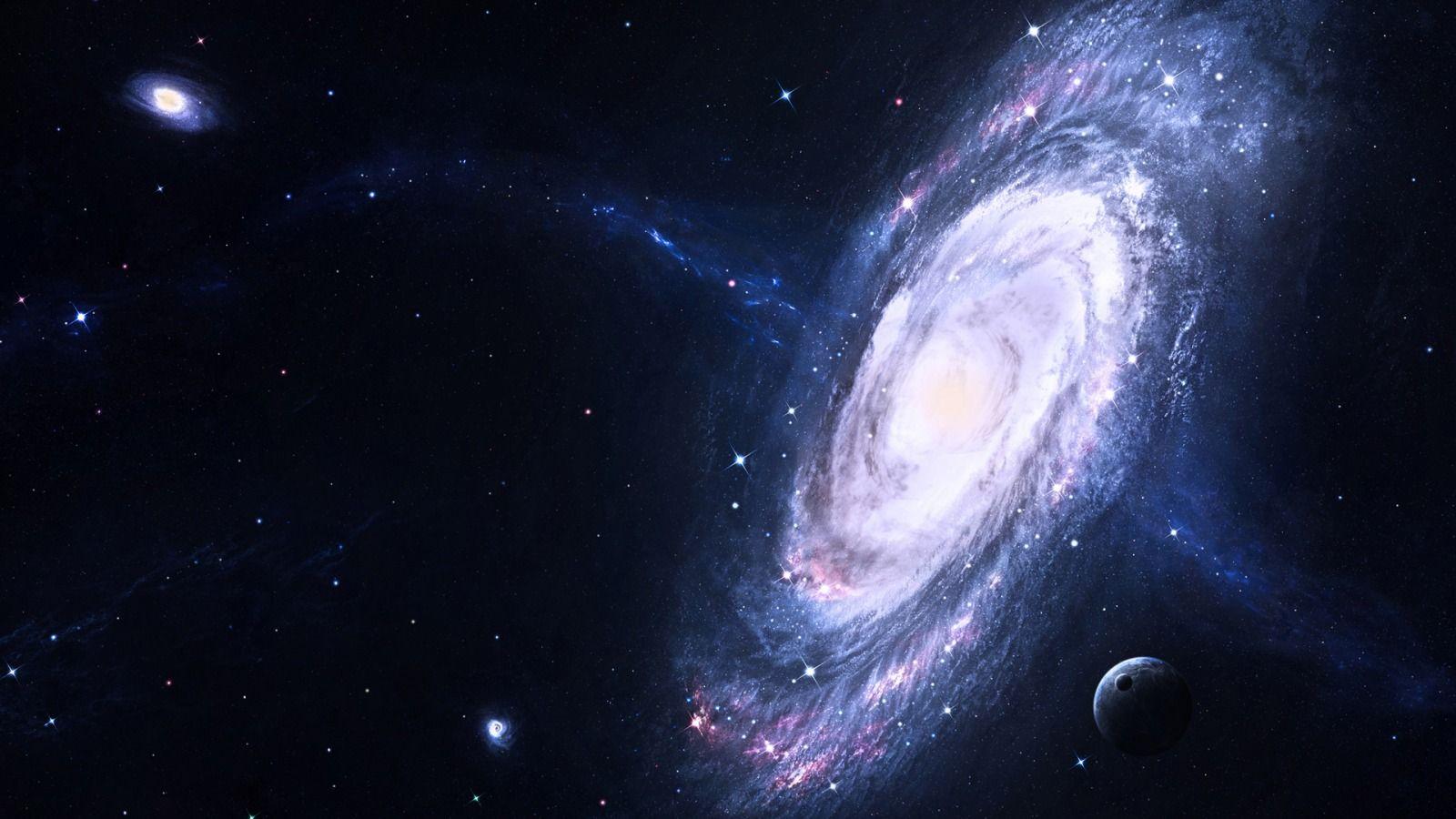
Scientists are increasingly deploying advanced artificial intelligence systems powered by high-performance GPUs to sift through massive volumes of astronomical data from next-generation telescopes, accelerating the search for distant galaxies and potential signs of extraterrestrial intelligence, yet despite these technological gains, researchers still report no evidence of intelligent life beyond Earth, underscoring both the promise and limits of machine-driven discovery in addressing longstanding questions like the Fermi Paradox.
Sources
https://www.semafor.com/article/04/24/2026/ais-hunt-for-signs-of-intelligent-life
https://tech.yahoo.com/science/articles/ais-hunt-signs-intelligent-life-161659253.html
https://en.wikipedia.org/wiki/Fermi_paradox
Key Takeaways
- AI systems powered by high-end GPUs are now essential for analyzing vast astronomical datasets that humans alone cannot realistically process.
- Despite improved detection capabilities and discovery of ancient galaxies, there is still no confirmed evidence of intelligent extraterrestrial life.
- The effort reflects a modern, technology-driven approach to the longstanding Fermi Paradox, highlighting both scientific ambition and persistent uncertainty.
In-Depth
The modern search for extraterrestrial intelligence has entered a new phase, driven not by speculative theory alone but by sheer computational force. With telescopes like the James Webb Space Telescope generating unprecedented volumes of data, the limiting factor is no longer observation but interpretation. That bottleneck has pushed scientists toward artificial intelligence, particularly systems built on transformer architectures similar to those used in language models, to process and interpret what human analysts simply cannot keep up with.
This shift represents a broader trend in scientific inquiry: the outsourcing of pattern recognition to machines. High-performance GPUs—many developed for commercial and consumer applications—are now repurposed to comb through pixelated, noisy images of deep space, identifying faint signals that might otherwise be dismissed as background noise. These systems are already proving their value by uncovering some of the oldest galaxies ever observed, offering insights into the early universe that were previously out of reach.
Yet for all the computational muscle now applied to the problem, the core question remains stubbornly unresolved. There is still no evidence of intelligent life beyond Earth. This reality reinforces the enduring weight of the Fermi Paradox, which highlights the contradiction between the statistical likelihood of extraterrestrial civilizations and the complete absence of observable proof.
What emerges is a picture of progress paired with restraint. Technology is advancing rapidly, and AI is undeniably expanding humanity’s observational reach. But it has not yet delivered the breakthrough many have long anticipated. That tension—between expectation and reality—suggests that either intelligent life is far rarer than assumed, or that it exists in forms or at distances that remain beyond even our most sophisticated tools.