

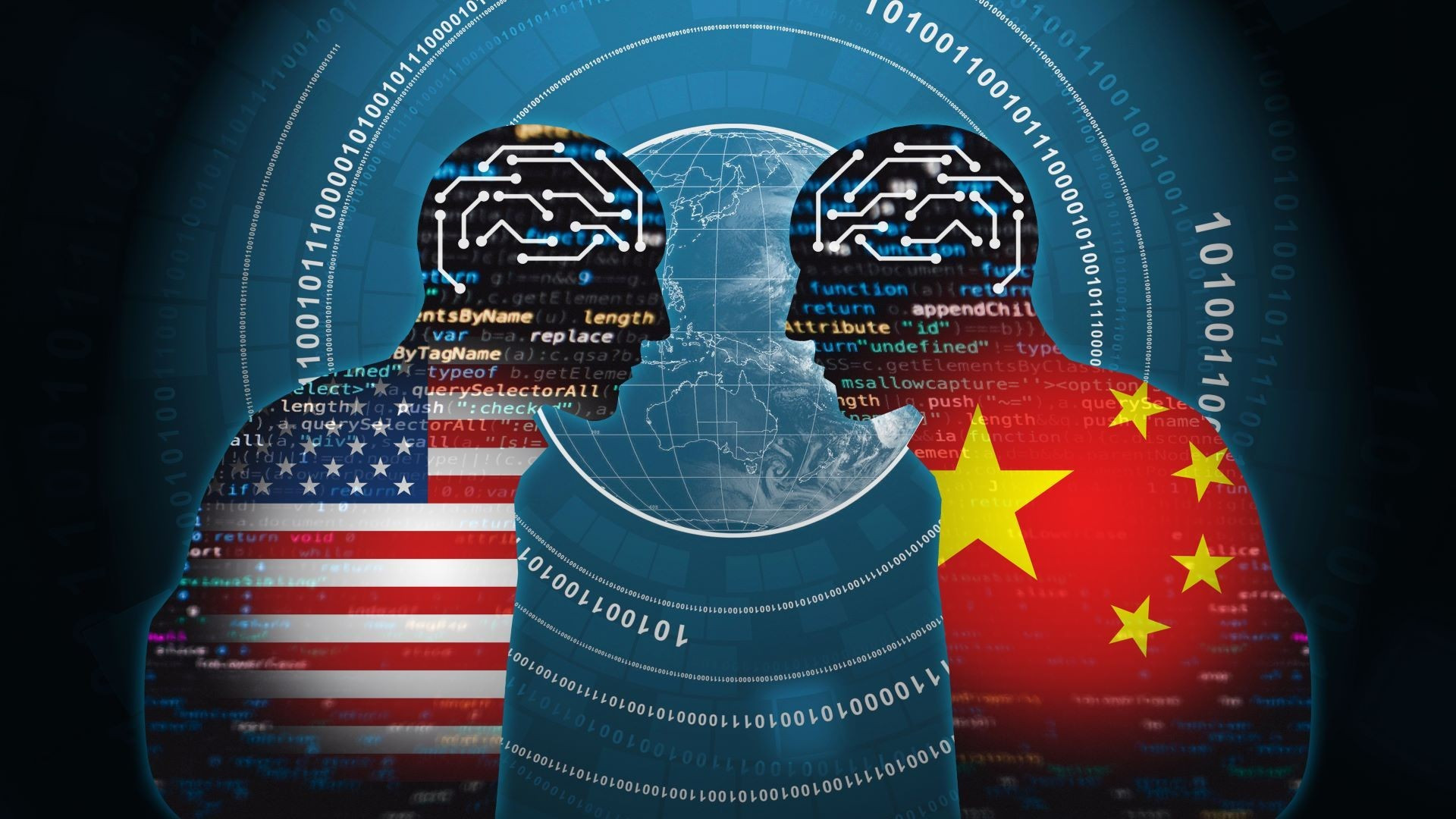
The United States has formally accused China of orchestrating large-scale efforts to extract and replicate the capabilities of advanced American artificial intelligence systems, escalating an already tense technological rivalry between the two global powers. According to U.S. officials, Chinese-linked actors have allegedly used sophisticated techniques—including thousands of proxy accounts and targeted system manipulation—to bypass safeguards and distill proprietary knowledge from leading U.S. AI models, effectively siphoning off innovation without incurring the research and development costs. These accusations characterize the activity as systematic and deliberate, suggesting a coordinated campaign designed to accelerate China’s position in the global AI race while undermining American technological leadership. Chinese officials have denied the allegations, calling them unfounded and urging cooperation instead of confrontation, but the dispute is already feeding into broader geopolitical tensions, including potential sanctions, export controls, and tighter collaboration between U.S. government agencies and private AI firms to defend intellectual property.
Sources
https://www.semafor.com/article/04/23/2026/us-accuses-china-of-ai-theft
https://www.reuters.com/world/white-house-accuses-china-industrial-scale-theft-ai-technology-ft-reports-2026-04-23/
https://apnews.com/article/a5c40346394ef5fa9ae710c5aabdc62c
Key Takeaways
- The U.S. government alleges China is conducting coordinated, large-scale efforts to extract proprietary capabilities from American AI systems using advanced technical workarounds.
- The dispute reflects a broader strategic competition over artificial intelligence dominance, with national security, economic leverage, and global influence at stake.
- China denies wrongdoing, but the accusations are likely to drive stricter U.S. countermeasures, including enforcement actions, export controls, and closer coordination with domestic tech firms.
In-Depth
The latest accusations coming out of Washington reflect a growing recognition that artificial intelligence is not just another sector—it is rapidly becoming the backbone of economic power, national defense, and global influence. When U.S. officials describe what they believe China is doing as “industrial-scale,” they are not using casual language. They are signaling that this is not a handful of isolated incidents or rogue actors, but something more organized, persistent, and strategically aligned with Beijing’s long-term ambitions.
At the center of the concern is a technical process often referred to as “distillation,” where a smaller model learns from a more advanced one. In legitimate settings, this is a standard optimization technique. But U.S. officials argue that, when exploited at scale and without authorization, it becomes a form of intellectual property extraction. Instead of spending billions and years developing frontier AI systems, a foreign competitor can effectively shortcut the process by harvesting outputs, probing weaknesses, and reconstructing capabilities.
From a policy standpoint, this creates a fundamental dilemma. Open innovation has long been a strength of the American system, allowing collaboration, rapid iteration, and global leadership. But that same openness may now be exposing critical technologies to adversarial exploitation. The response being discussed—greater safeguards, tighter access controls, and potential penalties—suggests a shift toward a more defensive posture.
This situation also fits into a much larger historical pattern. For decades, U.S. officials and industry leaders have raised concerns about intellectual property practices tied to China, particularly in high-value sectors. What makes the current moment different is the speed and scale at which AI is advancing. Unlike traditional manufacturing or even software, AI capabilities can be replicated and deployed globally at unprecedented pace once the underlying models are understood.
At the same time, it is worth noting that the line between legitimate use and exploitation is not always clean. AI systems are trained on vast datasets, often drawing from publicly available information, and distinguishing between acceptable learning and illicit extraction can be technically and legally complex. Even some experts caution that enforcement will require careful calibration to avoid stifling innovation or triggering unintended consequences.
Still, the broader trajectory is clear. The United States is increasingly treating AI as a strategic asset that must be protected, not just a commercial technology to be shared freely. Whether that approach succeeds—or simply accelerates a deeper technological divide—will likely define the next phase of the global AI race.