

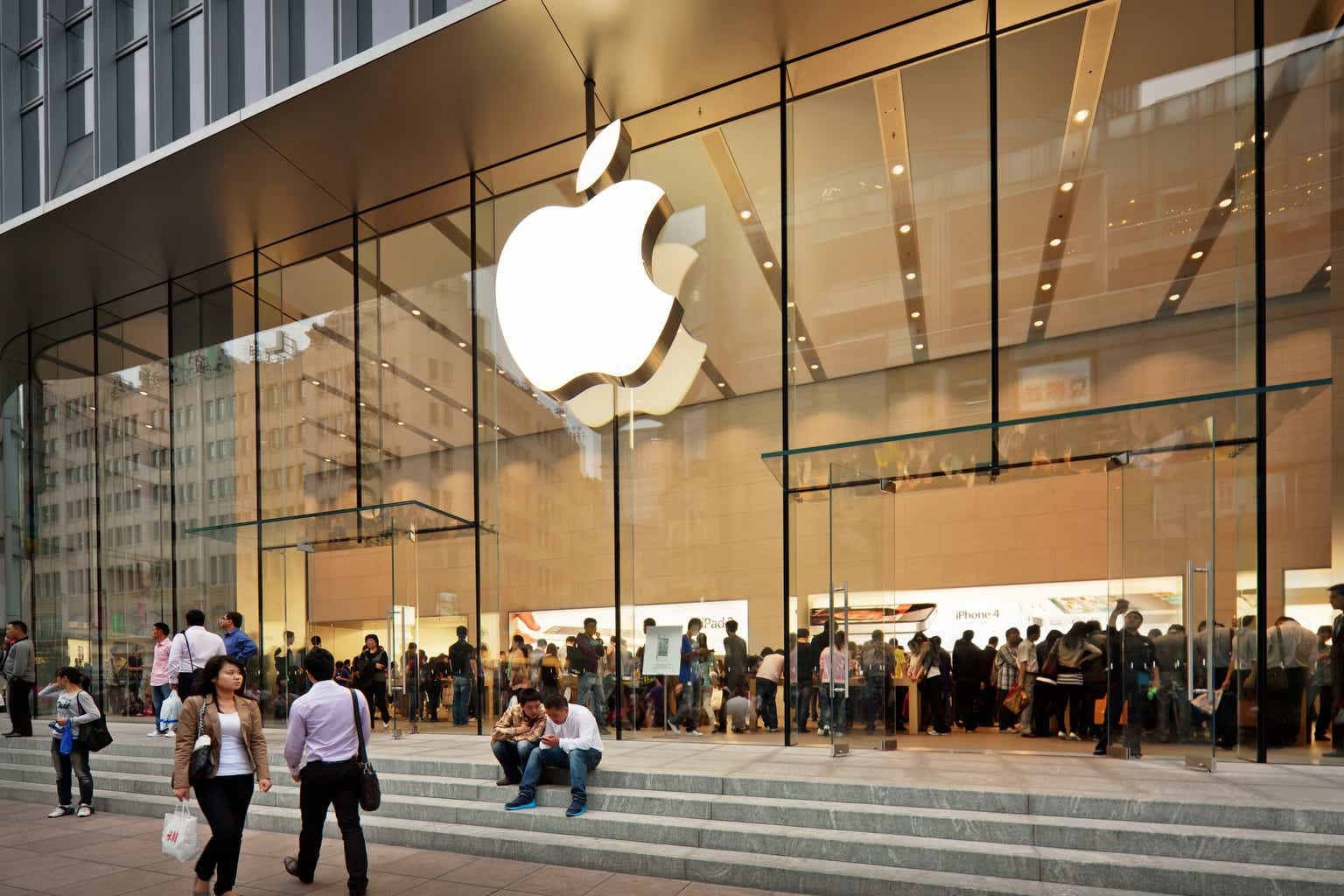
Apple‘s leadership transition places incoming CEO John Ternus in a precarious position as he inherits a company deeply tied to China for both manufacturing and revenue, while also confronting rising geopolitical tensions and intensifying competition in artificial intelligence, forcing a delicate recalibration of supply chains, market strategy, and technological direction at a time when U.S. political pressure and global economic realities increasingly collide.
Sources
https://www.semafor.com/article/04/21/2026/apples-new-boss-to-face-dual-challenge-in-chinese-market
https://www.reuters.com/technology/john-ternus-become-apple-ceo-tim-cook-become-executive-chairman-2026-04-20/
https://www.businessinsider.com/tim-cook-china-apple-ceo-step-down-legacy-2026-4
Key Takeaways
- Apple’s heavy reliance on China for both production and sales creates a dual vulnerability as geopolitical tensions escalate.
- The incoming CEO must balance U.S. political pressure to reduce dependence on China with the economic necessity of maintaining access to the Chinese market.
- Lagging in artificial intelligence development adds another layer of urgency, forcing leadership to address innovation gaps while managing global supply chain risks.
In-Depth
Apple’s leadership shift marks more than a routine executive transition; it represents a strategic inflection point shaped by years of decisions that tied the company’s fortunes closely to China. Under Tim Cook, Apple leveraged China’s manufacturing efficiency and scale to build one of the most powerful supply chains in modern business, while simultaneously cultivating the country as a critical consumer market. That dual reliance delivered extraordinary growth, but it also created a structural dependency that now presents real risks.
The incoming chief executive steps into an environment where political realities are no longer abstract considerations. Washington has increasingly signaled that reliance on Chinese manufacturing is a national vulnerability, pushing for reshoring or diversification. At the same time, China remains indispensable—not only as a production hub but as a revenue engine that has contributed tens of billions annually. Navigating that contradiction requires more than incremental adjustments; it demands a disciplined, pragmatic approach that recognizes both economic necessity and national interest.
Complicating matters further is the company’s perceived lag in artificial intelligence. Competitors have aggressively invested in AI infrastructure and applications, while Apple has taken a more measured, partnership-driven approach. That strategy may preserve margins in the short term, but it raises legitimate questions about long-term competitiveness in a sector increasingly defined by rapid innovation.
The challenge ahead is not simply operational—it is philosophical. Leadership must decide whether to double down on the globalized model that built Apple’s dominance or to adapt to a new era where geopolitical alignment, supply chain resilience, and technological leadership are inseparable. The margin for error is thin, and the consequences of miscalculation could extend far beyond quarterly earnings, shaping the company’s strategic trajectory for years to come.