

Close Menu

    Subscribe to Updates

    Get the latest tech news from Tallwire.

      What's Hot

      Algorithmic Edge or Systemic Risk? The Double-Edged Sword of AI Trading in Retail Investing

      May 30, 2026

      Space Force Deepens Strategic Alliance With SpaceX Through Massive Military Contract

      May 30, 2026

      Robinhood Opens the Door to AI-Driven Retail Investing

      May 30, 2026
      Facebook X (Twitter) Instagram
      • Tech
      • AI
      • Get In Touch
      Facebook X (Twitter) LinkedIn
      TallwireTallwire
      • Tech

        Trump Quantum Push Leaves Silicon Valley Giants on the Sidelines

        May 29, 2026

        Chicago’s Cultural Scene Pushes Back Against Digital Addiction

        May 29, 2026

        Tech Shuttle Decline Reflects San Francisco’s Remote-Work Reality

        May 27, 2026

        Southwest Airlines Moves To Ban Human-Animal Robots From Flights

        May 22, 2026

        Repurposed EV Batteries Raise Growing Safety and Reliability Concerns

        May 21, 2026
      • AI

        Robinhood Opens the Door to AI-Driven Retail Investing

        May 30, 2026

        AI Investment Boom Reshapes Australia’s Economic Future

        May 30, 2026

        White-Collar America Faces A Brutal Employment Squeeze

        May 29, 2026

        AI Voice Theft Lawsuit Targets Tech Industry Powerhouses

        May 29, 2026

        AI Anxiety Shadows the Class of 2026

        May 29, 2026
      • Security

        AI Voice Theft Lawsuit Targets Tech Industry Powerhouses

        May 29, 2026

        Canvas Cyberattack Raises New Questions About America’s Reliance on Digital Classrooms

        May 29, 2026

        Cybersecurity Emerges as a Rare Safe Haven in the AI Jobs Shakeup

        May 26, 2026

        Taiwan Cracks Down on Nvidia AI Server Smuggling to China

        May 26, 2026

        Britain’s AI Safety Retreat Signals A Dangerous Global Deregulatory Trend

        May 26, 2026
      • Health

        Big Tech Funnels Millions Into Youth-Focused Brands As Critics Warn Of Social Media Risks

        May 21, 2026

        AI Medical Scribes Trigger New Fight Over Patient Safety And Federal Oversight

        May 18, 2026

        Lawmakers Rebuke Meta Over Restrictions on Legal Ads for Social Media Addiction Claims

        May 12, 2026

        AI’s Soft Seduction Could Quietly Undermine Humanity, Professor Warns

        May 12, 2026

        AI Outperforms Doctors In Emergency Diagnosis Study, Raising Promise And Caution

        May 11, 2026
      • Science

        Trump Quantum Push Leaves Silicon Valley Giants on the Sidelines

        May 29, 2026

        SpaceX Prospectus Reveals Musk’s High-Stakes Push Toward a Multiplanetary Future

        May 29, 2026

        SpaceX Debuts More Powerful Starship in Major Leap Toward Lunar and Mars Missions

        May 27, 2026

        U.S. Funnels $2 Billion Into Quantum Computing Push to Counter Global Rivals

        May 23, 2026

        California Deploys AI To Combat Surging Whale Deaths In San Francisco Bay

        May 22, 2026
      • Tech

        Tech Billionaire Steps Into San Francisco Tax Revolt

        May 28, 2026

        Becerra Campaign Faces Scrutiny Over Alleged Fake Social Media Boosting

        May 27, 2026

        SpaceX IPO Filing Ignites Wall Street Frenation Over Musk’s Expanding Empire

        May 23, 2026

        AI Arms Race Is Turning The Hiring Process Into A Digital Circus

        May 21, 2026

        Bezos Blasts AOC’s Billionaire Attacks As Debate Over Wealth And Capitalism Intensifies

        May 20, 2026
      TallwireTallwire
      Home»Opinion»Algorithmic Edge or Systemic Risk? The Double-Edged Sword of AI Trading in Retail Investing
      Opinion

      Algorithmic Edge or Systemic Risk? The Double-Edged Sword of AI Trading in Retail Investing

      4 Mins Read
      Facebook Twitter Pinterest LinkedIn Tumblr Email
      Signature: ydCkhdfJ9g9j/LoXjrKhvPQXaANNRyZXFY7vVqTou8/Eyvq8mxHq6RugoCtMRXMAWt9eEhBc8ZeYWZRK0pfxevZuIcx/9KttmMlXN52WK+cTUutcgX1vSNA/4X4ZkaIeZNvCrEamRQLp+qeyvZDYSHs+kysXaoKVQO3v+8wj8xuY/pLO2pGWWS6lXofr4Mj2ZvTscAnQoXZaHwHQpzwi+w==
      Share
      Facebook Twitter LinkedIn Pinterest Email

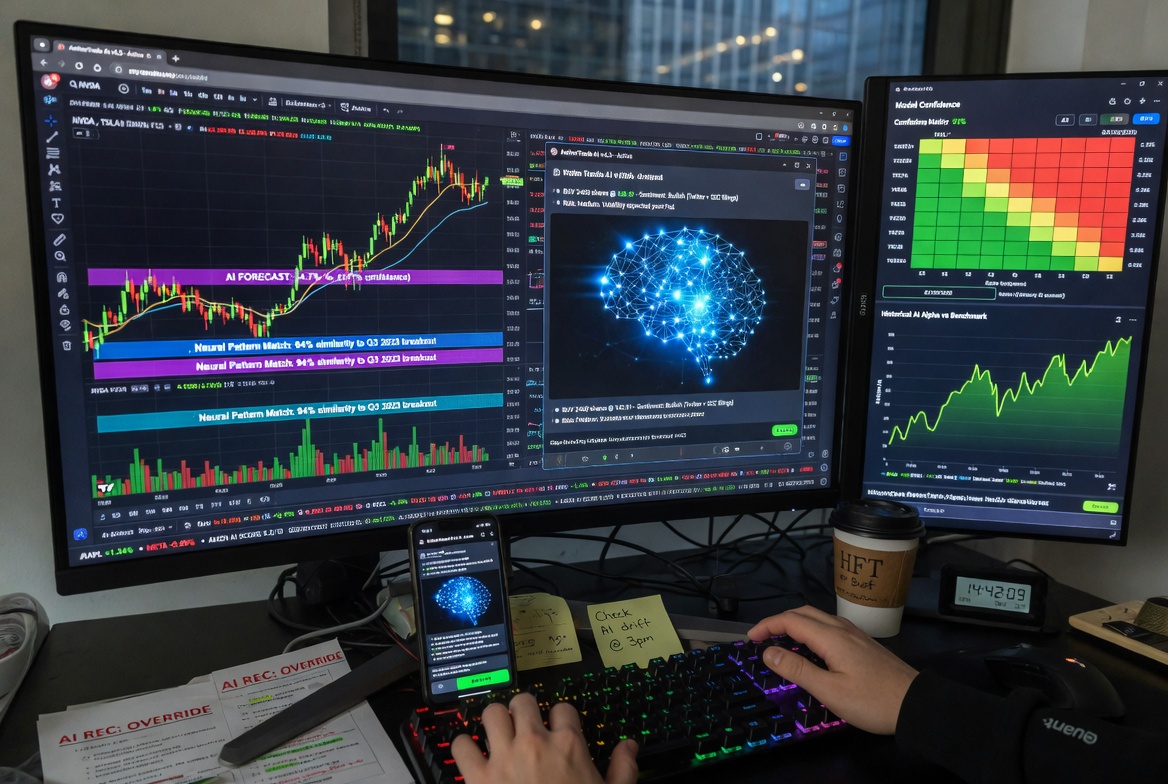
      he rise of artificial intelligence in financial markets has moved well beyond hedge funds and institutional desks. Today, retail investment platforms are increasingly exploring—or already offering—AI-assisted trading tools to everyday investors. On the surface, this evolution promises efficiency, accessibility, and potentially stronger returns. But beneath that promise lies a set of risks that could reshape not only individual portfolios, but the broader stability of financial markets.

      At its best, AI trading levels a playing field that has long tilted toward institutional money. For decades, retail investors have operated at an informational disadvantage, reacting to news and trends well after large firms have already priced them in. AI systems, particularly those leveraging machine learning, can process enormous volumes of market data in real time—far beyond human capacity. For a retail investor, this means access to predictive analytics, sentiment analysis, and pattern recognition that were once the exclusive tools of Wall Street.

      Another clear advantage is discipline. Human investors are notoriously emotional. Fear and greed drive poor timing decisions—panic selling during downturns or chasing overheated assets at market peaks. AI, by contrast, operates without emotion. It executes strategies based on pre-set parameters, statistical models, and historical probabilities. This can help mitigate the behavioral mistakes that often erode retail investor returns over time.

      Cost efficiency also comes into play. AI-driven platforms can reduce the need for traditional financial advisors, lowering fees and making investment management more accessible to individuals with smaller portfolios. For younger investors or those just entering the market, this democratization of tools could foster broader participation in wealth-building opportunities.

      However, these advantages come with real and substantial risks—some of which are easy to underestimate.

      First, there is the issue of overreliance. AI systems are only as good as the data and assumptions that underpin them. Markets are influenced not just by quantifiable trends, but by unpredictable human behavior, geopolitical shocks, and black swan events. An AI model trained on historical data may perform well under “normal” conditions, but fail dramatically when confronted with unprecedented scenarios. Retail investors, lulled into a false sense of confidence, may place too much trust in systems they do not fully understand.

      Second, there is the problem of herd behavior at scale. If large numbers of retail investors rely on similar AI models—or even the same underlying algorithms—trading patterns can become highly correlated. This creates the potential for amplified market swings. A signal to sell, triggered across thousands or millions of accounts simultaneously, could accelerate downturns in ways that resemble flash crashes. In this sense, AI does not eliminate risk; it can concentrate and magnify it.

      Transparency is another concern. Many AI trading tools operate as “black boxes,” offering recommendations or executing trades without clearly explaining the reasoning behind them. For retail investors, this raises questions of accountability. If an AI system underperforms or incurs significant losses, who is responsible? The platform? The developer? Or the investor who clicked “agree” on terms they likely did not read in detail?

      There is also a broader ethical and regulatory dimension. Financial markets depend on a degree of fairness and trust. If AI-driven trading creates an uneven landscape—where those with access to better algorithms consistently outperform others—it could deepen inequality within the investing public. Regulators may eventually need to step in, not only to protect individual investors, but to ensure that markets remain orderly and transparent.

      Cybersecurity risks cannot be ignored either. AI systems require vast amounts of data and connectivity, making them potential targets for manipulation or hacking. A compromised algorithm, even briefly, could lead to significant financial losses across a wide user base.

      Finally, there is the cultural shift within investing itself. The more decision-making is outsourced to machines, the less investors engage with the fundamentals of what they own. Investing risks becoming a passive, almost detached activity—more akin to trusting a navigation app than understanding the terrain. While convenience has its place, the long-term health of a market economy depends on informed participants who understand risk, value, and accountability.

      In the end, AI trading for retail investors is neither inherently good nor bad—it is a tool. Like any powerful tool, its impact depends on how it is used, understood, and regulated. The potential for improved efficiency and access is real, but so is the risk of systemic instability and individual overconfidence.

      A prudent approach would not reject AI outright, nor embrace it blindly. Instead, retail investors—and the firms that serve them—should treat AI as a supplement to human judgment, not a replacement for it. Markets have always rewarded those who balance innovation with caution. In the case of AI-driven trading, that balance may prove more important than ever.

      Intel
      Share. Facebook Twitter Pinterest LinkedIn Tumblr Email
      Previous ArticleSpace Force Deepens Strategic Alliance With SpaceX Through Massive Military Contract

      Related Posts

      Robinhood Opens the Door to AI-Driven Retail Investing

      May 30, 2026

      AI Investment Boom Reshapes Australia’s Economic Future

      May 30, 2026

      White-Collar America Faces A Brutal Employment Squeeze

      May 29, 2026

      Trump Quantum Push Leaves Silicon Valley Giants on the Sidelines

      May 29, 2026
      Add A Comment
      Leave A Reply Cancel Reply

      Editors Picks

      Trump Quantum Push Leaves Silicon Valley Giants on the Sidelines

      May 29, 2026

      Chicago’s Cultural Scene Pushes Back Against Digital Addiction

      May 29, 2026

      Tech Shuttle Decline Reflects San Francisco’s Remote-Work Reality

      May 27, 2026

      Southwest Airlines Moves To Ban Human-Animal Robots From Flights

      May 22, 2026
      Popular Topics
      Viral Satya Nadella Samsung Tesla Cybertruck Space UAE Tech Series A Series B Startup SpaceX starlink Satellite Sundar Pichai Stocks Software trending Taiwan Tech Tim Cook Tesla spotlight
      Major Tech Companies
      • Apple News
      • Google News
      • Meta News
      • Microsoft News
      • Amazon News
      • Samsung News
      • Nvidia News
      • OpenAI News
      • Tesla News
      • AMD News
      • Anthropic News
      • Elbit News
      AI & Emerging Tech
      • AI Regulation News
      • AI Safety News
      • AI Adoption
      • Quantum Computing News
      • Robotics News
      Key People
      • Sam Altman News
      • Jensen Huang News
      • Elon Musk News
      • Mark Zuckerberg News
      • Sundar Pichai News
      • Tim Cook News
      • Satya Nadella News
      • Mustafa Suleyman News
      Global Tech & Policy
      • Israel Tech News
      • India Tech News
      • Taiwan Tech News
      • UAE Tech News
      Startups & Emerging Tech
      • Series A News
      • Series B News
      • Startup News
      Tallwire
      Facebook X (Twitter) LinkedIn Threads Instagram RSS
      • Tech
      • Entertainment
      • Business
      • Government
      • Academia
      • Transportation
      • Legal
      • Press Kit
      © 2026 Tallwire. Optimized by ARMOUR Digital Marketing Agency.

      Type above and press Enter to search. Press Esc to cancel.