

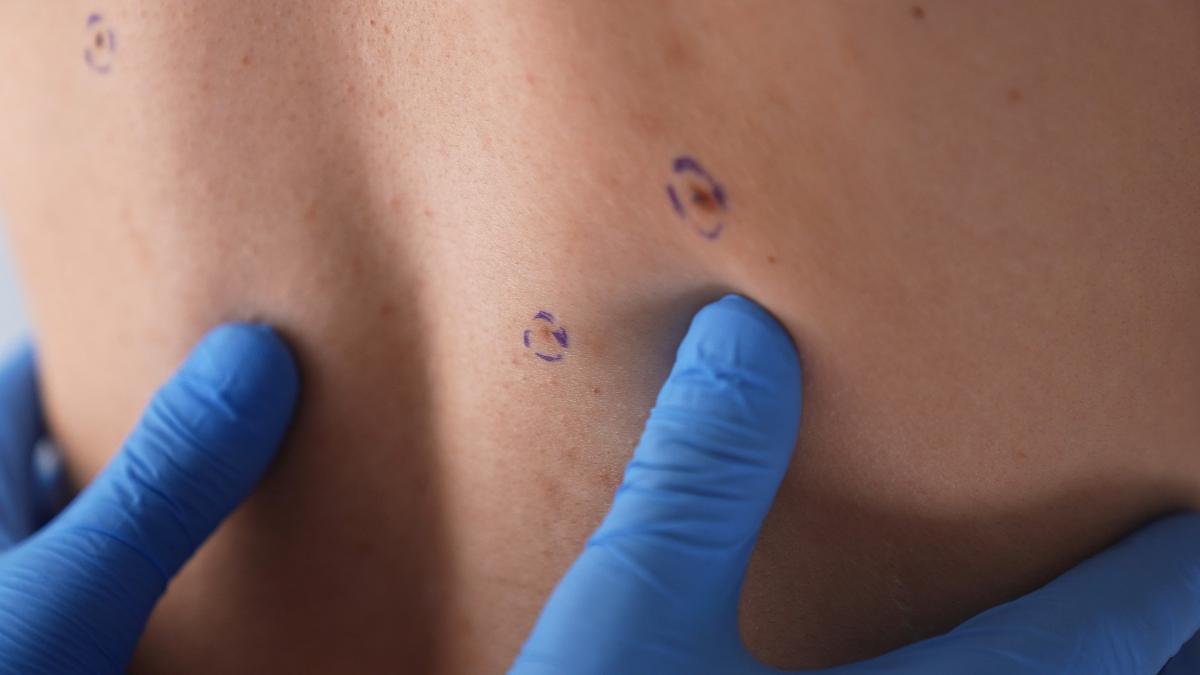
Canadian researchers have developed a temporary “smart tattoo” technology that may dramatically improve the early detection of melanoma, the deadliest form of skin cancer. The system, known as SMEAR-ULM, uses painless microneedles to place specialized nanoparticles beneath the skin, where they function as microscopic temperature sensors capable of identifying the subtle heat signatures generated by cancer cells long before tumors become visible to the naked eye. In laboratory testing involving mice, the technology successfully detected micro-melanomas just four days after formation, well before conventional imaging systems could identify them. The development represents a significant step toward less invasive, more accurate cancer screening at a time when melanoma rates continue to climb across North America. Researchers believe the technology could eventually reduce unnecessary biopsies while allowing physicians to intervene much earlier, when survival rates are dramatically higher.
Sources
- https://nypost.com/2026/05/29/health/temporary-smart-tattoo-could-catch-skin-cancer-before-its-visible
- https://medicalxpress.com/news/2026-05-intelligent-tattoo-skin-cancer.html
- https://nouvelles.umontreal.ca/en/article/2026/05/22/an-intelligent-tattoo-to-detect-skin-cancer-before-it-appears
- https://interestingengineering.com/health/microneedle-tattoo-melanoma-detection
Key Takeaways
- The SMEAR-ULM system can detect microscopic melanomas before they become visible by measuring minute temperature differences caused by cancer cells’ elevated metabolic activity.
- Researchers successfully identified melanomas in laboratory mice just four days after tumor formation, a stage that current imaging technologies generally cannot detect.
- If future human trials prove successful, the technology could reduce unnecessary biopsies, improve diagnostic accuracy, and significantly increase survival odds through earlier intervention.
In-Depth
For decades, skin cancer detection has relied heavily on a simple reality: doctors typically cannot diagnose what they cannot see. That limitation may soon face a serious challenge. Researchers in Canada have unveiled a temporary “smart tattoo” system that uses advanced nanotechnology and ultrafast imaging to identify melanoma before visible warning signs emerge.
The technology reflects the kind of innovation that can produce meaningful improvements in patient outcomes without creating an entirely new layer of government bureaucracy or regulatory complexity. Instead of waiting for suspicious moles to become apparent and then ordering invasive biopsies, physicians could potentially use a minimally invasive diagnostic tool capable of identifying aggressive cancers at their earliest stages.
The science is surprisingly straightforward. Cancer cells consume more oxygen and nutrients than healthy tissue, generating slightly higher temperatures. The smart tattoo’s microscopic sensors detect these subtle thermal differences and convert them into measurable signals. Researchers then create detailed thermal maps that reveal abnormalities invisible to conventional examinations.
The timing could hardly be better. Melanoma rates continue to rise, while survival statistics show a stark difference between cancers caught early and those discovered after spreading throughout the body. Early detection remains the single most effective weapon against deadly skin cancers. If this technology ultimately proves effective in human patients, it could represent one of the most important advances in dermatological diagnostics in years, offering a faster, less invasive, and potentially life-saving alternative to today’s standard screening methods.