

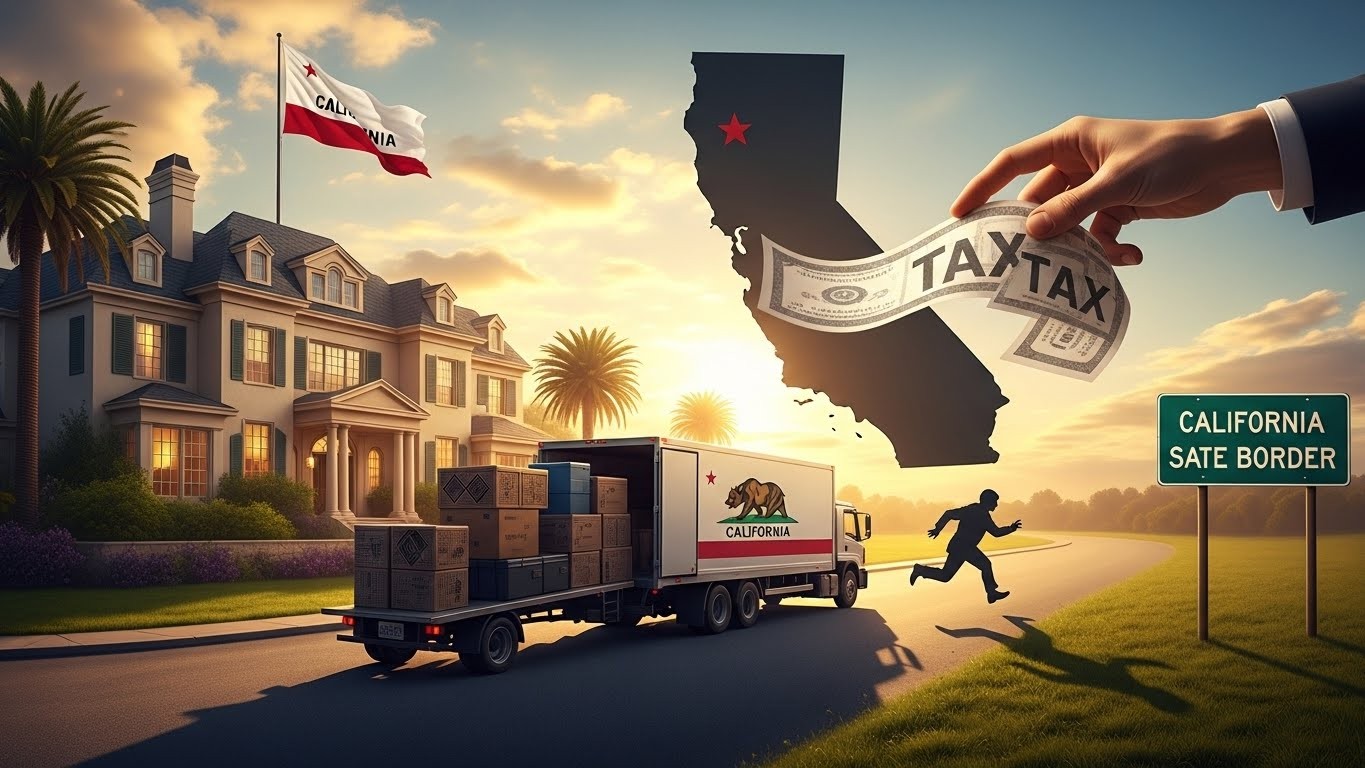
California Democrats are advancing a budget framework that includes a variety of revenue-raising measures and tax-related changes as state leaders grapple with ongoing fiscal pressures. Critics argue that the proposals continue Sacramento’s long-standing pattern of turning to taxpayers and businesses to close budget gaps rather than fundamentally reforming spending. Supporters contend the measures are necessary to preserve government services, but opponents warn that additional tax burdens could further erode affordability in a state already struggling with high housing costs, elevated living expenses, and continued population outflows. Recent budget negotiations have included proposals affecting software taxation, business tax credits, healthcare-related taxes, and other revenue mechanisms, prompting renewed concerns that middle-class families may ultimately bear the cost of Sacramento’s spending priorities.
Sources
- https://nypost.com/2026/06/16/us-news/california-dems-budget-could-stick-families-with-more-taxes/
- https://calmatters.org/politics/2026/06/california-budget-legislature-deal/
- https://ebudget.ca.gov/FullBudgetSummary.pdf
- https://nypost.com/2026/06/15/media/cnns-fareed-zakaria-blasts-californias-failing-dem-leaders-on-affordability-people-are-leaving/
Key Takeaways
- California lawmakers are considering budget measures that would increase taxes on certain software transactions, reduce business tax credits, and extend healthcare-related taxes as they seek additional revenue.
- Critics argue that California’s affordability crisis has been exacerbated by years of expanding government spending, regulatory burdens, and policies that increase costs for businesses and consumers.
- Opponents warn that even when taxes are targeted at businesses or high-income earners, the economic effects frequently ripple through the broader economy in the form of higher prices, fewer investments, and slower job growth.
In-Depth
California’s latest budget battle is shaping up to be another test of whether Sacramento’s governing philosophy has reached its limits. Democratic lawmakers and Governor Gavin Newsom face the challenge of balancing a budget amid fiscal pressures, yet many of the solutions under discussion once again revolve around extracting more revenue from the private sector. Proposals involving software taxation, reductions in business tax incentives, and extensions of existing healthcare taxes may be marketed as targeted measures, but history suggests that costs imposed on businesses rarely remain confined to corporate balance sheets. They eventually find their way to consumers, workers, and families.
The broader concern is that California is attempting to solve a spending problem with additional taxation. The state already imposes some of the nation’s highest income taxes and a substantial overall tax burden. Meanwhile, housing costs remain punishingly high, businesses continue to cite regulatory obstacles, and affordability concerns dominate public discourse. Even prominent commentators who are not typically aligned with conservatives have recently pointed to failures in governance, arguing that soaring expenditures have not translated into proportional improvements in public services.
For many Californians, the fear is not simply the immediate impact of any single tax increase. It is the cumulative effect of years of policies that steadily raise the cost of living while promising future benefits that often fail to materialize. When government repeatedly turns to new revenue streams rather than structural reforms, taxpayers become understandably skeptical.
As budget negotiations continue, the central question is whether state leaders will finally confront the underlying drivers of spending growth or continue relying on tax-related fixes that critics believe are making California less affordable for the very families policymakers claim to protect.