

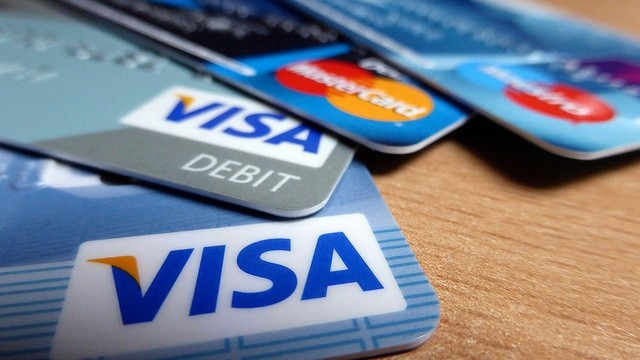
Visa’s agreement to acquire cybersecurity and fraud-intelligence company BioCatch for $2.4 billion underscores the growing recognition that artificial intelligence is empowering increasingly sophisticated financial crime and that payment networks must respond with equally advanced defensive technologies. BioCatch’s behavioral biometrics platform analyzes how legitimate users interact with devices to identify fraud before transactions are completed, providing protection across hundreds of financial institutions worldwide. The acquisition also reflects intensifying competition among major payment processors to strengthen fraud prevention capabilities as digital commerce expands and cybercriminals exploit AI to automate scams, identity theft, account takeovers, and payment fraud. While the transaction highlights private-sector innovation responding to evolving threats, it also serves as another reminder that protecting financial infrastructure has become a matter of economic and national security.
Sources
- https://www.theepochtimes.com/business/visa-to-buy-cybersecurity-company-biocatch-for-2-4-billion-6070906
- https://www.reuters.com/legal/transactional/visa-buy-fraud-intelligence-provider-biocatch-24-billion-2026-08-03
- https://www.wsj.com/finance/banking/visa-to-buy-fraud-defense-platform-biocatch-in-2-4-billion-deal-5e36f6e3
Key Takeaways
- • Visa’s $2.4 billion acquisition demonstrates that combating AI-enabled financial fraud has become a strategic priority requiring substantial investment in advanced cybersecurity technologies.
- • BioCatch’s behavioral biometrics technology enables fraud detection before payments are completed, offering financial institutions another layer of defense against increasingly sophisticated account takeovers, identity fraud, and scams.
- • The transaction reflects a broader competitive shift within the payments industry as major firms race to strengthen cyber defenses amid rapidly evolving digital threats and expanding online commerce.
In-Depth
Visa’s purchase of BioCatch is more than another corporate acquisition; it is evidence that the financial industry understands artificial intelligence has fundamentally changed the threat landscape. Criminal organizations now possess tools capable of generating convincing phishing campaigns, deepfake voices, synthetic identities, and automated attacks at a scale unimaginable only a few years ago. As those capabilities become cheaper and more accessible, financial institutions cannot afford to rely solely on traditional authentication methods.
Behavioral biometrics offers an important advantage because it evaluates how a person naturally interacts with a device rather than depending exclusively on passwords or one-time authentication codes. Keystroke rhythm, touchscreen movements, mouse activity, and hundreds of other behavioral indicators can expose fraudulent activity even when criminals possess legitimate credentials. That represents a significant shift from reacting to fraud after losses occur toward preventing attacks before money changes hands.
The transaction also reinforces a broader principle long championed by conservatives: private-sector innovation frequently adapts faster than government bureaucracy to emerging technological threats. While policymakers continue debating AI regulation, market participants are investing billions of dollars to protect customers and preserve confidence in digital commerce. Maintaining secure payment systems is essential not only for economic growth but also for protecting consumers from increasingly organized cybercriminal enterprises. Visa’s investment reflects an understanding that cybersecurity is no longer merely an IT expense—it is a core business capability and an increasingly indispensable component of modern financial infrastructure.