

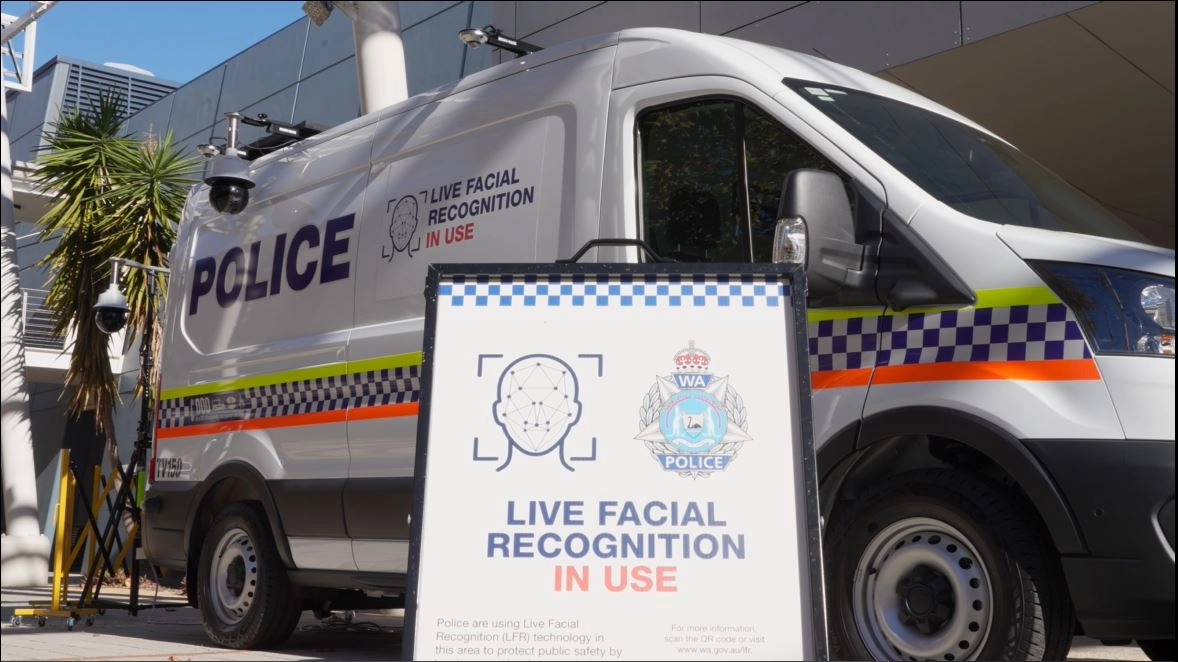
Western Australia Police announced that a newly deployed live facial-recognition van scanned 131,478 faces during its first week of operation, generating 33 alerts that led to 18 arrests, including individuals wanted on outstanding warrants and registered sex offenders. Authorities say the system compares faces against databases of wanted criminals and missing persons, automatically blurs and discards images of people who are not matched, and recorded only one false positive during the trial period. While police have promoted the technology as an effective force multiplier for public safety, the rollout has renewed longstanding concerns among privacy advocates about expanding government surveillance, mission creep, and the lack of comprehensive legislative safeguards governing biometric monitoring in public spaces.
Sources
- https://www.theepochtimes.com/world/wa-police-facial-recognition-van-scans-130000-faces-in-first-week-6056704
- https://www.wa.gov.au/government/announcements
- https://www.oaic.gov.au/privacy/privacy-guidance-for-organisations-and-government-agencies
Key Takeaways
- The facial-recognition van demonstrated immediate law-enforcement value by helping identify wanted offenders, resulting in multiple arrests during its first week of deployment.
- Police maintain the technology incorporates safeguards by blurring and deleting images of individuals who are not matched against law-enforcement databases while reporting an extremely low false-positive rate.
- The rapid expansion of biometric surveillance is likely to intensify debates over the proper balance between public safety, individual liberty, government accountability, and privacy protections.
In-Depth
The first-week results from Western Australia’s live facial-recognition van illustrate why law-enforcement agencies around the world are increasingly investing in biometric technologies. Identifying wanted fugitives, locating missing persons, and rapidly recognizing repeat offenders can significantly improve public safety while allowing officers to respond more efficiently to active investigations. In this case, police point to arrests made almost immediately after deployment as evidence that the technology can produce tangible operational benefits.
At the same time, conservatives have long argued that government power should always be viewed with healthy skepticism, regardless of which political party happens to control it. Technologies capable of scanning tens of thousands of innocent citizens in public spaces raise legitimate constitutional and civil-liberty questions. Today’s safeguards may be sufficient, but future governments could expand databases, retain images longer, or broaden surveillance beyond its original purpose unless clear statutory limits are enacted.
The challenge for policymakers is not choosing between security and freedom but ensuring both are protected. Facial-recognition systems should be governed by transparent laws, independent oversight, strict auditing requirements, meaningful penalties for misuse, and narrow limitations on data retention. Used responsibly, the technology can become another valuable law-enforcement tool. Used without firm legal guardrails, however, it risks becoming yet another example of government authority expanding beyond the public’s original consent.