

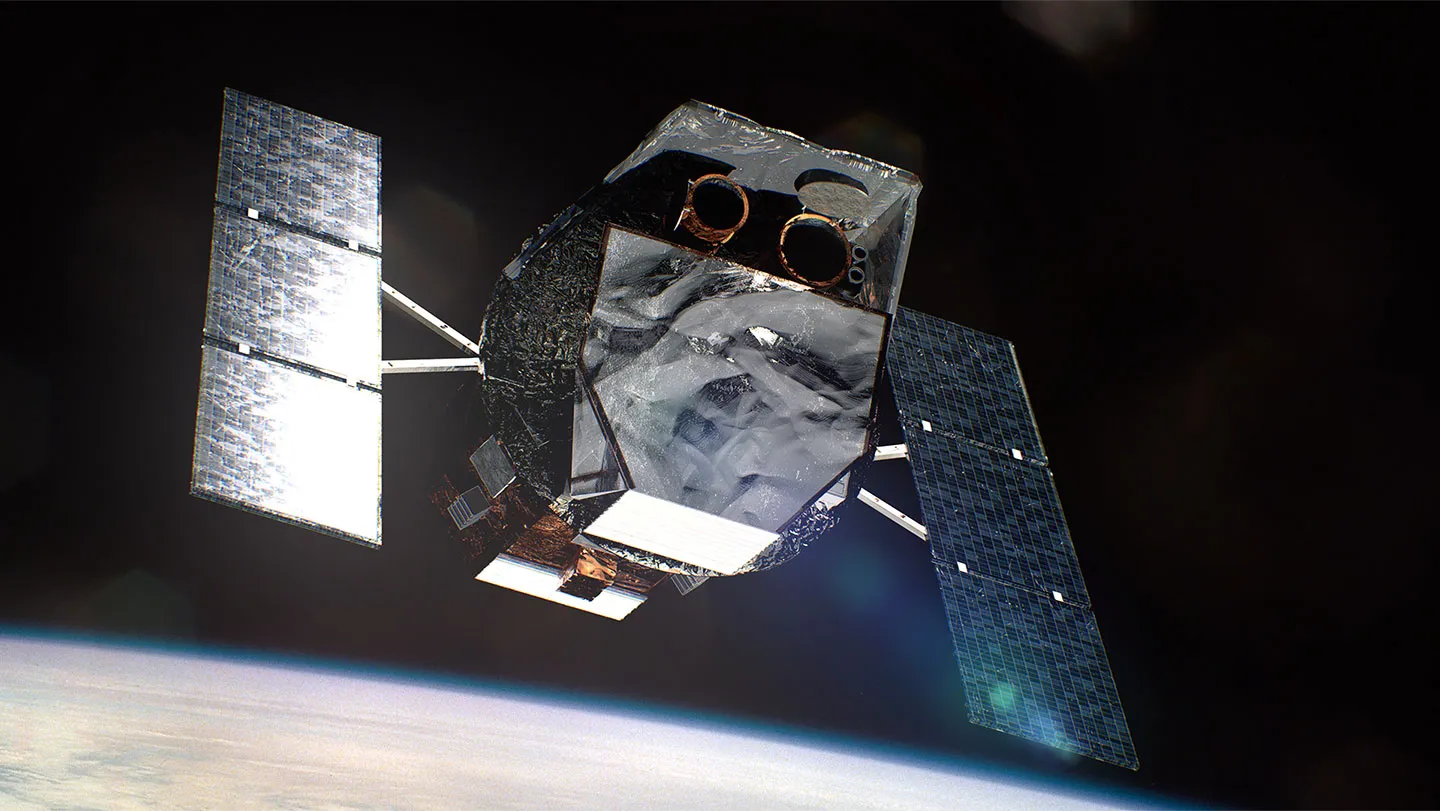
NASA is pursuing a first-of-its-kind mission to extend the operational life of the aging Neil Gehrels Swift Observatory by using a robotic servicing spacecraft built by Katalyst Space Technologies to rendezvous with, capture, and raise the telescope into a higher orbit before atmospheric drag causes it to reenter Earth’s atmosphere later this year. The approximately $30 million mission represents a significant shift from the traditional practice of abandoning aging spacecraft once their orbits decay. If successful, the demonstration could establish a practical model for commercial satellite servicing, allowing valuable government and private-sector assets to remain operational far longer while reducing orbital debris. Although the mission has encountered launch delays caused by technical issues and weather, NASA continues to view the effort as an important investment in both scientific research and the future economics of space operations, with implications extending well beyond the Swift observatory itself.
Sources
- https://www.reuters.com/science/satellite-rescue-mission-nasa-orbiting-observatory-postponed-2026-07-02
- https://apnews.com/article/3c3c5858b865064134a480295567f7f6
- https://www.space.com/space-exploration/launches-spacecraft/nasa-is-paying-usd30-million-for-a-1st-of-its-kind-rescue-mission-to-the-aging-swift-telescope-before-it-falls-from-space-is-it-worth-it
Key Takeaways
- NASA’s attempted rescue of the Swift Observatory marks the first U.S. effort to robotically capture and reposition an operational government science satellite that was never designed for in-orbit servicing.
- Success would demonstrate that commercial satellite servicing can preserve valuable scientific assets at a fraction of the cost of designing, launching, and operating entirely new spacecraft.
- Despite launch delays and significant technical risks, the mission reflects a growing emphasis on extending the lifespan of critical space infrastructure while reducing waste and improving the long-term sustainability of orbital operations.
In-Depth
For decades, the accepted practice in spaceflight has been straightforward: once a satellite or telescope reaches the end of its useful orbital life, it is simply allowed to burn up in Earth’s atmosphere or remain as space debris. NASA’s effort to rescue the Neil Gehrels Swift Observatory challenges that mindset and could become one of the most consequential demonstrations of commercial space servicing ever attempted.
Swift has dramatically outlived its original design life since its 2004 launch, producing valuable observations of gamma-ray bursts and other transient cosmic events. Yet increased atmospheric drag driven by heightened solar activity has steadily lowered its orbit, threatening to end an otherwise productive scientific mission. Rather than spending hundreds of millions of taxpayer dollars replacing a functioning observatory, NASA opted to invest roughly $30 million in a robotic rescue designed to extend its operational life by several years if successful.
From a conservative perspective, the mission illustrates a principle that often receives too little attention in government: preserving existing assets before paying to replace them. Extending the life of expensive infrastructure through innovative engineering reflects a more disciplined approach to taxpayer investment than automatically funding costly new programs whenever older equipment approaches retirement.
The mission remains technically ambitious, and recent launch delays underscore the inherent risks involved. Even so, if NASA and its commercial partner succeed, they will have demonstrated that orbital servicing can become a practical business model for future government and commercial spacecraft alike. That breakthrough could reduce costs, improve resilience, and strengthen American leadership in an increasingly competitive space environment where innovation—not simply spending—will determine who leads the next generation of space exploration.